Public Events

Filtering by: Public Events

Nov
24
12:00 PM12:00

Year-End Review of Schizophrenia Treatment & Research in 2025

Schizophrenia: 2025 Progress in Negative Symptom Treatment, Coordinated Care, and Precision Approaches

Dr. Matcheri Keshavan

View Recording

Year-End Review of Schizophrenia Treatment & Research in 2025

It’s been a quietly important year – though not with a single breakthrough – but with multiple streams converging, reshaping how we think, diagnose, and treat schizophrenia. We are witnessing the end of the dopamine era, the rise of precision psychiatry, and – importantly – the expansion of real-world, scalable care models.

1. Beyond Dopamine

For over 60 years, virtually all antipsychotics shared a common denominator: D2 receptor blockade. 2025 marks something historic: the first truly viable non-dopaminergic antipsychotic in clinical use. Cobenfy™ – also known as xanomeline–trospium – a combined M1/M4 muscarinic agonist with peripheral blockade to reduce side effects. After its late 2024 approval, this year brought guidance on how to use it, who benefits most, and how to manage its GI side effects. What’s intriguing is that patients with prominent negative symptoms seem to respond particularly well. We’re seeing the first signs of treatment stratification – matching interventions to symptom profiles, perhaps even to biological signatures in the near future.

Ulotaront, a TAAR1 and 5-HT1A agonist: The results so far in 2025 confirm good tolerability and modest benefits – especially in those with milder psychosis or those who can’t tolerate dopamine blockers. It’s not widely approved yet, but remains very much alive.

These studies provide the proof of concept that schizophrenia can be effectively treated without dopamine antagonism. This opens the door toward mechanistically diverse antipsychotics, and possibly, symptom-specific treatment strategies.

  • Halassa, M.M. Preliminary real-world predictors of response to muscarinic targeting in psychosis. Nat. Mental Health (2025). https://doi.org/10.1038/s44220-025-00529-w

  • Hsu YC, Hung TY, Chen YB, Hung KC, Liang CS, Tseng PT, Tu YK, Correll CU, Hsu CW, Solmi M. Trajectory of efficacy and safety across ulotaront dose levels in schizophrenia: a systematic review and dose-response meta-analysis. Int J Neuropsychopharmacol. 2025 Sep 1;28(9):pyaf059. doi: 10.1093/ijnp/pyaf059. PMID: 40795331; PMCID: PMC12421877.


2. Long-Acting Injectables

Six-month paliperidone now has real-world 3-year follow-up data, demonstrating stable symptom control, lower hospitalization rates, and predictable tolerability. Olanzapine LAI – long delayed due to post-injection delirium risks – made a comeback. New Phase 3 data show no observed cases of PDSS across thousands of injections. If approved, this could finally make olanzapine, one of the most effective antipsychotics, practically available in LAI form.

Thus, practice guidelines are shifting: LAIs are no longer seen as “last-resort adherence tools” but increasingly as first-line maintenance options, especially when the goal is sustained functional recovery. In chronic psychosis, dosing every 6 months may soon become routine. We’re moving toward a future where non-adherence is treated as a medical risk factor – just like dropping out of insulin treatment for diabetes.

  • New Long-term Safety Data from the Completed Phase 3

  • Kane JM, Agid O, Castle DJ, Citrome L, Fagiolini A, Kishimoto T, Larrauri CA, Leucht S, Rubio JM, Sajatovic M, Schooler N, Correll CU. The Use of Long-Acting Injectables for People with Schizophrenia: Consensus Panel Recommendations for Overcoming Barriers and Implementing Treatment. Neurol Ther. 2025 Dec;14(6):2551-2581. doi: 10.1007/s40120-025-00838-3. Epub 2025 Oct 7. PMID: 41057718; PMCID: PMC12623523.

3. Digital Therapeutics (DTx)

One major development is CT-155, a smartphone-based prescription digital therapeutic targeting negative symptoms – particularly motivation and engagement. It met its primary endpoint in a Phase 3 trial and now has Breakthrough Device designation from the FDA. Other tools, such as SlowMo – a digital reasoning-based therapy for paranoia – have published high-quality RCT data demonstrating real-world improvements when added to treatment-as-usual. Moreover, apps using ecological momentary interventions – tiny push notifications with structured prompts, mindfulness cues, cognitive reframing – are being tested in several domains: motivation, social functioning, coping with hallucinations.

Digital interventions are no longer just “apps for wellness.” They are slowly becoming prescribable, evidence-based, reimbursable tools — especially for treating negative symptoms and social withdrawal, where medication alone is weak.

  • Lakhan SE, Dorner-Ciossek C, Besedina O, Dickerson F, Hastedt C, Isla R, Kahn RS, Lindenmayer JP, Mehta R, Snipes C, Speier A, Tang W, Willis B, Fernandez JW, von der Goltz C, Pratap A Effectiveness, Engagement, and Safety of a Digital Therapeutic (CT-155/BI 3972080) for Treating Negative Symptoms in People With Schizophrenia: Protocol for the Phase 3 CONVOKE Randomized Controlled Trial JMIR Res Protoc 2025;14:e81293
    doi: 
    10.2196/81293PMID: 41057039PMCID: 12541272

4. Brain Stimulation: A Growing Electroceutical Toolbox

Another major movement in 2025: accelerated TMS and theta-burst stimulation for negative symptoms. Intermittent theta-burst stimulation (iTBS) to the dorsomedial prefrontal cortex – especially using accelerated multi-session protocols – is showing clinically meaningful reductions in negative symptoms. Safety is no longer a major concern – 2025 meta-analyses confirm low seizure risk and good tolerability. The field is now asking: Which patients benefit most? Which brain targets? Which stimulation parameters? Precision is replacing general enthusiasm. This marks the beginning of an “electroceutical era” in schizophrenia care – still early, still mostly off-label – but increasingly structured, protocol-driven, and measurable.

  • Li J, Jiang D, Huang X, Wang X, Xia T, Zhang W. Intermittent theta burst stimulation for negative symptoms in schizophrenia patients with moderate to severe cognitive impairment: A randomized controlled trial. Psychiatry Clin Neurosci. 2025 Apr;79(4):147-157. doi: 10.1111/pcn.13779. Epub 2025 Jan 30. PMID: 39887864.

5. Biomarkers and Precision Psychiatry

Three trends dominate: Exosomal microRNAs – increasingly studied in relation to psychosis onset, cognitive deficits, and synaptic dysfunction. In AI-driven analyses — especially ensemble models — these miRNA signatures can discriminate risk states with growing accuracy. Polygenic risk scores – not clinically decisive yet — but when combined with clinical features or treatment trajectories, such as clozapine response, they begin to inform treatment stratification. Real-world data + clinical phenotyping – analyses of muscarinic agonist responses hint at early efforts to match treatment to patient phenotype, based on patterns like prominent negative symptoms or substance use history. Overall, psychiatry is edging closer to “precision psychiatry”, although this is not yet ready for routine care.

  • Adly NM, Khalifa D, Abdel-Ghany S, Sabit H. MicroRNAs as biomarkers and molecular mediators of cognitive dysfunction in schizophrenia. J Neural Transm (Vienna). 2025 Aug 8. doi: 10.1007/s00702-025-02993-1. Epub ahead of print. PMID: 40779062.

  • Năstase MG, Vasile AI, Pietreanu AC, Trifu S. Following the Action of Atypical Antipsychotic Clozapine and Possible Prediction of Treatment Response in Schizophrenia. Life (Basel). 2025 May 22;15(6):830. doi: 10.3390/life15060830. PMID: 40566484; PMCID: PMC12194553.

6. The Rise of Early Psychosis Programs

Coordinated Specialty Care – CSC – has now firmly established itself as the gold standard for first-episode psychosis. In 2025, the conversation moved from “Does this work?” to “How do we scale and sustain it?”. Policy frameworks now focus on: Financial models for sustained CSC funding, Training and retention of workforce, and Integration of family support, vocational therapy, and digital engagement. If implemented widely, CSC may improve outcomes, by catching psychosis early, shortening duration of untreated illness, and restoring role functioning.

View Event →
Mar
3
11:30 AM11:30

Rethinking Schizophrenia - New Perspective on Disorders

Rethinking Schizophrenia - New Perspective on Disorders

Matcheri Keshavan | TEDxHopkinton HS Youth

In this fascinating TEDx talk, Matcheri Keshavan challenges the conventional understanding of schizophrenia, arguing that the term itself is both stigmatizing and inaccurate. He proposes a radical shift in how we view the condition, suggesting that schizophrenia should be reimagined as part of a broader spectrum of brain disorders rather than a singular, fixed diagnosis. Keshavan advocates for reconsidering the language surrounding mental health, even proposing the possibility of a new name for the condition, one that reflects its complexity and range of symptoms. Through this rethinking, he hopes to reduce the stigma and encourage a more nuanced, compassionate approach to diagnosis, treatment, and support of those affected by the disorder.

View Event →
Feb
9
10:00 AM10:00

Ask the Experts: Updates on Sustainable Payment for CSC in Massachusetts

Ask the Experts: Updates on Sustainable Payment for CSC in Massachusetts

Brenda Jackson & Joshua Cranston

The goal of this meeting is to explain the results of a survey and follow-up interviews led by the NASMHPD Research Institute (NRI) and TriWest team. In 2023, NRI and TriWest gathered utilization, staffing, and other data from first episode psychosis programs across Massachusetts to set a sustainable team-based rate (both monthly and encounter rates across different program sizes/types) for coordinated specialty care.

Click here to view a fact sheet describing recent updates to billing for CSC in Massachusetts.

Our Speakers

Brenda Jackson specializes in policy, program design and implementation and regulatory analysis for Medicaid and Children’s Health Insurance Programs (CHIP) with a focus on delivery system innovation, value-based purchasing (VBP), behavioral health system redesigns and Centers for Medicare & Medicaid Services (CMS) policy compliance. Brenda worked on behavioral health, home and community-based services (HCBS) and managed care policy when she was employed by CMS, the State of Kansas, and Deloitte & Touche Management Consulting. While employed by CMS, Brenda was the Iowa State Representative and reviewed all Iowa waivers and amendments as well as reviewing all managed care authorities and contracts for Missouri, Kansas, Iowa, and Nebraska. Brenda has been in this field since 1993. Brenda is the parent and guardian of a 23-year-old son on the KanCare I/DD waiver.

Joshua Cranston is a Consultant for TriWest and is based in St. Louis. He is primarily responsible for project management, including on rate setting projects for coordinated specialty care for first episode psychosis programs across the nation and on projects for institutes/foundations, state-level agencies, and community health centers. He also assists with editing, preparing documents and reports, and providing research help.

View Event →
Nov
15
2:00 PM14:00

APA Speaking of Psychology: Treatment and recovery from serious mental illness, with Dr. Kim Mueser

Speaking of Psychology: Treatment and recovery from serious mental illness

Kim Mueser, PhD

Among the many challenges people with serious mental illness face is the stigma surrounding illnesses such as schizophrenia and bipolar disorder. Kim Mueser, PhD, of the Center for Psychiatric Rehabilitation at Boston University, talks about the progress psychology has made in treating serious mental illness, the role of both medication and psychosocial interventions, why meaningful work can play a critical role in recovery, and the truth about the connection between violence and mental illness.

Speaking of Psychology is an audio podcast series produced by the American Psychological Association (APA) highlighting some of the latest, most important, and relevant psychological research being conducted today.

Listen Here


Kim Mueser, PhD, is a clinical psychologist and Professor at the Center for Psychiatric Rehabilitation at Boston University. Mueser’s clinical and research interests include family psychoeducation, the treatment of co-occurring psychiatric and substance use disorders, psychiatric rehabilitation for serious mental illnesses, and the treatment of posttraumatic stress disorder. His research has been supported by the National Institute of Mental Health, the National Institute on Drug Abuse, the Substance Abuse and Mental Health Administration, and the Brain and Behavior Research Foundation. He is the coauthor of over 10 books and treatment manuals, and has published extensively, including numerous peer-reviewed journal articles and book chapters.

View Event →
May
27
3:00 PM15:00

WPR: Why is psychosis still stigmatized in an era of mental health awareness?

On Friday, May 27th 2022, MAPNET’s Dr. Raquelle Mesholam-Gately joined Wisconsin Public Radio for a segment titled “Why is psychosis still stigmatized in an era of mental health awareness?". The description from WPR.org and a link to the recording are included here:

Research has found that schizophrenia and other conditions that cause psychosis carry more stigma than other mental health conditions, like depression. For Mental Health Awareness Month, a researcher explains how stigma harms those who experience psychosis. Then, we hear from a leader of a group that provides peer-to-peer support for those who experience hallucinations.

View Recording
View Event →
Dec
1
3:00 PM15:00

Early Intervention for Psychosis in Young People: A Lived Experience and School Perspective

Early Intervention for Psychosis in Young People: A Lived Experience and School Perspective

Presenters: Raquelle Mesholam-Gately, PhD; Kelsey Johnson, MPH; Dan Johnston

Join us for this listening session to gain insight on the early signs and symptoms of psychosis, review the benefits of early intervention, and access tools that help young people connect with care. Specialized early intervention provides the best hope for recovery and growth for teens and young adults who are starting to experience psychosis.

Having lived experience of early intervention as a young adult provides the opportunity to support other people experiencing confusing or unfamiliar phenomena through peer support and advocacy. At this session, we will also show how an individual’s self-determination is sustained during early intervention and how their goals and skills are fostered into the future.

This listening session will be co-facilitated by Courtney Spitzer, Clinical Research Study Coordinator, Harvard University, Department of Psychiatry and Martha Staeheli, PhD, Director of the New England Mental Health Technology Transfer Center's (New England MHTTC) School Mental Health Initiative. Our co-facilitators will ask the presenters questions about compassionate responses to early psychosis in schools before opening the floor for audience questions.

View Event →
Sep
29
1:00 PM13:00

[Podcast] Why Some Experts and Patients Want to Rename Schizophrenia

MAPNET’s Drs. Matcheri Keshavan and Raquelle Mesholam-Gately joined Mad in America to discuss their consumer-led project on renaming schizophrenia. You can listen to this podcast or read the transcript here.

“In this interview, [Drs. Keshavan & Mesholam-Gately] discuss what they learned about the issues surrounding the renaming of schizophrenia in their research with consumers and service users. In particular, they reflect on how this psychiatric diagnosis can impact the therapeutic alliance necessary for effective treatment and the overall quality of life of people diagnosed.”

View Event →
Jun
11
2:00 PM14:00

Ask a Peer: COVID-19 Vaccine Q&A for Youth and Families

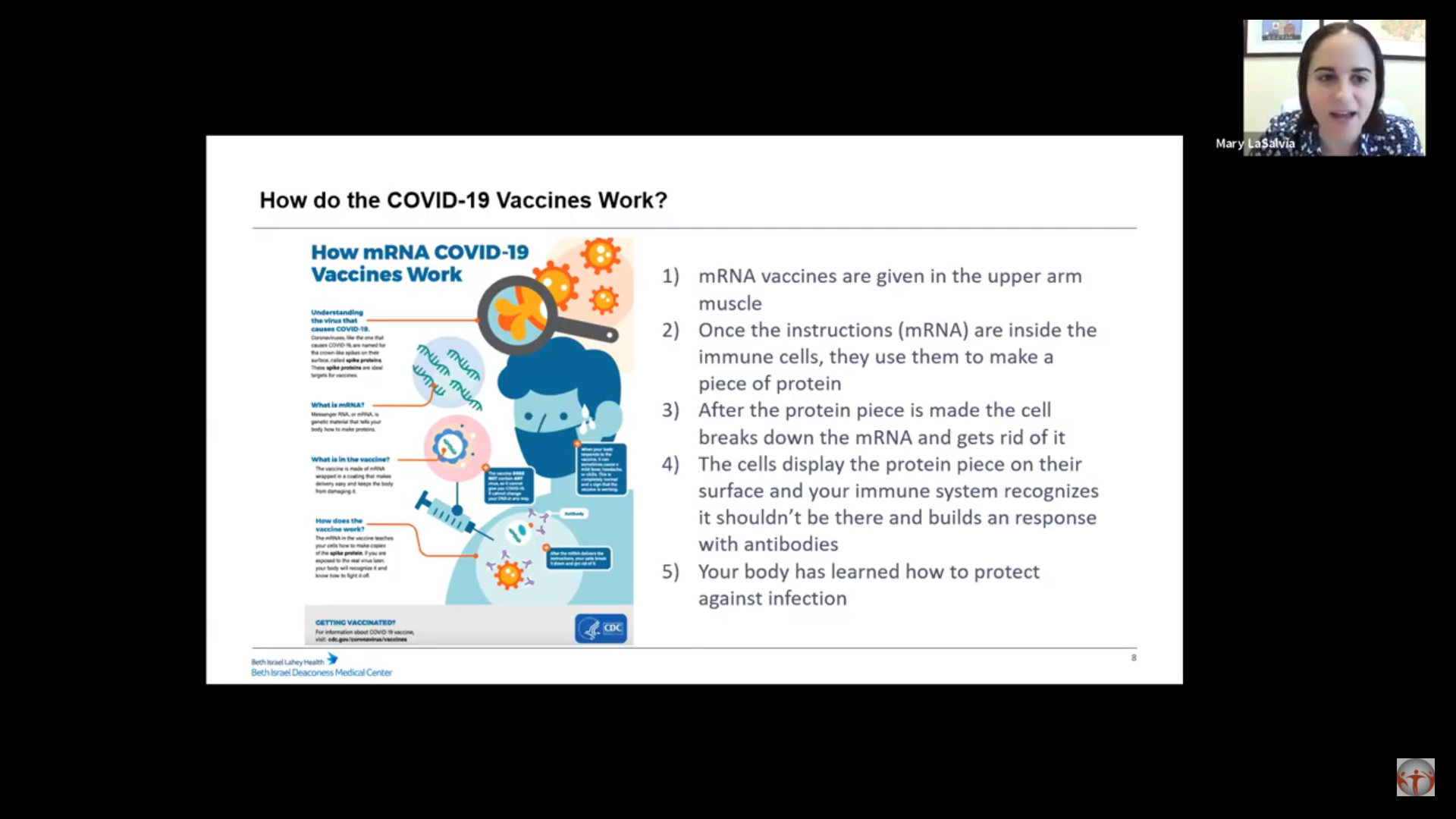
Young people who have experienced psychosis and their families may have unanswered questions about the COVID-19 vaccine. With walk-in vaccine appointments now available across Massachusetts, this panel of early psychosis peer specialists and local vaccine experts are here to share their experiences.

Co-hosted by the New England Mental Health Technology Transfer Center (MHTTC)

Panelists

  • Mary LaSalvia, MD; Division of Infectious Disease, Beth Israel Deaconess Medical Center

  • Victoria Shokunbi, RN, MSN; Nurse Educator, Massachusetts Department of Mental Health

  • Robert Walker, CPS; Office of Recovery and Empowerment, Massachusetts Department of Mental Health

  • Joshua Cairns, CPS; Recovery Counselor, Prevention & Recovery in Early Psychosis (PREP) Program

  • Tammie Badura, CPS; Certified Peer Specialist, Prevention & Recovery in Early Psychosis (PREP) Program

View Event →
Jun
9
12:00 PM12:00

Motivational Interviewing for COVID-19 Vaccine Hesitancy

There are enough COVID-19 vaccines for everyone in the United States, but some people aren't quite sure yet if they are ready to get one. Dr. Emily Kline taught how to use skills from an evidence-based approach called motivational interviewing to have more successful conversations about COVID-19 vaccines.

Dr. Emily Kline is a psychologist, an Assistant Professor of Psychiatry at Boston University School of Medicine, and the Director of Psychological Services for the Wellness and Recovery After Psychosis program at Boston Medical Center. She has created a brief curriculum that teaches core motivational interviewing concepts to non-professionals facing difficult conversations with their loved ones.

Co-hosted by the New England Mental Health Technology Transfer Center (MHTTC)

View Event →