
Cultivating in Community: Assessing the Acceptability and Feasibility of a Pilot: Gardening Program for Individuals with Psychosis and SMI
Kendra Jiang (1), Angel Tang (1), Nika Rosa (1), Lawrence Mendez (1), Abaigeal Grant (1), Xiaoduo Fan (1,2)
1. UMass Chan Medical School, Worcester, MA
2. UMass Memorial Health, Worcester, MA
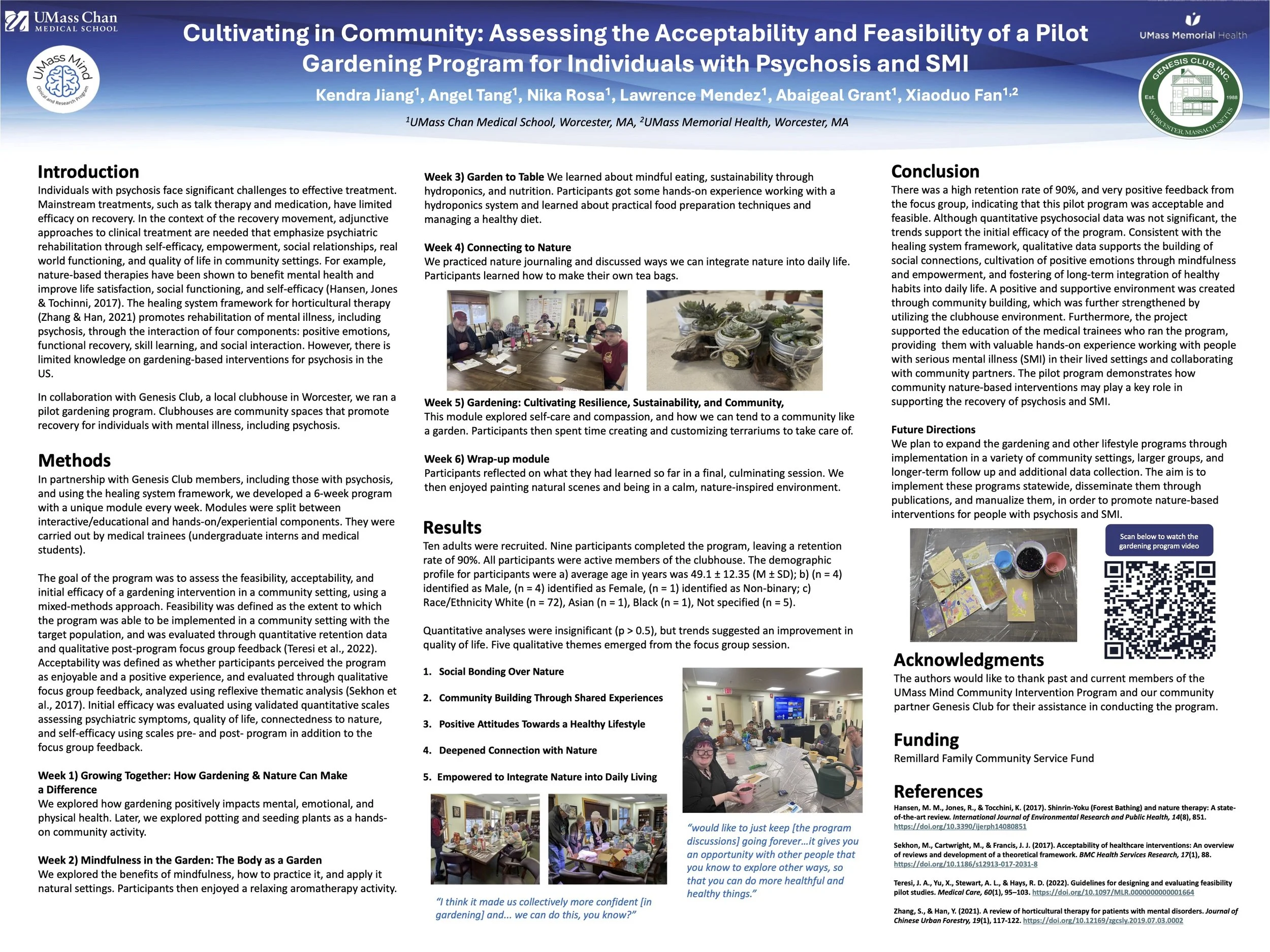
Background: Current treatments for psychosis, such as medications and talk-based therapy, are helpful but have limited efficacy for some patients. Complementary and alternative approaches, such as nature-based therapy, may hold promises for filling this gap. Nature-based therapy has been widely explored, mostly in countries outside the US. We ran a pilot gardening program for individuals with psychosis to examine the feasibility and acceptability of this novel approach in a community setting.
Methods: UMass Mind piloted a 6-week gardening program in collaboration with Genesis Club, a local clubhouse that provides a community space to support mental health recovery. Each week, which included an educational session and hands-on interactive session, featured a unique module. Sessions focused on gardening logistics, mindfulness, garden-to-table practices, personal connections to nature, community and self-care, and nature-based self-expression. Activities included herb-planting, aromatherapeutic exercises, mindful eating, and terrarium customization. Four quantitative scales, including the Brief Psychiatric Rating Scale (BPRS), Quality of Life Enjoyment and Satisfaction Scale (Q-LES-Q-SF), Connectedness to Nature Scale (CNS), and Generalized Self-Efficacy Scale (GSES), were administered pre- and post-program. Qualitative data was collected via a post-program focus group.
Results: Ten participants enrolled in the program, and nine completed it. Although no significant changes in rating scales were observed over the 6-week intervention, the findings suggest a trend toward increased quality of life. Thematic analysis of the focus group found that participants were highly satisfied with the gardening program; they reported it helped them build social connections, cultivate positive emotions through mindfulness, and foster long-term integration of healthier habits into their daily lives.
Conclusions: Our pilot gardening program demonstrated the feasibility, acceptability, and potential benefits of a gardening program in a clubhouse setting. Future iterations will collect additional data and further explore the potential impact of gardening on mental and physical health among people with psychosis.