Nov
2
9:30 AM09:30

Expanding Access to Evidence-Based Resources: Crafting Support Takea picture tolearn Project Family Webinar Series

Expanding Access to Evidence-Based Resources: Crafting Support

Matthew Doherty (1), Julie M. McCarthy (1,2)
1. Division of Psychotic Disorders, McLean Hospital, Belmont, MA
2. Department of Psychiatry, Harvard Medical School
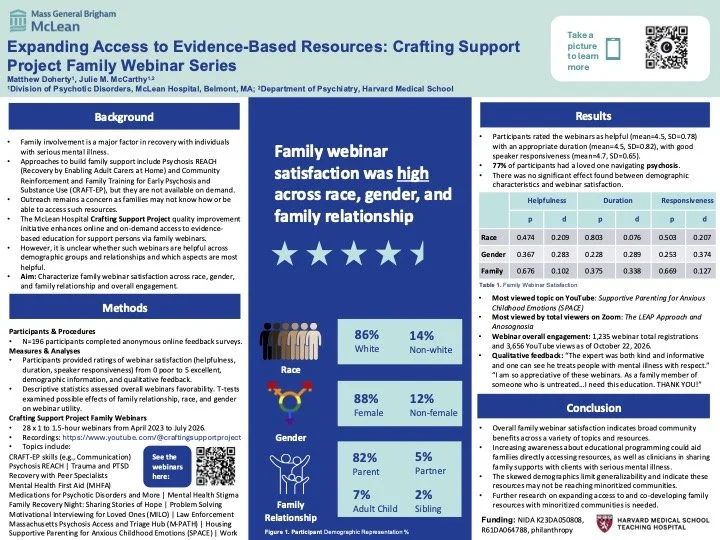
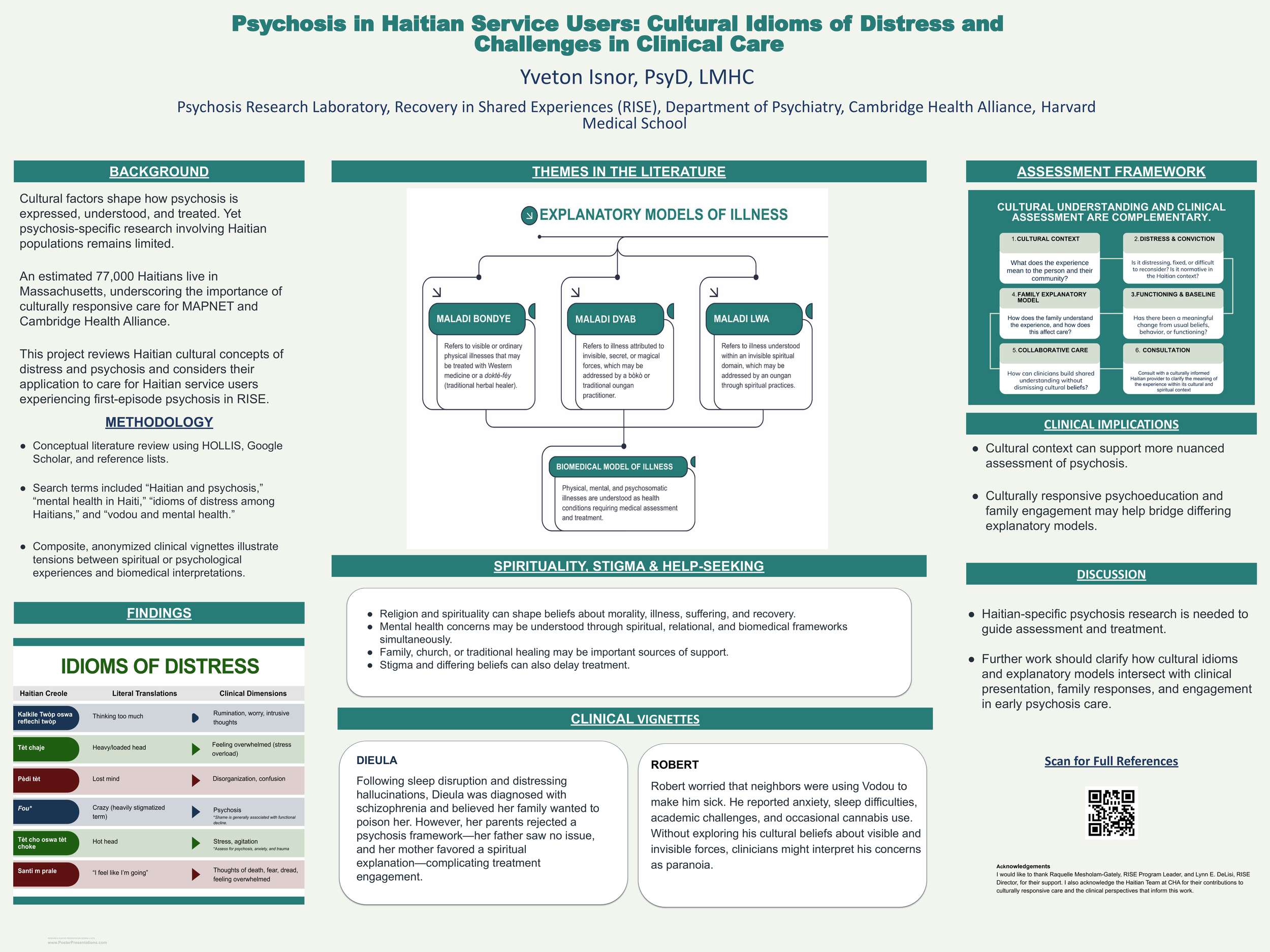
Background: Family involvement is a major factor in recovery for individuals with serious mental illness. Existing approaches to build family support include Psychosis REACH (Recovery by Enabling Adult Carers at Home) and Community Reinforcement and Family Training for Early Psychosis and substance use (CRAFT-EP). However, outreach remains a concern as families may not know how or be able to access these resources. The Crafting Support Project quality improvement initiative aims to enhance access to evidence-based education for support persons of loved ones navigating mental health recovery.

Methods: N=196 participants completed Crafting Support Project Family Webinar Series anonymous online feedback surveys from 28 webinars between 2023 and 2026. Participants provided ratings of webinar qualities (helpfulness, duration, speaker responsiveness) from 0 to 5, demographic information, and qualitative feedback. Descriptive statistics assessed overall webinars favorability. T-tests examined possible effects of family relationship, race, and gender on webinar utility.

Results: Participants rated the webinars as helpful (mean=4.5, SD=0.78) with an appropriate duration (mean=4.5, SD=0.82), with good speaker responsiveness (mean=4.7, SD=0.65). Participants were primarily parents (82%) identifying as white (86%) and female (88%). Participants’ loved one(s) most commonly experienced psychosis (43%). There was no significant effect of demographic characteristics on webinar ratings (p>.05). As of August 12, 2026, the webinars had 2,792 YouTube views with Communication Skills: Building Trust and Understanding being the most viewed topic.

Conclusion: Overall favorability of the webinars was high regardless of family role, race, or gender, indicating broad community benefits from outreach and support. Increasing awareness about such educational programming would also likely benefit mental health clinicians interested in sharing accessible family supports with their clients and their families. The sample’s skew regarding demographics limits generalizability of results and indicates these resources may not be reaching minoritized communities. Further research on developing family resources with minoritized communities is needed.
View Event →
Nov
2
9:30 AM09:30

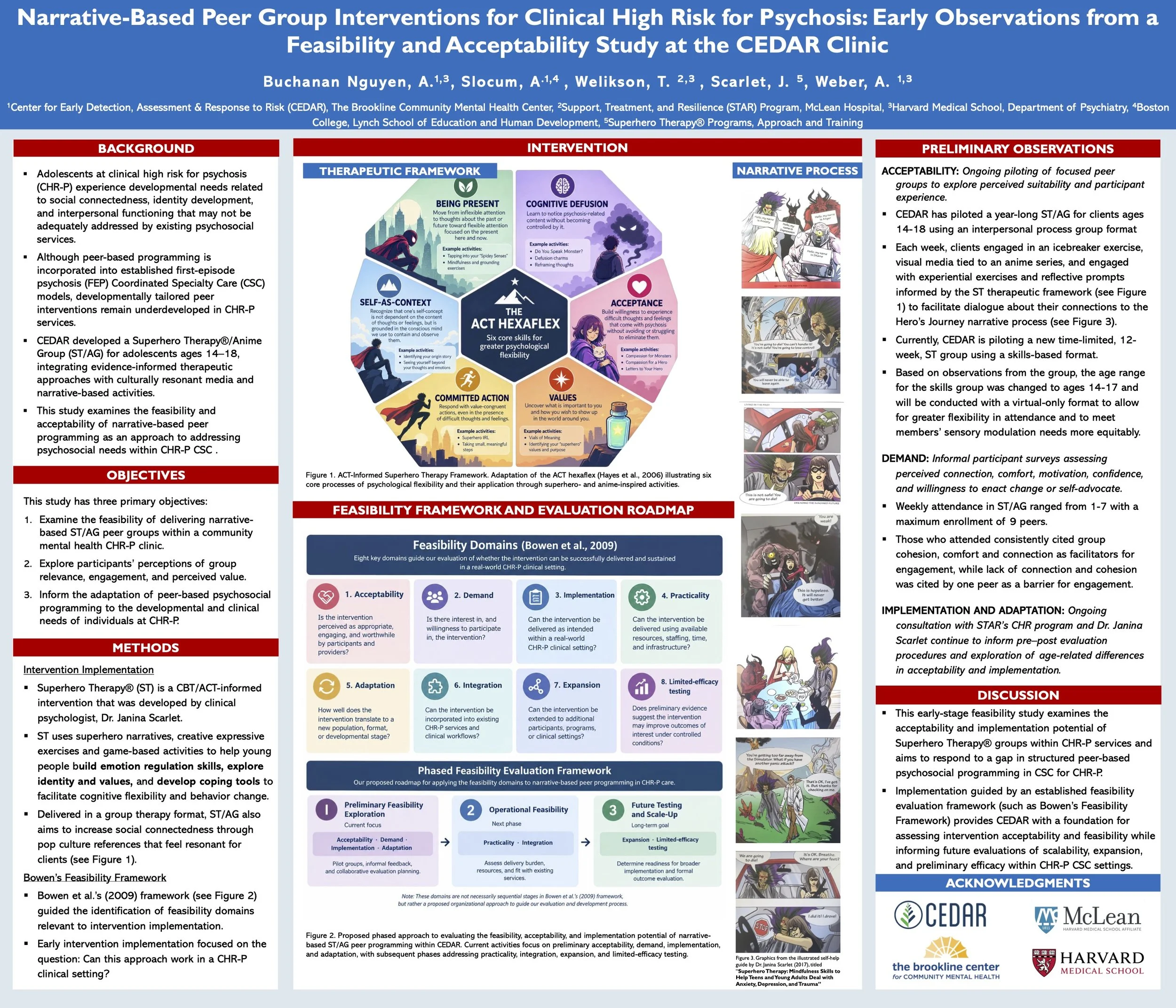
Narrative-Based Peer Group Interventions for Clinical High Risk for Psychosis: Early Observations from a Feasibility and Acceptability Study at the CEDAR Clinic

Narrative-Based Peer Group Interventions for Clinical High Risk for Psychosis: Early Observations from a Feasibility and Acceptability Study at the CEDAR Clinic

Allison Slocum, CEDAR Clinic/BCCMH
Tamara Welikson, STAR Clinic/McLean Hospital
Janina Scarlet, creator of Superhero Therapy; consulting psychologist with CEDAR and STAR
Amanda Weber, CEDAR Clinic/BCCMH

Background: Coordinated Specialty Care (CSC) clinics for clinical high risk for psychosis (CHR-P) serve a population with substantial unmet needs in social connectedness, identity development, and treatment engagement, yet peer group-based psychosocial interventions targeting these domains remain underdeveloped. The CEDAR Clinic is a specialized CHR-P CSC program and is part of the Massachusetts Psychosis Prevention Partnership (M3P), a statewide consortium funded by the Substance Abuse and Mental Health Services Administration (SAMHSA). In response to the need for developmentally appropriate and culturally responsive approaches to these domains, CEDAR has offered a Superhero Therapy/Anime Group (ST/AG) for adolescents ages 14–18. The ST/AG integrates Acceptance and Commitment Therapy (ACT), Cognitive Behavioral Therapy (CBT), and superhero/anime-based narrative frameworks to promote identity development, intrapersonal meaning-making, and social connectedness through engagement with culturally resonant media. Given the limited availability of peer group-based interventions within CHR-P CSC, this study examines whether the ST/AG's culturally resonant and evidence-informed format is feasible and acceptable for implementation in CHR-P CSC settings.

Methods: This retrospective and prospective secondary data analysis examined feasibility and acceptability of the ST/AG delivered as routine clinical care at CEDAR. Feasibility was indexed by enrollment, session attendance, and completion rates. Acceptability was assessed using a group-specific questionnaire and participants were provided with the opportunity to provide qualitative feedback regarding their group experience.

Results: Data collection is ongoing. This poster will present the study design, rationale, and measurement approach as well as observed facilitators and barriers to feasibility and acceptability in a CHR-P CSC setting.

Conclusions: This project aims to address a gap in developmentally appropriate, culturally engaging peer group interventions for CHR-P populations. By generating foundational feasibility and acceptability data, the study aims to inform future regional dissemination of these models, supporting statewide goals of early intervention and evidence-based care.

View Event →
Nov
2
9:30 AM09:30

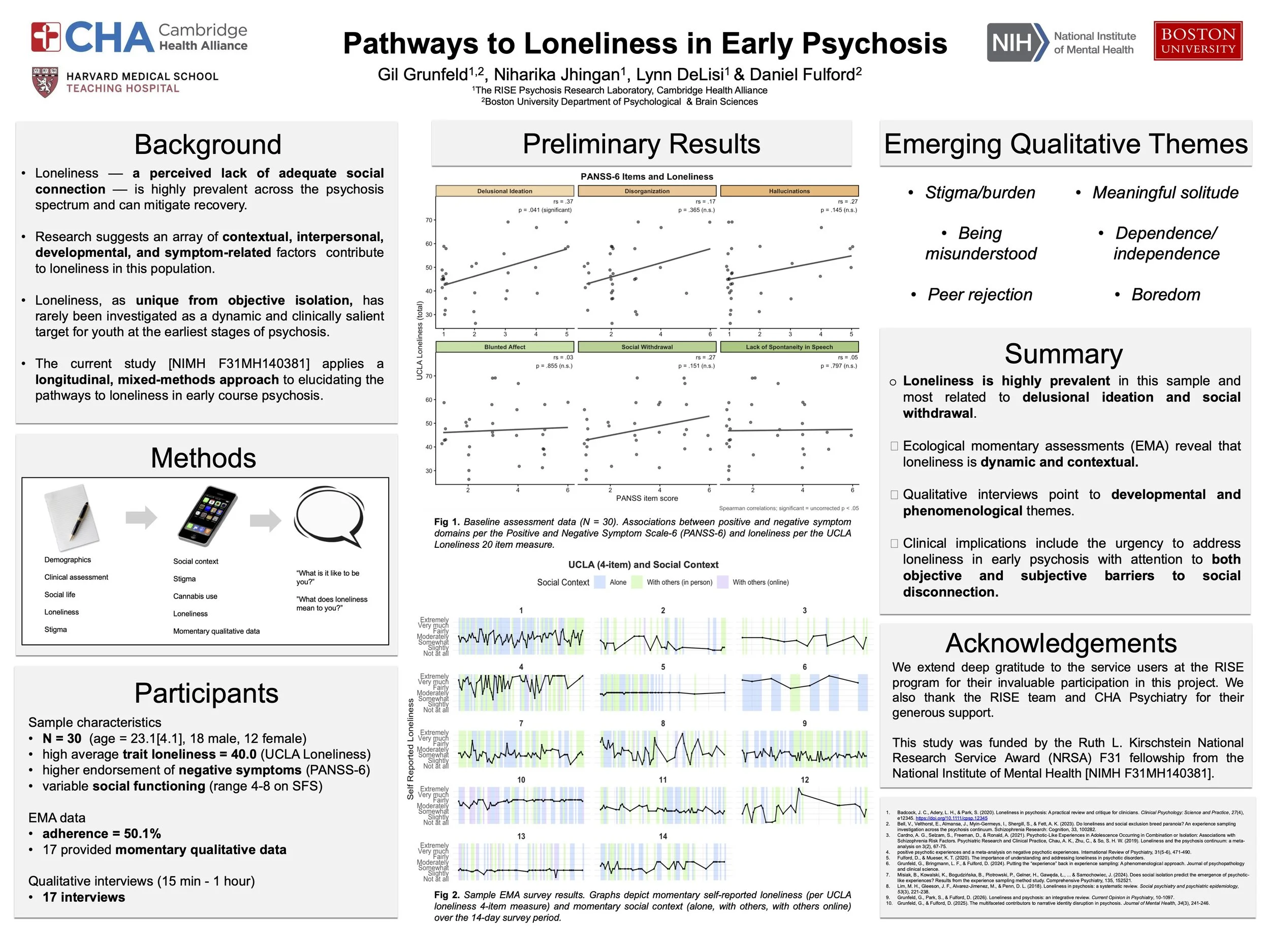
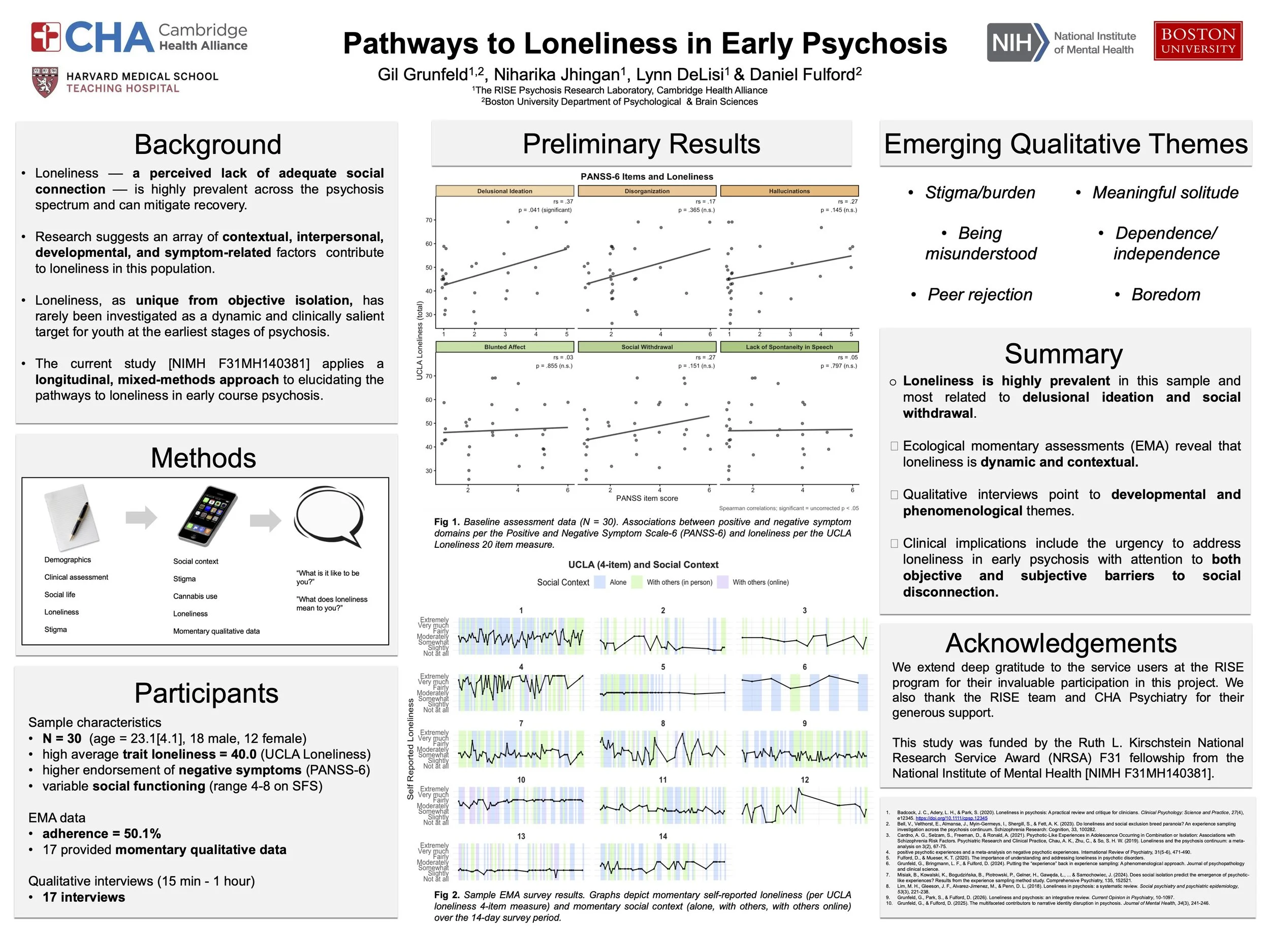
Pathways to Loneliness in Early Psychosis

Pathways to Loneliness in Early Psychosis

Gil Grunfeld (1,2), Niharika Jhingan (1), Lynn DeLisi (1) & Daniel Fulford (2)
1. The RISE Psychosis Research Laboratory, Cambridge Health Alliance
2. Boston University Department of Psychological & Brain Sciences

Background: Loneliness, the subjective experience of social disconnection, is prevalent across the psychosis spectrum, with negative consequences for physical health, symptom trajectory, and overall wellbeing. Loneliness is particularly salient for youth at the earliest stages of illness, given unique contributions of developmental (e.g., identity formation), social (e.g., stigma), and illness related factors (e.g., psychosis symptomatology). Despite its relevance for early intervention, little is known about correlates of loneliness in the daily lives of youth recovering from early psychosis, and few studies have explored the lived experience of loneliness in this population.

Methods: Data were drawn from the Pathways to Loneliness in Early Psychosis study at Cambridge Health Alliance’s Recovery in Shared Experiences (RISE) Program [F31MH140381]. Analyses include ecological momentary assessment (EMA) data in 30 participants over two weeks. EMA questions captured experiences of social connection, disconnection, and related phenomena (e.g., stigma, belongingness). Participants also provided real-time qualitative reflections on loneliness and a subset completed full qualitative interviews following the EMA period.

Results: Descriptive analyses reflected heterogeneity of loneliness in daily life. For some participants, momentary loneliness fluctuated substantially across the two-week period, while others reported more persistent disconnection. We will also present follow-up analyses of our intensive longitudinal data using multilevel modeling to elucidate between- and within- participant differences in loneliness across the study duration. Preliminary qualitative reflections illuminated proximal contributors to loneliness, including stigma, social rejection, and unmet needs for belonging, as well as structural challenges.

Conclusions: The current project is the first to explore loneliness through a dynamic, mixed-methods, intensive longitudinal approach in youth with early psychosis. We suggest structural, developmental, social, and symptom-related factors interact to contribute to the subjective experience of disconnection in youth with psychosis spectrum diagnoses. We discuss avenues for addressing loneliness and it correlates in the context of early intervention.

View Event →
Nov
2
9:30 AM09:30

Preliminary clinical cohort outcomes of a brief, hybrid care clinic model for individuals with psychosis

Preliminary clinical cohort outcomes of a brief, hybrid care clinic model for individuals with psychosis

Sunnie Li¹, Victoria Lisowski¹, Andrew Jin Soo Byun¹, Kathryn Taylor Ledley¹, Brian Sampson, Maddalena Cipriani¹, Matcheri Keshavan¹, Michelle Friedman-Yakoobian¹, John Torous¹

¹ Department of Psychiatry, Beth Israel Deaconess Medical Center, Harvard Medical School, Boston, MA, USA

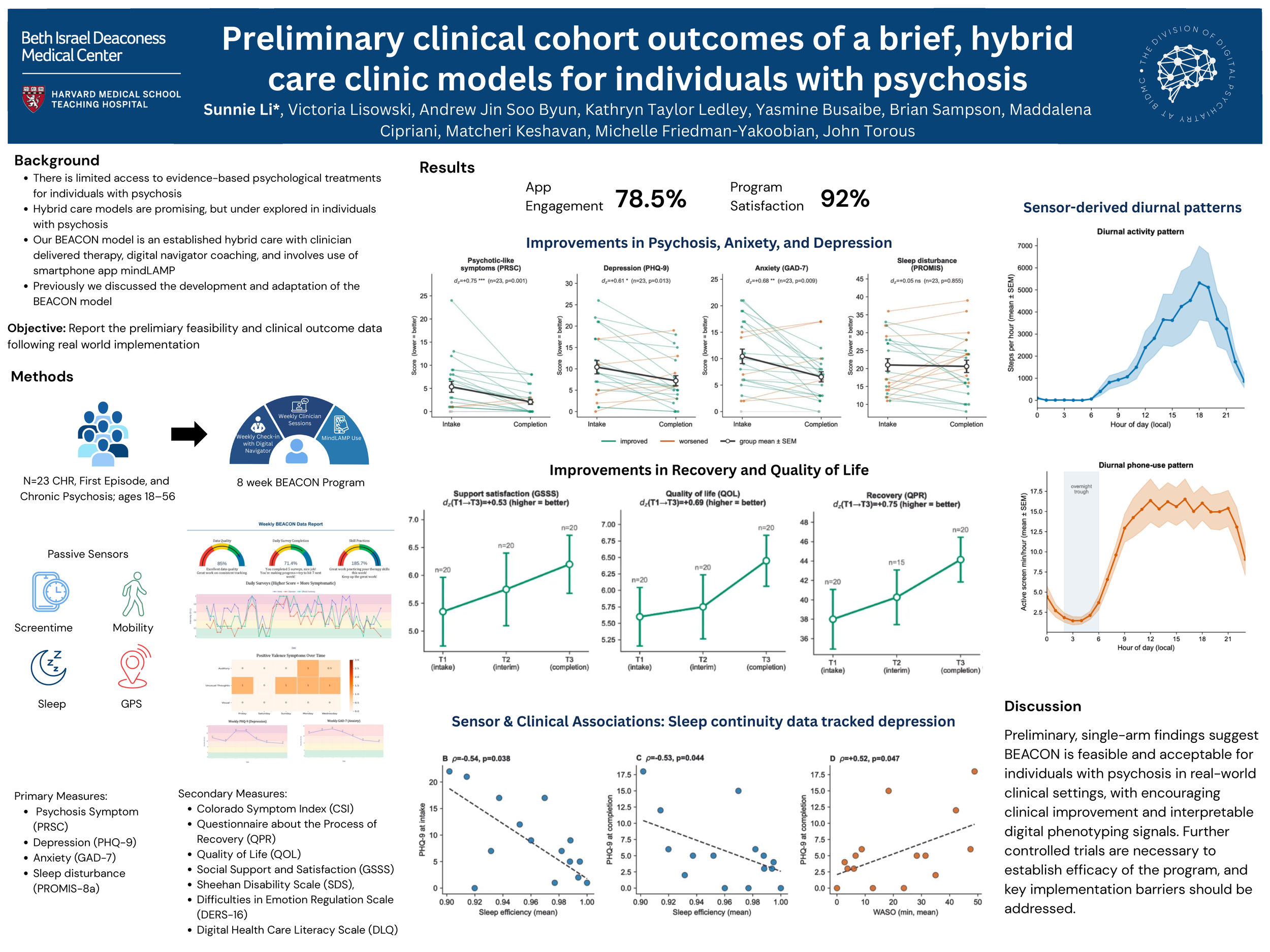
Background: With limited access to evidence-based psychological treatments for individuals with psychosis, hybrid digital care models are promising yet remain under-explored in naturalistic psychosis populations. Our BEACON model adapts an established hybrid care model (with clinician-delivered therapy, the mindLAMP smartphone app, and Digital Navigator coaching) for individuals with psychosis. Having presented previously on the development and adaptation of the BEACON model, this poster reports preliminary feasibility and clinical outcome data from its initial real-world implementation.

Methods: A preliminary clinical cohort (N=23) spanning the psychosis spectrum (Clinical High Risk, First Episode, and Chronic Psychosis; ages 18–56) completed the 8-week BEACON program. Primary clinical outcomes (attenuated psychosis symptoms, anxiety, depression, sleep disturbance), secondary measures (recovery, quality of life, disability, emotion regulation, etc.), and passive digital phenotype data (steps, screen time, GPS mobility) were collected from intake to completion.

Results: Patients demonstrated 78.5% app engagement and 92% program satisfaction. From intake to completion, patients showed medium-to-large improvements in attenuated psychosis symptoms (d_z=+0.75), anxiety (d_z=+0.68), and depression (d_z=+0.61), with no significant change in sleep disturbance. Secondary measures moved in favorable directions, most notably self-worth/recovery (d_z=+0.75) and quality of life (d_z=+0.69). Passive sensing data revealed coherent behavioral patterns (diurnal activity rhythms, expected phone-use trends), and exploratory associations linked greater sleep continuity and GPS mobility diversity to lower symptom burden.

Conclusion: These preliminary, single-arm findings suggest BEACON is feasible and acceptable for individuals with psychosis in real-world clinical settings, with encouraging clinical improvement and interpretable digital phenotyping signals. Further controlled trials are necessary to establish efficacy of the program, and key implementation barriers should be addressed.

View Event →
Nov
2
9:30 AM09:30

Implementation of a Community Health Worker to Improve Engagement in First-Episode Psychosis Patients

Implementation of a Community Health Worker to Improve Engagement in First-Episode Psychosis Patients

Katlyne Dessaint-Louis, CHW¹, Morgan Ellis, MHS¹, Brittany Gouse, MD, MPH¹,², Anne Berrigan, LICSW¹, Ellie Reagan, MSW¹, Devin Cromartie Bodrick, MD, MPH¹,², Samantha LaMartine, PsyD¹,², Anissa Ray, CHW³, Hannah E. Brown, MD¹,²

¹ Wellness and Recovery After Psychosis (WRAP) Program, Boston Medical Center, Boston, MA
² Boston University Chobanian and Avedisian School of Medicine, Boston, MA
³ Boston Public Health Commission, Boston, MA

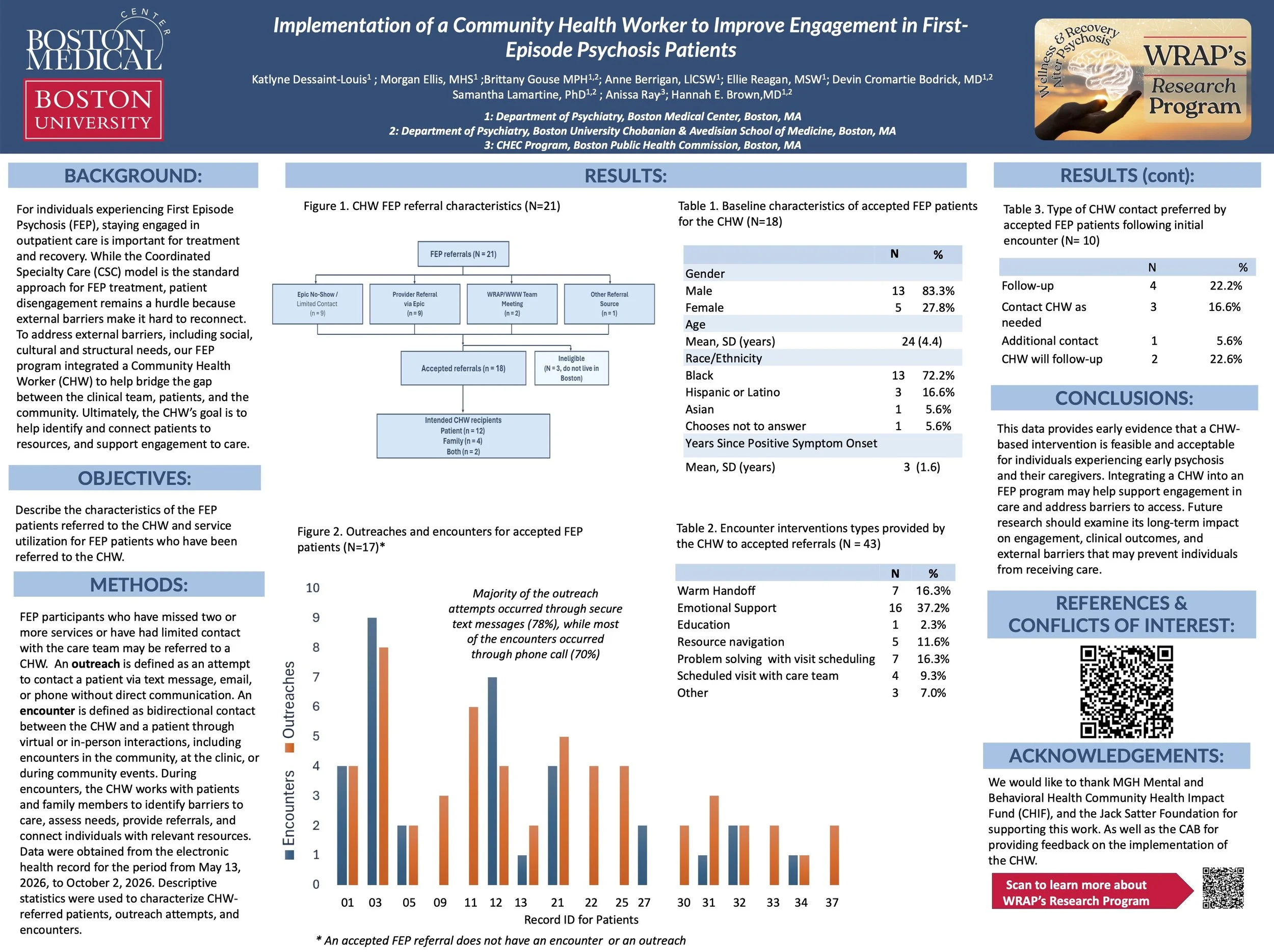
Background: For individuals with First-Episode Psychosis (FEP), engagement in outpatient care is essential. Although Coordinated Specialty Care (CSC) is the gold standard for FEP care, disengagement is a challenge that can worsen social functioning and quality of life, as outcome trajectories are often established early in the disorder. Studies show that integrating Community Health Workers (CHWs) into behavioral health settings can increase treatment engagement. However, research on CHWs' effects on FEP patients remains limited. To improve treatment engagement among individuals experiencing FEP, the Wellness Recovery After Psychosis (WRAP) Program integrated a CHW to reduce structural, cultural, and social barriers to treatment engagement.

Methods: WRAP program participants who have missed 2+ services or are identified through limited contact patient lists are referred to CHW services. After a patient is referred, the CHW outreaches via text, email, or phone call. The CHW can also meet with the patient or their family member in the community or clinic, during which time referrals are made, and they are connected to resources.

Results: There were 16 (43%) individuals referred to the CHW that met FEP criteria. Half of FEP referrals (n=8) came from the no-show list. Some referrals (n=3; 19%) were for the CHW to work with only the family. Text messages were the most common outreach method (71%). Most encounters were over the phone (77%) and lasted less than 10 minutes (58%). Key interventions provided included emotional support (46%) and problem-solving around visit scheduling (23%). Primarily, transportation was an ongoing barrier to care (63%). Most follow-up plans after the encounters were scheduled meetings (35%). The median number of encounters per patient was 2.5 (IQR = 1.3-4.0)

Conclusion: Integrating a CHW into a CSC program is feasible and may improve disengagement rates among FEP patients. Longer term follow-up is needed to determine the longitudinal benefits.

View Event →
Nov
2
9:30 AM09:30

Metacognitive Reflection and Insight Therapy (MERIT) in First-Episode Psychosis Care: A Conceptual Framework

Metacognitive Reflection and Insight Therapy (MERIT) in First-Episode Psychosis Care: A Conceptual Framework

Sebastián Marcos Hernández-Del Valle¹,²,⁴; Ashley Buchanan-Nguyen¹,³,⁴,⁵,⁶; Faith Breisblatt¹,³; Tatiana Bennett¹,²,⁴,⁵; Emily Gagen⁴,⁵,⁶

¹ Advancing Services for Psychosis Integration and Recovery (ASPIRE) Clinic, Beth Israel Deaconess Medical Center (BIDMC), Boston, MA
² Massachusetts Mental Health Center, Department of Mental Health, Boston, MA
³ Department of Psychiatry, BIDMC, Boston, MA
⁴ Department of Psychiatry, Harvard Medical School, Boston, MA
⁵ The Brookline Center for Community Mental Health, Brookline, MA
⁶ Massachusetts Psychosis Access and Triage Hub (M-PATH), Brookline, MA

Poster: Metacognitive Reflection and Insight Therapy, Sebastián Hernández-Del Valle and colleagues

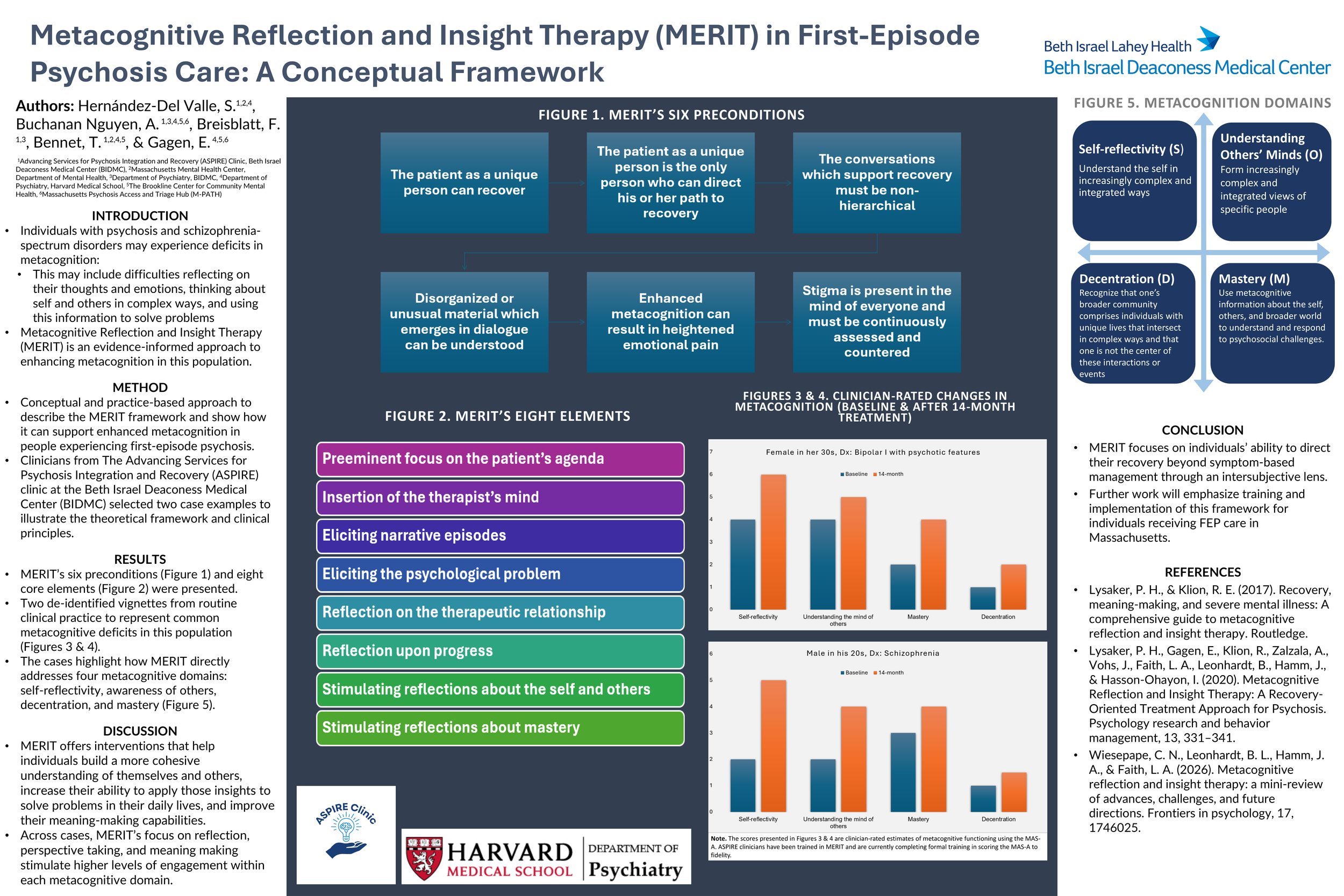
Background: Individuals recovering from psychosis and schizophrenia-spectrum disorders may experience deficits in metacognition, including difficulties reflecting on their thoughts and emotions and using this information to effectively solve problems. Metacognitive Reflection and Insight Therapy (MERIT) is an evidence-informed approach to enhancing metacognition in this population, offering interventions that help individuals build a more cohesive understanding of themselves and others, increase their ability to apply those insights to solve problems in their daily lives, and improve their meaning-making capabilities.

Method: This poster uses a conceptual and practice‑based approach to describe the MERIT framework and show how it can support enhanced metacognition in people experiencing first-episode psychosis (FEP). Clinicians from The Advancing Services for Psychosis Integration and Recovery (ASPIRE) clinic at the Beth Israel Deaconess Medical Center (BIDMC) selected two case examples to illustrate the theoretical framework and clinical principles.

Results: MERIT’s six preconditions and eight core elements were presented, as well as two de‑identified vignettes from routine clinical practice to represent common metacognitive deficits in this population. The cases highlight how MERIT directly addresses four metacognitive domains: self‑reflectivity, awareness of others, decentration, and mastery.

Discussion: MERIT is an evidence-informed and established intervention to provide clinical support to individuals recovering from FEP and schizophrenia-spectrum disorders at FEP clinics across the state of Massachusetts. The framework and vignettes help illustrate how MERIT’s principles can be applied to common metacognitive challenges in psychosis. Across cases, MERIT’s focus on reflection, perspective taking, and meaning making stimulate higher levels of engagement within each metacognitive domain.

Conclusion: MERIT focuses on individuals’ ability to direct their recovery beyond symptom-based management through an intersubjective lens. Further work will emphasize training and implementation of this framework for individuals receiving FEP care in Massachusetts.

View Event →
Nov
2
9:30 AM09:30

Theoretical and Empirical Support for Implementation of Mentalization Based Interventions for Parents and Caregivers of CHRp Youth

Theoretical and Empirical Support for Implementation of Mentalization Based Interventions for Parents and Caregivers of CHRp Youth

Drew Madore, PsyD¹,²; Yves Isnor, PsyD¹,²; Raquelle Mesholam-Gately, PhD¹,²

¹ Psychosis Research Laboratory, Recovery in Shared Experiences (RISE), Department of Psychiatry, Cambridge Health Alliance, Cambridge, MA
² Harvard Medical School, Boston, MA

Poster: Mentalization based interventions for parents and caregivers of CHRp youth, Drew Madore and colleagues

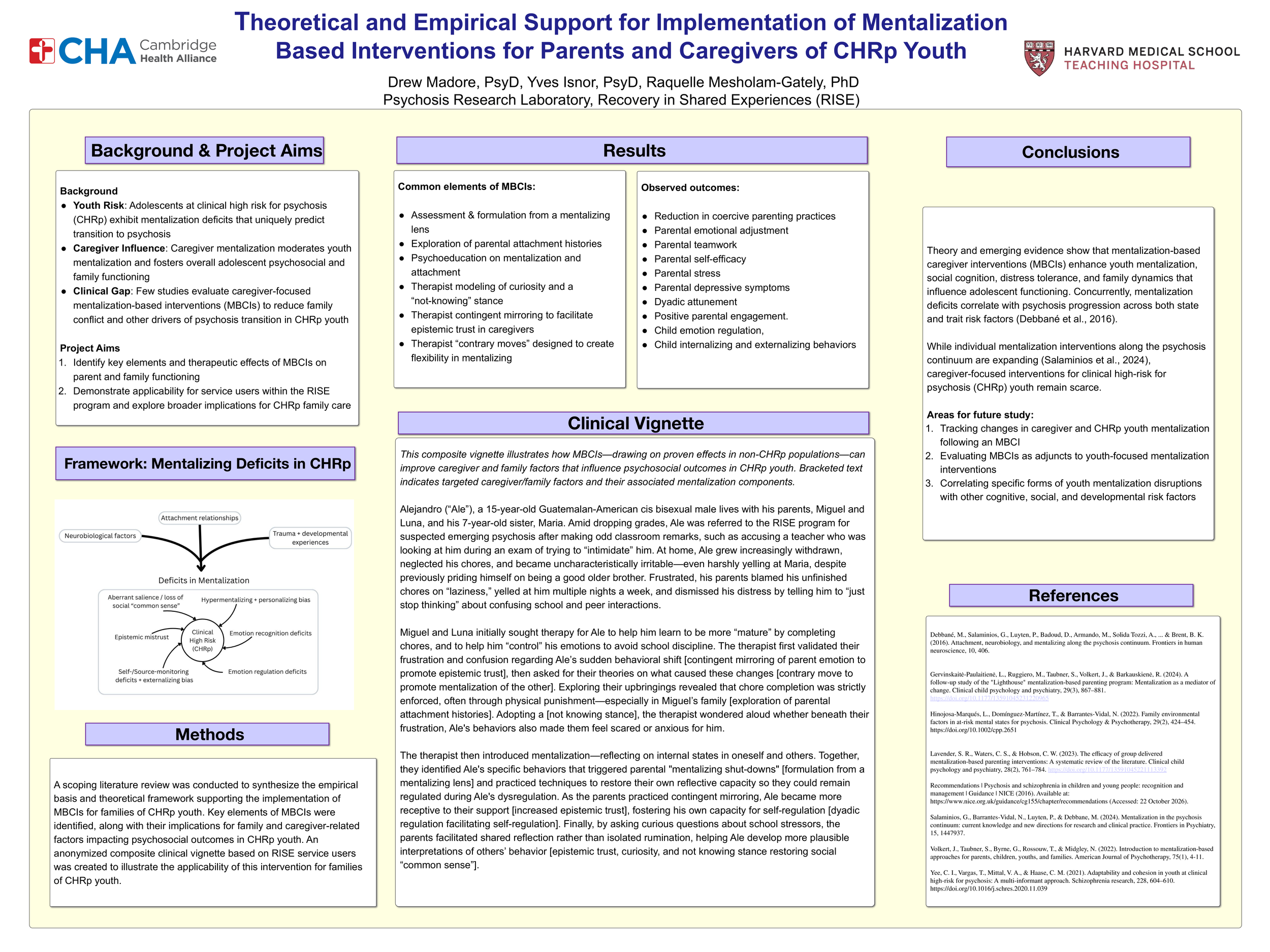
Background: Adolescents at clinical high risk for psychosis (CHRp) have been found to exhibit deficits in mentalization, with said difficulties also being identified as unique predictors of transition to psychosis in CHRp populations. Parent/caregiver mentalization has been posited as a key moderator of child mentalization, in addition to promoting greater overall familial functioning and adolescent psychosocial functioning. However, there are few studies examining the efficacy of mentalization based interventions for parents and caregivers of CHRp youth, and their potential for reducing family conflict and other drivers of transition to psychosis in CHRp youth. In light of the demonstrated links between family functioning, caregiver mentalization, and youth psychopathology, there is a need to examine the effects of a mentalization based caregiver intervention (MBCI) in families of youth designated as CHRp.

Methods: A systematic literature review was conducted to synthesize the empirical basis and theoretical framework supporting the implementation of an MBCI for families of CHRp youth. Additionally, an anonymized composite clinical vignette based on RISE service users was created to illustrate the applicability of this intervention for families of CHRp youth.

Results: Studies demonstrated that caregiver-focused mentalization based interventions correlate with reductions in child/adolescent psychopathology, improvements in adolescent psychosocial functioning, reductions in parent/caregiver stress, and improvements in familial functioning. Greater degrees of mentalization in parents are also correlated with greater degrees of mentalization and emotion regulation in youth across a wide range of diagnostic presentations.

Conclusion: There is a strong theoretical basis and emerging empirical evidence supporting the link between MBCIs in promoting improved mentalization, social cognition, and decreased distress in youth, providing a strong rationale for the utility of these interventions in reducing the risk of transition to psychosis in CHRp youth. Implications for intervention design, assessment of CHRp youth and families, and service delivery are discussed.

View Event →
Nov
2
9:30 AM09:30

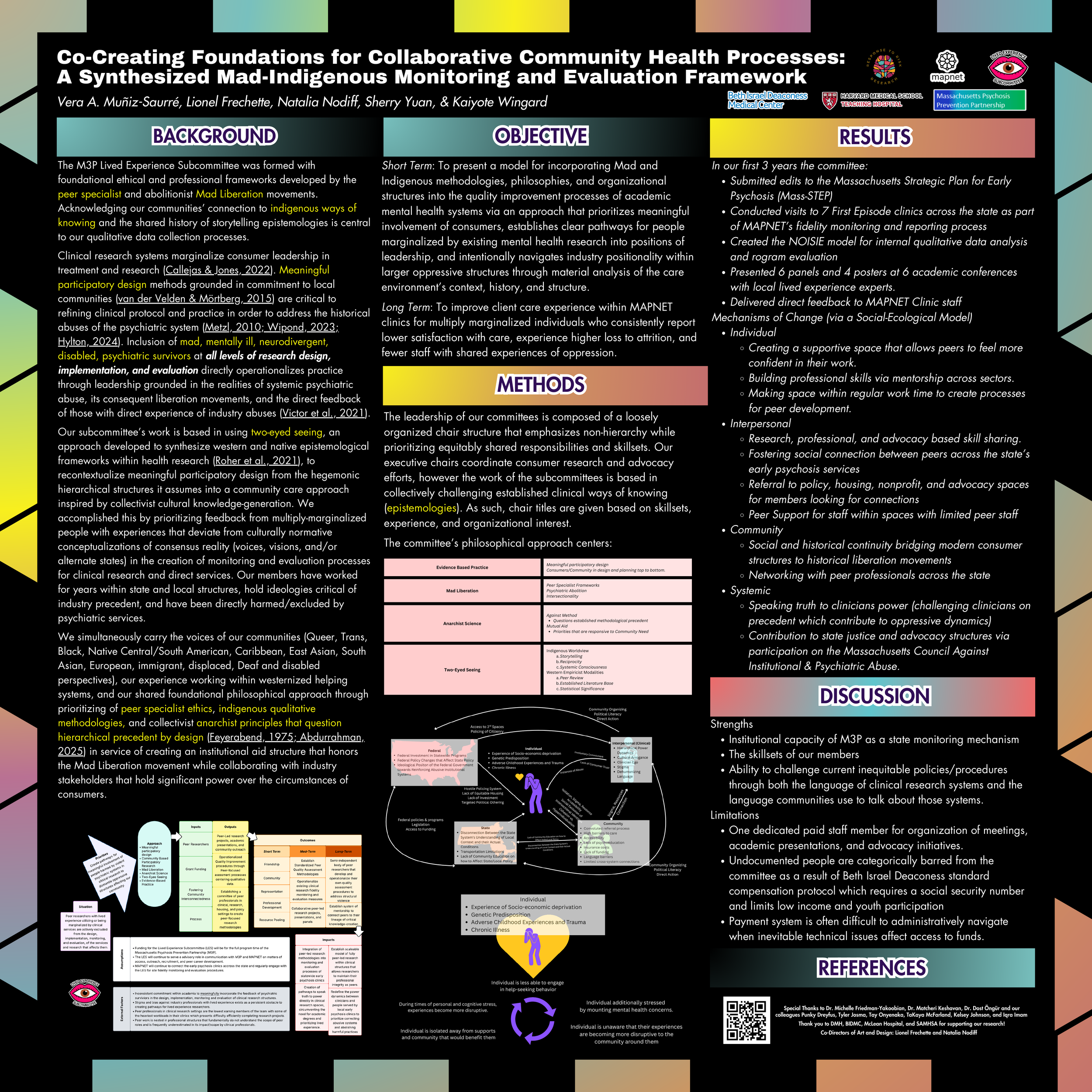
Co-Creating Foundations for Collaborative Community Health Processes: A Synthesized Mad-Indigenous Monitoring and Evaluation Framework

Co-Creating Foundations for Collaborative Community Health Processes: A Synthesized Mad-Indigenous Monitoring and Evaluation Framework

Vera Muñiz-Saurré, MPH, CPS¹; Natalia Nodiff, CPS; Sherry Yuan, CPS; Kaiyote Wingard; & Lionel Frechette, CPS

¹ Beth Israel Deaconess Medical Center, Boston, MA

Co-Creating Foundations for Collaborative Community Health Processes: A Synthesized Mad-Indigenous Monitoring and Evaluation Framework, poster by Vera Muñiz-Saurré and colleagues

Background: Clinical research systems marginalize consumer leadership in treatment and research. Meaningful participatory design methods grounded in commitment to local working-class communities are critical to refining clinical protocol and practice in order to address the historical abuses of the psychiatric system. Including mad, mentally ill, neurodivergent, disabled, psychiatric survivors at all levels of clinical research design, implementation, and evaluation allows for direct operationalization of practice through leadership grounded in the history of the Mad Liberation and Psychiatric Survivor movements and for direct feedback from those who have experienced industry abuses firsthand.

Methods: The leadership of our committees is composed of a loosely organized chair structure that emphasizes non-hierarchy while prioritizing equitably shared responsibilities and skillsets. Our executive chairs serve as a way of maintaining organization, however the work of the subcommittees is based in mutual effort towards challenging established clinical ways of knowing (epistemologies) which historically exclude and marginalize consumers regardless of experience and industry certifications through development of quality improvement research methodologies. Through this approach, we recontextualized meaningful participatory design by decentering the precedent of hegemonic hierarchical structures by centering development of our own foundational processes through collective synthesis of established peer specialist and anarchist epistemologies. The committee’s approach centers building capacity within our communities to support ourselves in the process of building epistemic infrastructure in parallel to the options available to us and develop standardized monitoring and evaluation processes using anarchist principles that challenge hierarchical methodological precedent by design.

Results: In our first 3 years, our lived experience research team has accomplished the creation of our own assessment, project design, implementation, and evaluation philosophy and approach to advocate for consumers both directly served and systemically excluded from early psychosis care spaces. The core of this is explored through logic models to create a roadmap of the healthcare ecosystem and case examples of how those models are used in the creation of the tools created by the committee (environmental scan guide implemented via MAPNET fidelity interview process, NOISIE Analysis reporting procedure, and interview structures designed to optimize qualitative data collection for peer researchers engaging clinical staff).

Discussion: The iterative work our committee has accomplished over the past 3 years has built a peer community network, a standard set of practices, and core philosophical approach to address the specific interconnected systems within psychiatric settings that contribute to inequities in the care experience of multiply-marginalized people. Through our collaborative approach that centers community perspectives, our intent is to standardize representative participatory methodologies and practices in the regular monitoring processes of MAPNET via the model we have developed in collaboration with the clinical research staff within MAPNET clinics.

View Event →
Nov
2
9:30 AM09:30

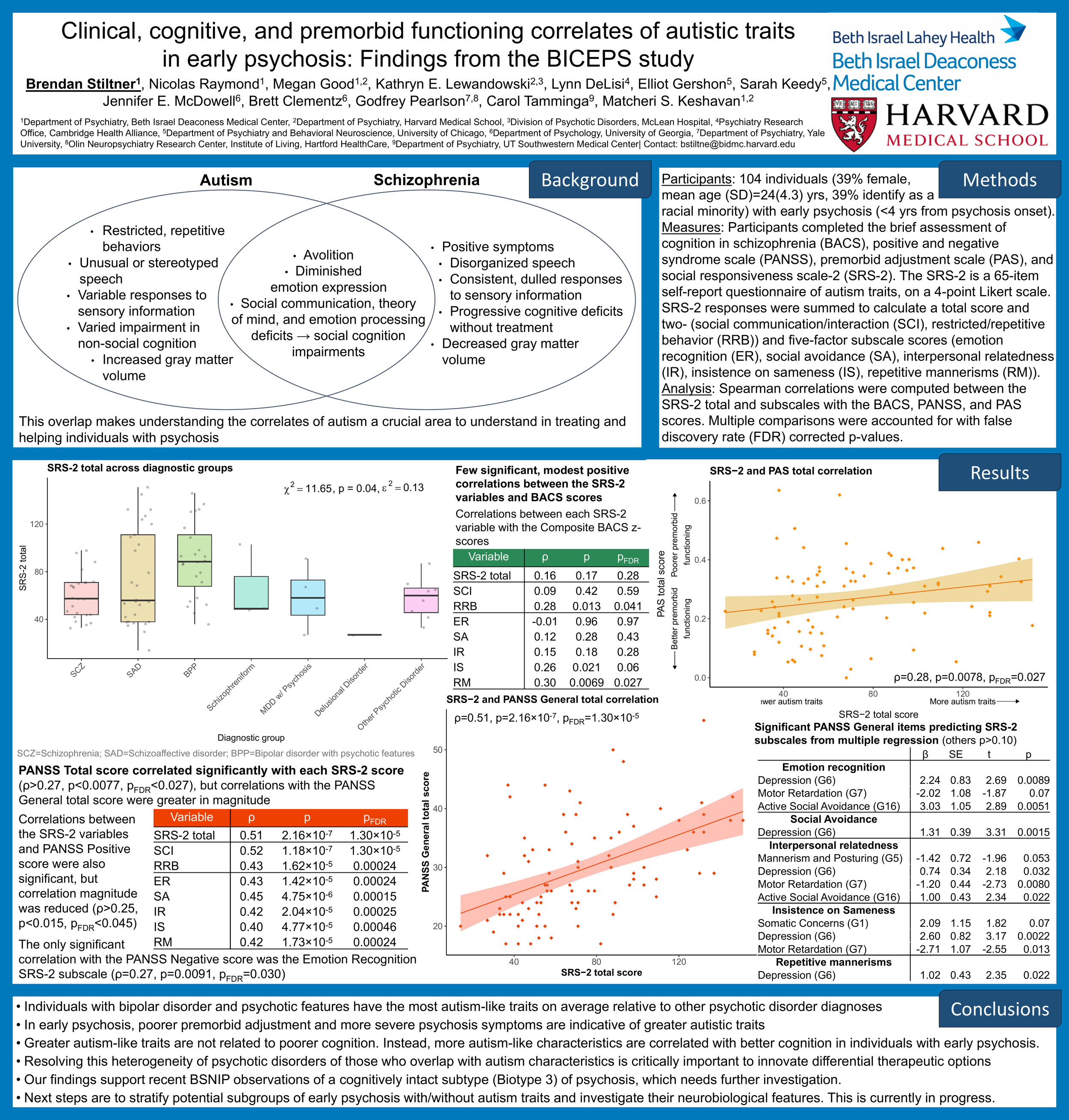
Clinical, cognitive, and premorbid functioning correlates of autistic traits in early psychosis: Findings from the BICEPS study

Clinical, cognitive, and premorbid functioning correlates of autistic traits in early psychosis: Findings from the BICEPS study

Brendan Stiltner (1), Nicolas Raymond (1), Megan Good (1, 2), Kathryn E. Lewandowski (2, 3), Lynn DeLisi (4), Elliot Gershon (5), Sarah Keedy (5), Jennifer E. McDowell (6), Brett Clementz (6), Godfrey Pearlson (7, 8), Carol Tamminga (9), Matcheri S. Keshavan (1, 2)

1. Department of Psychiatry, Beth Israel Deaconess Medical Center, Boston MA
2. Department of Psychiatry, Harvard Medical School, Boston MA
3. Division of Psychotic Disorders, McLean Hospital, Belmont MA
4. Psychiatry Research Office, Cambridge Health Alliance, Cambridge MA
5. Department of Psychiatry and Behavioral Neuroscience, University of Chicago, Chicago, IL
6. Department of Psychology, University of Georgia, Athens, GA
7. Department of Psychiatry, Yale University, New Haven, CT
8. Olin Neuropsychiatry Research Center, Institute of Living, Hartford HealthCare, Hartford, CT
9. Department of Psychiatry, UT Southwestern Medical Center, Dallas, TX

Background: Approximately 75% of genes associated with autism are also implicated in schizophrenia. Phenotypically, there is overlap between psychosis symptoms and autistic behaviors. However, research understanding how autistic traits impact outcomes of in early psychosis (EP) is lacking.

Methods: 104 participants (39.4% female, mean age (standard deviation)=24.04 (4.27) years, 39.4% identifying as a racial minority) with EP (<4 years from symptom onset) were enrolled and eligible. Participants completed the brief assessment of cognition in schizophrenia (BACS), positive and negative syndrome scale (PANSS), premorbid adjustment scale (PAS), and social responsiveness scale-2 (SRS-2). The SRS-2 quantifies autism traits, yielding total scores and two- (social communication/interaction (SCI), restricted/repetitive behavior (RRB)) and five-factor subscale scores (emotion recognition (ER), social avoidance, interpersonal relatedness, insistence on sameness, repetitive mannerisms (RM)). Spearman correlations were computed between the SRS-2 total and subscales with the BACS, PANSS, and PAS scores. The false discovery rate (FDR) corrected P-values.

Results: The PAS correlated significantly with the SRS-2 total (ρ=0.29, p=0.0056, FDR-p=0.025), SCI (ρ=0.29, p=0.0060, FDR-p=0.025), and ER scores (ρ=0.28, p=0.0078, FDR-p=0.027). The RM subscale correlated with the symbol coding (ρ=0.29, p=0.0080, FDR-p=0.027), verbal fluency (ρ=0.30, p=0.0069, FDR-p=0.027), and composite BACS scores (ρ=0.28, p=0.013, FDR-p=0.041), which the RBB score also correlated with (ρ=0.28, p=0.013, FDR-p=0.041). We found the SRS-2 total and all its subscales correlated significantly with PANSS total (ρ>0.27, p<0.0077, FDR-p<0.027) general (ρ>0.40, p<0.000048, FDR-p<0.00046) and positive scores (ρ>0.25, p<0.015, FDR-p<0.045). Additionally, the ER subscale correlated significantly with the PANSS negative subscale (ρ=0.27, p=0.0091, FDR-p=0.03). Other correlations were not significant (FDR-p>0.05).

Conclusion: Greater prevalence of autism-like traits in a sample of individuals with EP related to poorer premorbid functioning, more severe symptoms, but better cognition. While future work must evaluate the significance of baseline autism-like traits on longitudinal outcomes, results indicate the import of autistic traits to the presentation of EP.

View Event →
Nov
2
9:30 AM09:30

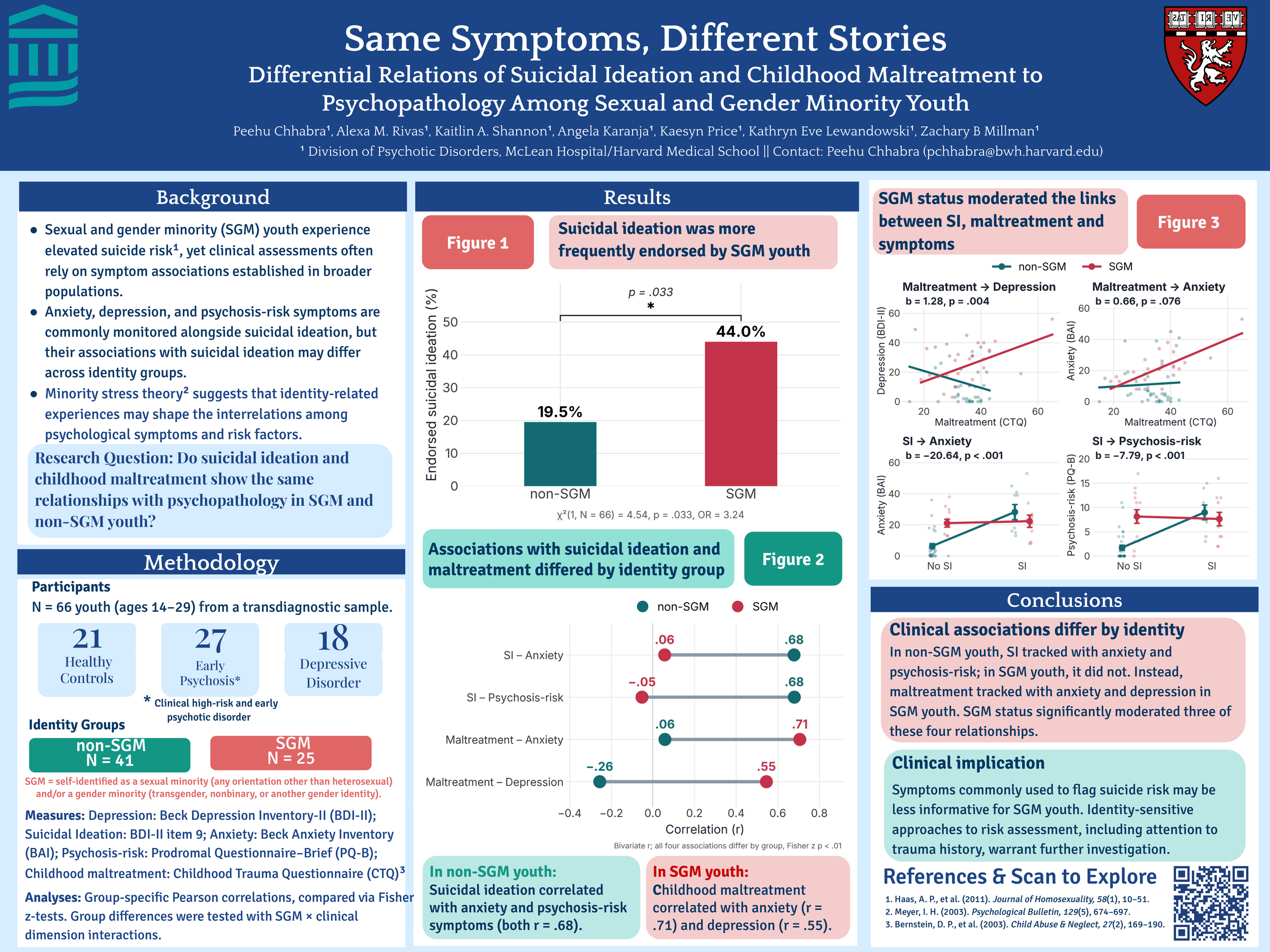
Same Symptoms, Different Stories: Differential Relations of Suicidal Ideation and Childhood Maltreatment to Psychopathology Among Sexual and Gender Minority Youth

Same Symptoms, Different Stories: Differential Relations of Suicidal Ideation and Childhood Maltreatment to Psychopathology Among Sexual and Gender Minority Youth

Peehu Chhabra¹,²; Alexa Marie Rivas¹,²; Kaitlin Ann Shannon¹,²; Angela Karanja¹,²; Kaesyn Price¹,²; Kathryn Eve Lewandowski¹,²; Zachary B Millman¹,²

¹ Division of Psychotic Disorders, McLean Hospital, Belmont, MA
² Harvard Medical School, Boston, MA

Poster: Same Symptoms, Different Stories, Peehu Chhabra and colleagues

Background: Sexual and gender minority (SGM) youth are overrepresented in psychosis-risk clinical populations and face markedly elevated suicide risk. Early-intervention services typically monitor anxiety, depression, and psychosis-risk symptoms as warning signs for suicidal ideation. However, minority stress theory predicts that identity-based stressors may alter how symptoms relate to one another. If pathways to suicidal ideation differ by identity, screening calibrated to majority populations may miss the SGM patients at greatest risk.

Methods: Sixty-six youth (ages 14–29) from a transdiagnostic sample (healthy controls n=21, clinical high-risk for psychosis n=27, depressive disorder n=18) were assessed on depression, anxiety, psychosis-risk, childhood maltreatment, and suicidal ideation. Correlation structures were compared across identity groups using Fisher z-tests, and maltreatment-to-depression moderation was tested via linear regression.

Results: SGM youth (n=25) endorsed suicidal ideation at over twice the rate of non-SGM youth (44.0% vs. 19.5%), yet associations differed sharply. In non-SGM youth, suicidal ideation correlated with anxiety (r=.68) and psychosis-risk experiences (r=.68); in SGM youth, those links were strikingly absent (r=.06, r=−.05; Fisher z ps<.01). Conversely, childhood maltreatment predicted anxiety (r=.71) and depression (r=.55) in SGM youth but not non-SGM youth (r=.06, r=−.26; Fisher z ps<.01), despite comparable maltreatment exposure. The SGM × maltreatment interaction confirmed this effect (b=1.28, p=.004).

Conclusion: The same symptoms do not carry the same meaning across identity groups. In SGM youth, traditional risk markers may be less relevant to suicidal ideation, while childhood maltreatment may be more strongly linked. As Massachusetts advances early intervention for psychosis, screening calibrated to majority populations may systematically miss SGM patients experiencing suicidal ideation. Identity-responsive screening, including routine assessment of maltreatment history, may be needed to reach this priority population equitably.

View Event →
Nov
2
9:30 AM09:30

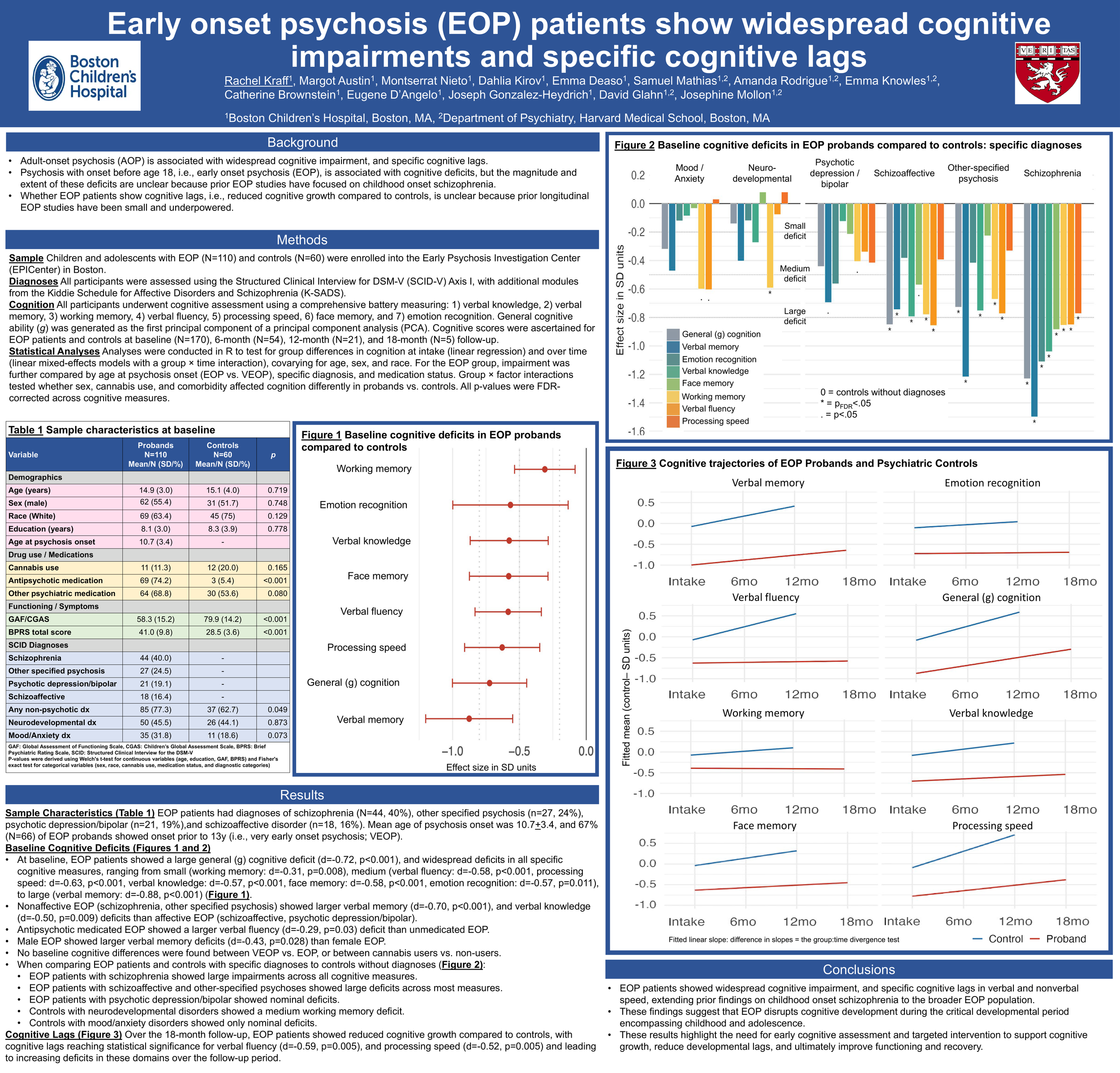
Early onset psychosis (EOP) patients show widespread cognitive impairment and specific cognitive lags in verbal and nonverbal speed

Early onset psychosis (EOP) patients show widespread cognitive impairment and specific cognitive lags in verbal and nonverbal speed

Rachel Kraff¹, Margot Austin¹, Montserrat Nieto¹, Dahlia Kirov¹, Emma Deaso¹, Samuel Mathias¹,², Amanda Rodrigue¹,², Emma Knowles¹,², Catherine Brownstein¹, Eugene D’Angelo¹, Joseph Gonzalez-Heydrich¹, David Glahn¹,², Josephine Mollon¹,²

¹ Department of Psychiatry and Behavioral Sciences, Boston Children’s Hospital, Boston, MA
² Department of Psychiatry, Harvard Medical School, Boston, MA

Poster: Early onset psychosis cognitive impairment and cognitive lags, Rachel Kraff and colleagues

Background: Psychosis with onset <18y, (early-onset psychosis; EOP), is associated with cognitive deficits. Yet, the extent of these deficits is unclear, as prior studies have focused on childhood-onset schizophrenia. Moreover, there are limited data clarifying whether EOP patients show cognitive lags.

Methods: Children/adolescents with EOP (N=110) and controls (N=60) participated. EOP patients had SCID diagnoses of schizophrenia (N=44, 40%), other specified psychosis (n=27, 24%), schizoaffective disorder (n=18, 16%), and psychotic depression/bipolar (n=21, 19%). Age of psychosis onset was 10.5+3.3y, and 67% (N=66) showed onset prior to 13y (very early onset psychosis; VEOP). Participants underwent cognitive assessment measuring: verbal knowledge, verbal memory, working memory, verbal fluency, processing speed, face memory, and emotion recognition. General cognitive ability (g) was generated as the first principal component of a PCA. Data were collected at baseline (N=172), 6-month (N=54), 12-month (N=20), and 18-month (N=5) follow-up. Baseline cognitive deficits, and cognitive lags (time-by-group interactions) in EOP compared to controls were tested.

Results: At baseline, EOP patients showed a large general deficit (d=-0.72, p<0.001) and small to large deficits in all specific measures: working memory: d=-0.31, p=0.008, verbal fluency: d=-0.58, p<0.001, processing speed: d=-0.63, p<0.001, verbal knowledge: d=-0.57, p<0.001, face memory: d=-0.58, p<0.001, emotion recognition: d=-0.57, p=0.011, and verbal memory: d=-0.88, p<0.001. Nonaffective EOP showed larger verbal memory (d=-0.70, p<0.001) and knowledge (d=-0.50, p=0.009) deficits than affective EOP. Antipsychotic medicated vs. nonmedicated EOP showed larger verbal fluency deficits (d=-0.29, p=0.03). Male vs. female EOP showed larger verbal memory deficits (d=-0.43, p=0.028). Throughout 18-month follow-up, EOP patients showed reduced cognitive growth compared to controls, with cognitive lags in verbal fluency (d=-0.59, p=0.005) and processing speed (d=-0.52, p=0.005), leading to increasing deficits over the follow-up period.

Conclusion: EOP patients showed widespread impairment and specific cognitive lags. These findings high-light the need for early identification/intervention to support cognitive growth/reduce developmen-tal lags and improve outcomes.

View Event →
Nov
2
9:30 AM09:30

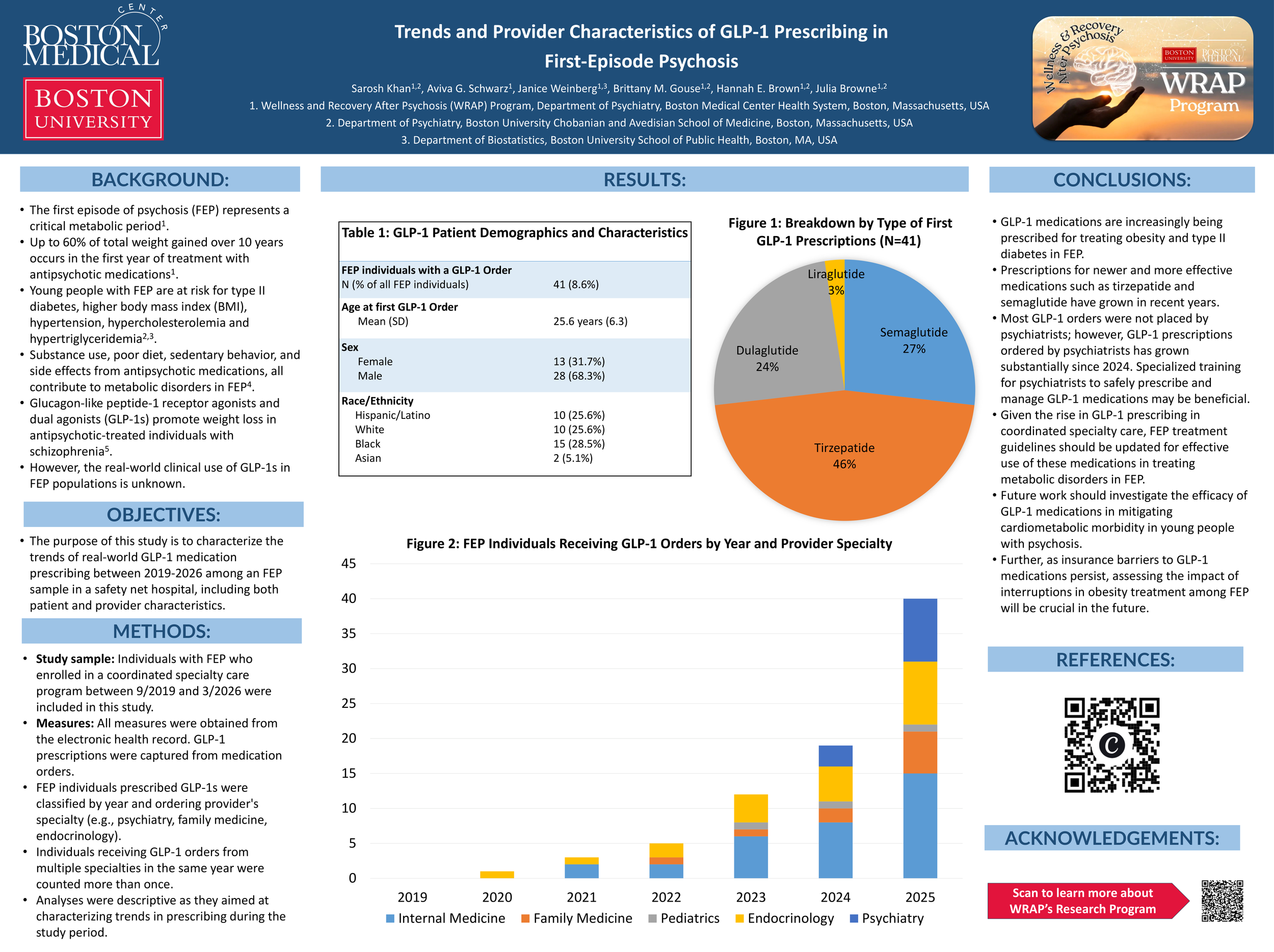
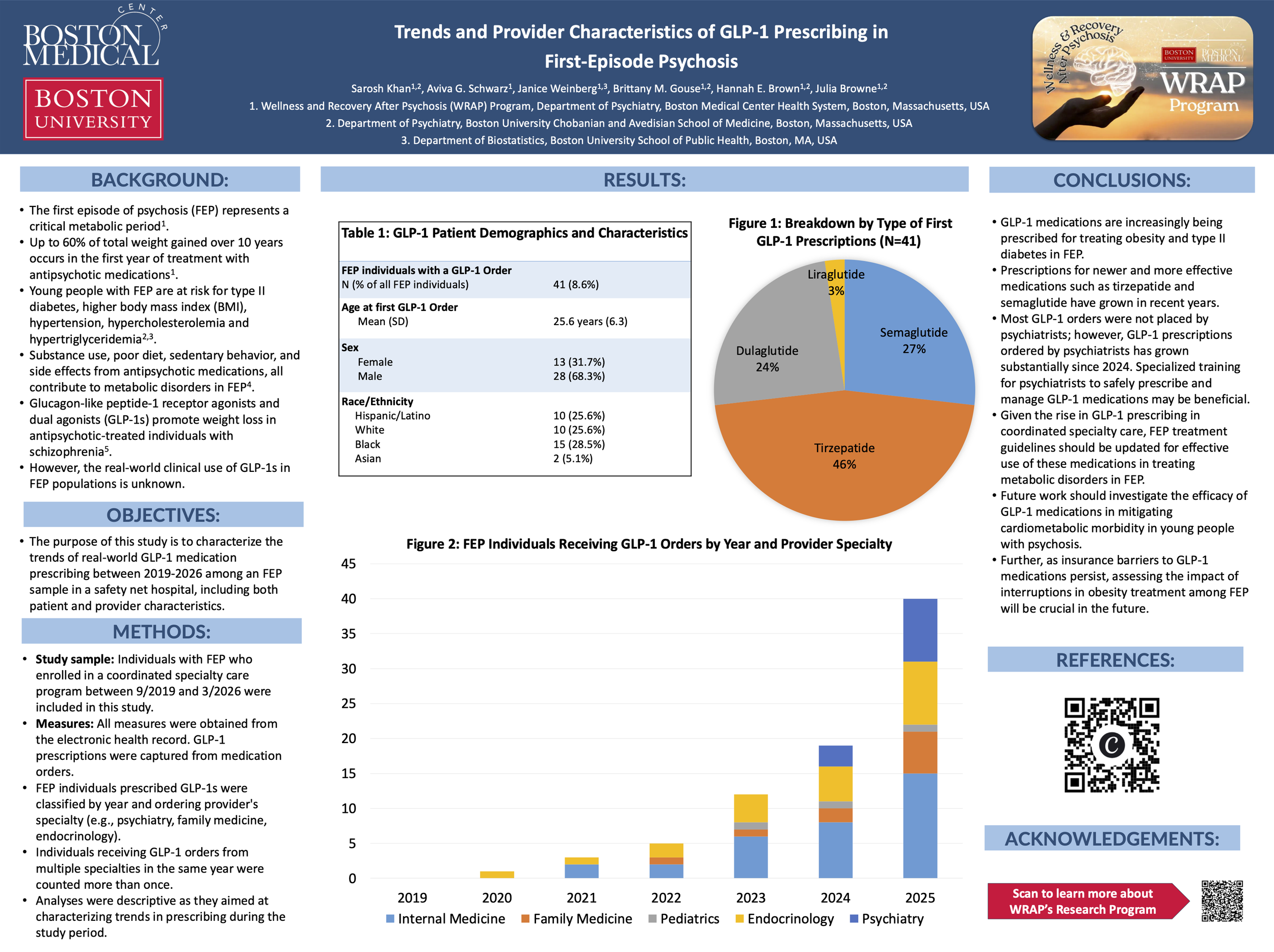
Trends and Provider Characteristics of GLP-1 Prescribing in First-Episode Psychosis

Trends and Provider Characteristics of GLP-1 Prescribing in First-Episode Psychosis

Sarosh Khan, DO¹, ², Aviva G. Schwarz, MPH¹, Janice Weinberg, ScD¹ ,³ , Brittany M. Gouse, MD, MPH¹,²; Hannah E. Brown, MD¹,²; Julia Browne, PhD¹,²

¹ Wellness and Recovery After Psychosis (WRAP) Program, Department of Psychiatry, Boston Medical Center Health System, Boston, Massachusetts, USA
² Department of Psychiatry, Boston University Chobanian and Avedisian School of Medicine, Boston, Massachusetts, USA
³ Department of Biostatistics, Boston University School of Public Health, Boston, MA, USA

Poster: Trends and Provider Characteristics of GLP-1 Prescribing in First-Episode Psychosis, Sarosh Khan and colleagues

Background: The first episode of psychosis (FEP) represents a critical metabolic period, as the most rapid weight gain occurs within the first year of treatment. Glucagon-like peptide-1 receptor agonists and dual agonists (referred to collectively as GLP-1s) are efficacious for promoting weight loss in antipsychotic-treated individuals with schizophrenia. However, the real-world clinical use of GLP-1s in FEP samples is unknown. The purpose of this study is to characterize the trends of real-world GLP-1 medication prescribing between 2019-2026 among an FEP sample in a safety net hospital, including provider characteristics.

Methods: Study sample: Individuals with FEP who enrolled in a coordinated specialty care program between 9/2019 and 3/2026 were included in this study.
Measures: All measures were obtained from the electronic health record. GLP-1 prescriptions were captured from medication orders. Provider specialty (e.g., psychiatry, family medicine, endocrinology) associated with GLP-1 prescription orders were captured. Analyses were descriptive as they aimed at characterizing trends in prescribing during the study period.

Results: Overall, 41/475 individuals with FEP (8.6%) received a GLP-1 prescription. Total GLP-1 recipients rose from 0 in 2019 to 31 in 2025 and 16 in the first quarter of 2026. GLP-1 recipients were most commonly prescribed newer medications including tirzepatide (N = 28, 68%) and semaglutide (N = 19, 46.3%), and they most frequently received GLP-1 orders from primary care physicians (N = 19, 46.3%) and endocrinologists (N = 14, 34.1%); however, psychiatrist GLP-1 prescribing grew by 3-fold from 2024-2025.

Conclusion: Given the rise in GLP-1 prescribing in coordinated specialty care, FEP treatment guidelines should be updated to guide the effective use of these medications in treating metabolic disorders in FEP.

View Event →
Nov
2
9:30 AM09:30

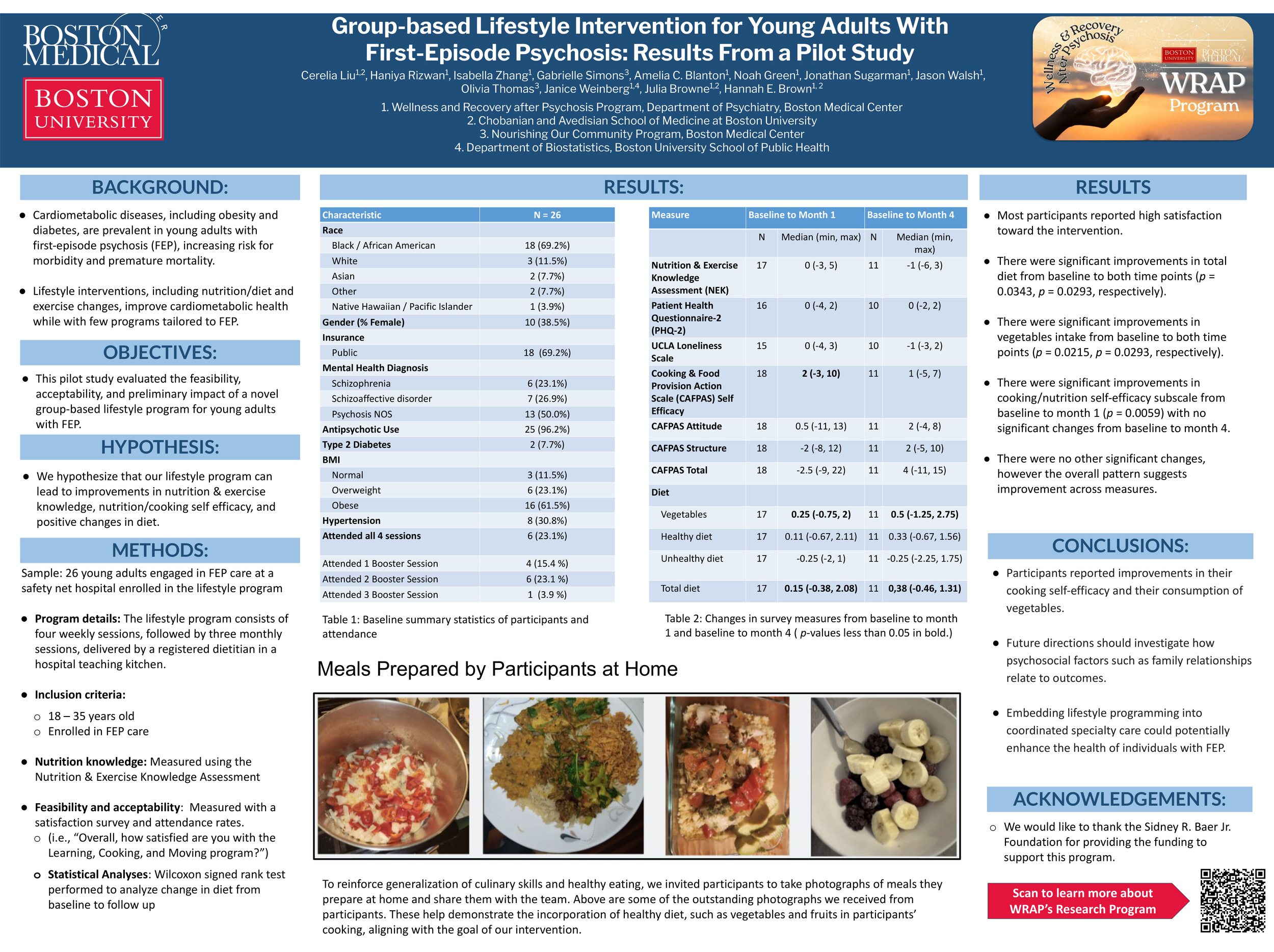
Group-based lifestyle intervention for young adults with first-episode psychosis: Results from a pilot study

Group-based lifestyle intervention for young adults with first-episode psychosis: Results from a pilot study

Cerelia Liu¹,²; Haniya Rizwan¹; Isabella Zhang¹; Gabrielle Simons³; Amelia C. Blanton¹; Noah Green¹; Jonathan Sugarman¹; Jason Walsh¹; Olivia Thomas³; Janice Weinberg¹,⁴; Julia Browne¹,²; Hannah E. Brown¹,²

¹ Wellness and Recovery after Psychosis Program, Department of Psychiatry, Boston Medical Center, Boston, MA, USA
² Chobanian and Avedisian School of Medicine at Boston University, Boston, MA
³ Nourishing Our Community Program, Boston Medical Center, Boston, MA, USA
⁴ Department of Biostatistics, Boston University School of Public Health, Boston, MA, USA

Poster: Group-based lifestyle intervention for young adults with first-episode psychosis, Cerelia Liu and colleagues

Background: Cardiometabolic diseases (e.g., obesity, diabetes) are prevalent in young adults with first-episode psychosis (FEP), increasing risk for premature mortality. Lifestyle interventions improve cardiometabolic health; however, few programs focus on this population. This pilot study evaluated the feasibility, acceptability, and preliminary impact of a novel group-based lifestyle program for young adults with FEP.

Methods: The lifestyle program involved hands-on culinary skills training, nutrition education, and physical activity delivered by a registered dietitian in a hospital teaching kitchen. Participants received four weekly classes followed by three monthly booster sessions. Participants completed assessments of nutrition knowledge (Nutrition & Exercise Knowledge Assessment) and nutrition/cooking self-efficacy (Cooking and Food Provisioning Action Scale/CAFPAS) at baseline, one month, and four months. Feasibility and acceptability were measured with a satisfaction survey and attendance rates. Cohen’s d effect sizes were calculated to characterize changes in nutrition knowledge and nutrition/cooking self-efficacy.

Results: The study sample included 26 young adults with FEP who were, on average, 25 years old (SD=3.3) and 61.5% male. Nearly all participants (25/26; 96%) attended at least 2/4 weekly classes, and 50% attended at least 3/4 weekly classes. Participants reported high satisfaction with the program (Total Score mean=12.6; SD=3.60; highest possible score = 15).

Of the participants with complete baseline and month one data, small effect size improvements were observed in nutritional knowledge (d=0.26, n=16) and total cooking/nutrition self-efficacy (d=0.15, n=18). There was a large effect size improvement on the cooking/nutrition self-efficacy subscale (d=0.78); however, scores on the other two subscales (attitudes towards cooking/nutrition and structure/meal planning and organization) did not change or worsened (d=-0.06, d=-0.24, n=18).

Conclusion: Results from this pilot study support initial feasibility and acceptability of a novel group-based lifestyle intervention for young adults with FEP. Future work should include larger, randomized trials to evaluate the efficacy and implementation of the lifestyle program.

View Event →
Nov
2
9:30 AM09:30

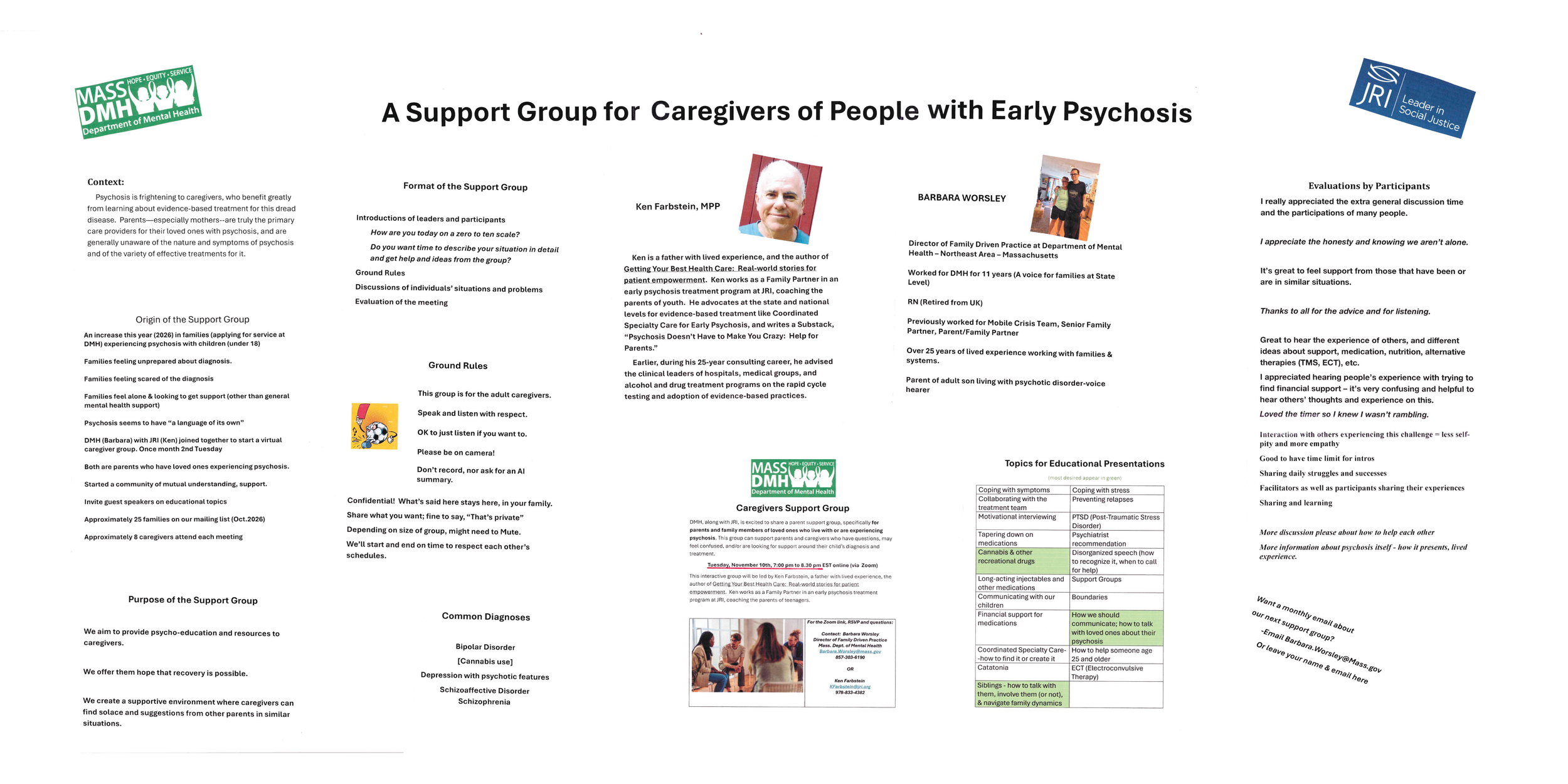
A Caregiver Support Group for Early Psychosis

A Caregiver Support Group for Early Psychosis

Ken Farbstein, MPP¹, Barbara Worsley, RN²

¹ Justice Resource Institute
² Massachusetts Department of Mental Health, Northeast Area

Poster: A Caregiver Support Group for Early Psychosis, Ken Farbstein and Barbara Worsley

Background: Psychosis is frightening to caregivers, who benefit greatly from learning about evidence-based treatment for this dread disease. Parents—especially mothers--are truly the primary care providers for their loved ones with psychosis and are generally unaware of the nature and symptoms of psychosis and of the variety of effective treatments for it.

Methods: An online support group on Zoom, led by a father with lived personal and professional experience and by the DMH Director of Family Driven Practice, who is a Mother with both lived and professional experience. Useful resources are made available to participants after the meetings by email. Participants have initiated the use of a WhatsApp group to continue their conversations in between the monthly support group meetings.

Results: This new support group has met monthly since May 2026, serving dozens of parents, primarily in Northeastern Massachusetts. Participants have favorably evaluated the group. Of the participants in the first meeting, 67% participated in the group’s second or third meeting.

Conclusion: The number of participants indicates that this interests the adult caregivers of people with early psychosis.

View Event →
Nov
2
9:30 AM09:30

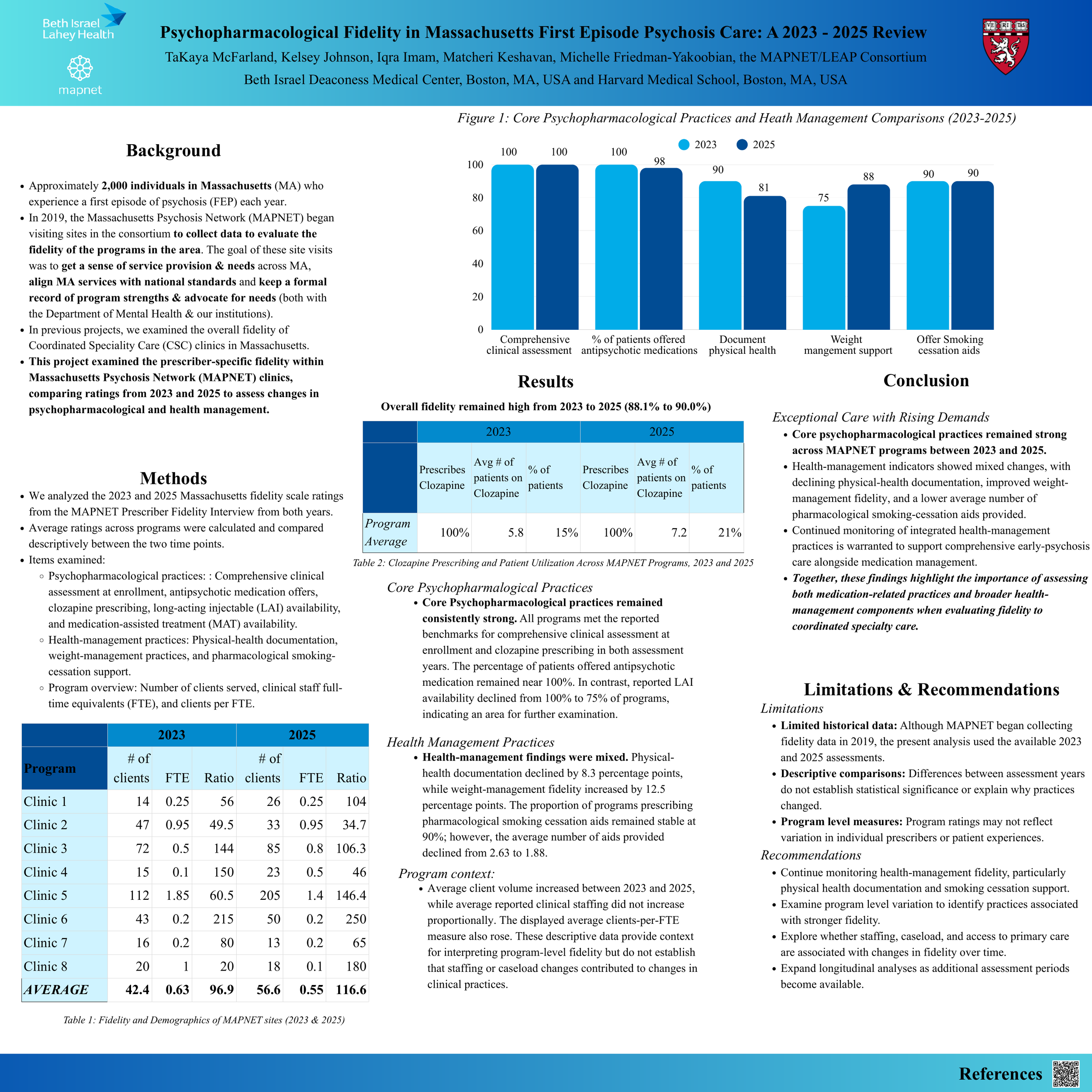
Psychopharmacological Fidelity in Massachusetts First Episode Psychosis Care: A 2023 - 2025 Review

Psychopharmacological Fidelity in Massachusetts First Episode Psychosis Care: A 2023 - 2025 Review

TaKaya McFarland¹,², Kelsey Johnson¹,², Iqra Imam¹,², Matcheri Keshavan¹,², Michelle Friedman-Yakoobian¹,², & the MAPNET/LEAP Consortium¹,²

¹ Beth Israel Deaconess Medical Center, Boston, MA, USA
² Harvard Medical School, Boston, MA, USA

Psychopharmacological Fidelity in Massachusetts First Episode Psychosis Care: A 2023 - 2025 Review, poster by TaKaya McFarland and colleagues
View Event →
Nov
2
9:30 AM09:30

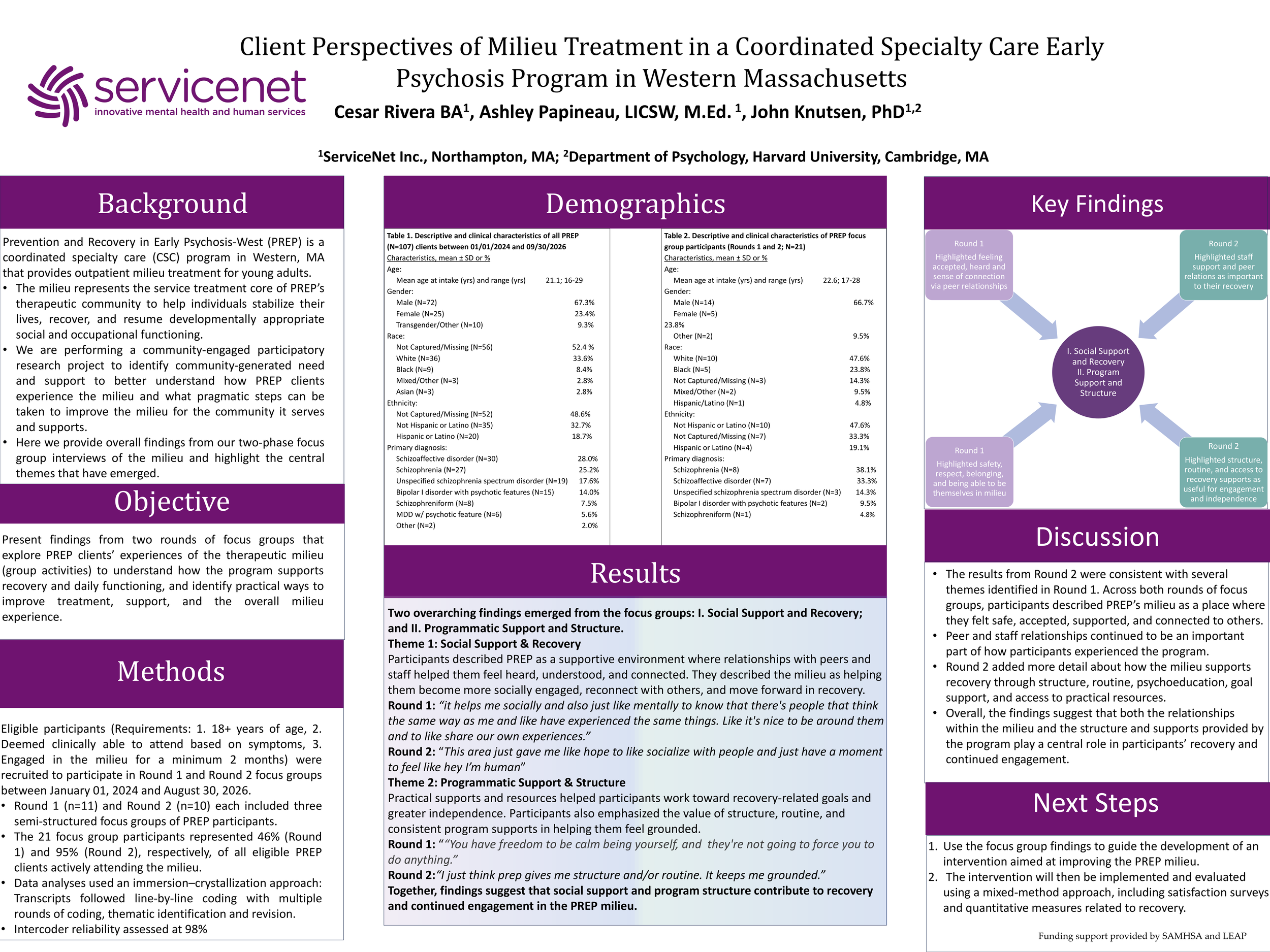
Client Perspectives of Milieu Treatment in a Coordinated Specialty Care Early Psychosis Program in Western Massachusetts

Client Perspectives of Milieu Treatment in a Coordinated Specialty Care Early Psychosis Program in Western Massachusetts

Cesar Rivera, BA¹; Ashley Papineau, LICSW, M.Ed.¹; John Knutsen, PhD¹,²

¹ ServiceNet Inc., Northampton, MA
² Department of Psychology, Harvard University, Cambridge, MA

Poster: Client Perspectives of Milieu Treatment in a Coordinated Specialty Care Early Psychosis Program, Cesar Rivera and colleagues

Background: Prevention and Recovery in Early Psychosis-West (PREP) is a coordinated specialty care program in Western Massachusetts that provides flexible, comprehensive, evidence-based outpatient milieu treatment for individuals experiencing early psychosis. The PREP milieu functions as the clinical core of the program’s therapeutic community, supporting individuals as they stabilize, recover, and re-engage in developmentally appropriate social, educational, and occupational roles. We are conducting a community-engaged participatory research project that examines how the milieu shapes client treatment, care coordination, and support efforts while identifying community-generated needs, support, and opportunities for intervention. The study aims to characterize PREP clients’ experiences of the milieu and identify pragmatic strategies to strengthen the therapeutic environment for the community it serves. We will present findings from focus group interviews that follow from our preliminary data collected during the initial phase of data collection.

Methods: Focus group transcripts will be analyzed using an immersion–crystallization approach, followed by line-by-line coding of data from eligible, participating PREP clients. A subsequent analytic cycle will include transcript review, recoding, and iterative codebook refinement to incorporate emergent concepts and enhance analytic rigor.

Results: Findings will be based on perspectives from approximately 85-95% (N=12) of all individuals enrolled in and actively attending the milieu and who did not participate in preliminary data collection. Currently we have held focus groups with seven clients and will complete data collection by the end of the following month. Analyses will be used to identify salient client perspectives on the therapeutic milieu, build upon previous findings, and to elaborate themes emerging from the focus groups.

Conclusion: Findings from this project will help characterize the perceived significance and therapeutic impact of the PREP milieu. Ongoing data collection will further elucidate client experiences and feedback, supporting the co-development and implementation of future milieu-based intervention strategies.

View Event →
Nov
2
9:30 AM09:30

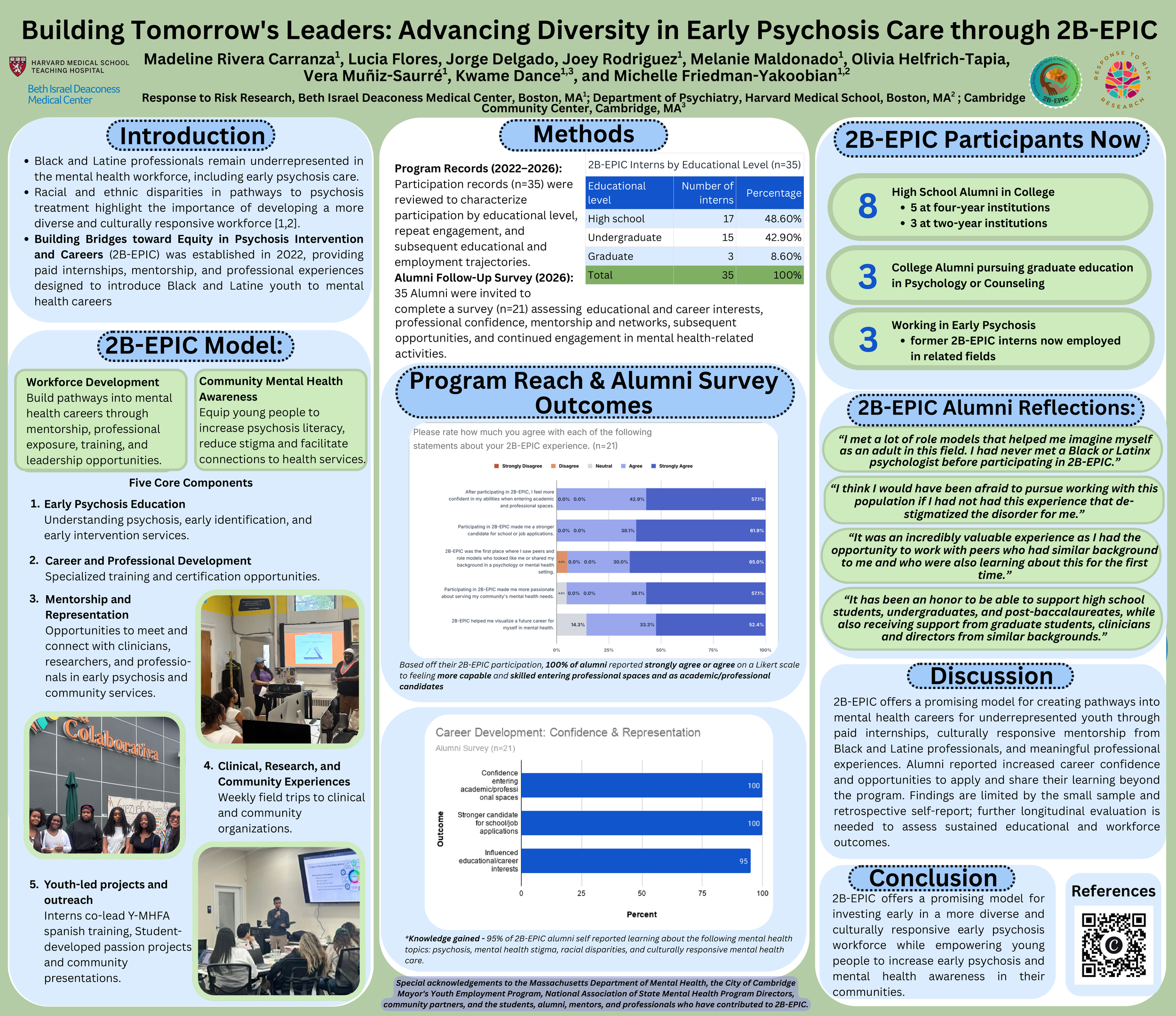
Building Tomorrow's Leaders: Advancing Workforce Development in Early Psychosis Care through 2B-EPIC

Building Tomorrow's Leaders: Advancing Workforce Development in Early Psychosis Care through 2B-EPIC

Madeline Rivera Carranza¹; Lucia Flores¹; Jorge Delgado¹; Joey Rodriguez¹,²; Melanie Maldonado¹,²; Olivia Helfrich-Tapia¹,²; Vera Muñiz-Saurré¹,²; Michelle Friedman-Yakoobian¹,²; Kwame Dance¹,²

¹ Psychosis Research Program, Beth Israel Deaconess Medical Center, Boston, MA
² Department of Psychiatry, Harvard Medical School, Boston, MA

Poster: Building Tomorrow’s Leaders, Madeline Rivera Carranza and colleagues

Background: Black and Latine professionals remain underrepresented in the mental health workforce, including among providers trained in early psychosis care. This gap is particularly concerning given persistent racial and ethnic disparities in pathways to early psychosis treatment, including greater likelihood of crisis-driven and coercive pathways to care. Building Bridges toward Equity in Psychosis Intervention and Careers (2B-EPIC) was established in 2023 to address this workforce gap upstream by exposing Black and Latine youth to mental health careers and providing experiences, mentorship, and professional connections designed to support their entry into the field.

Methods: 2B-EPIC provides paid internships combining early psychosis education, career and professional development, mentorship, research exposure, community and clinical field experiences, and youth-led passion projects. We examined program reach and participation from 2023–2026, including repeat participation and progression into mentoring, employment, and other advanced roles. In 2026, alumni were invited to complete a follow-up survey assessing educational and employment trajectories, professional networks, career direction and confidence, subsequent opportunities, continued involvement in mental health and related fields, and perceived influence of 2B-EPIC on their development. Exploratory pre/post data on psychosis knowledge and confidence connecting youth to care were also collected from a small subset of recent participants.

Results: We will report cumulative participation and continued engagement in 2B-EPIC from 2023–2026. Alumni findings will describe current education and employment, pursuit of mental health and related careers, subsequent internships and employment opportunities, professional network development, and career confidence. We will also examine alumni perceptions of whether 2B-EPIC helped clarify career goals, build connections, increase access to opportunities, and prepare them for subsequent educational and professional experiences. Participant reflections will illustrate pathways from initial participation to later opportunities and leadership roles.

Conclusion: Findings will examine the potential of paid internships, mentorship, professional exposure, and progressive leadership opportunities to support Black and Latine youth along pathways into mental health careers. 2B-EPIC may provide a promising model for investing early in the workforce pipeline to strengthen diversity and cultural responsiveness in early psychosis care.

View Event →
Nov
2
9:30 AM09:30

When AI Agrees Too Well: Sycophancy, "Technological Folie à Deux," and Delusional Spirals in the Age of Chatbot Companionship

When AI Agrees Too Well: Sycophancy, "Technological Folie à Deux," and Delusional Spirals in the Age of Chatbot Companionship

Kadi Nguyen, MD¹; Arielle Silbersweig, MD¹; Julia Versel, MD, MSc¹; Alex Rains, MD¹; Desmond Ong, PhD²; Kartik Chandra, PhD³; Eric Lin, MD⁴; Tae Kyu Uhm, MD⁵; Claire Triller, MD⁵

¹ Brigham and Women’s Hospital/Harvard Medical School Psychiatry Residency, Boston, MA
² The University of Texas at Austin, Department of Psychology, Austin, TX
³ Massachusetts Institute of Technology Computer Science & Artificial Intelligence Laboratory (MIT CSAIL), Cambridge, MA
⁴ Stanford School of Medicine, Department of Psychiatry and Behavioral Sciences, Stanford, CA
⁵ Brigham and Women’s Faulkner Hospital, Department of Psychiatry, Boston, MA

Poster: When AI Agrees Too Well, Kadi Nguyen and colleagues

Background: Generative AI chatbots have become a first-line source of emotional support for millions of people worldwide, filling gaps left by limited access to psychiatric care, financial barriers, stigma, and time constraints. Since Mass-STEP's founding in 2020, statewide efforts have shortened treatment delays for early psychosis across Massachusetts, closing some of these prominent gaps. However, providers must now begin to reckon with this emerging modifier of psychotic-spectrum illness looking forward. This clinical challenge illustrates how AI-mediated interactions can catalyze and reinforce delusional thinking, and highlights patient characteristics associated with heightened vulnerability.

Case Presentation: We present a case in which a 43-year-old woman was admitted to an inpatient psychiatry unit after experiencing a delusional spiral driven by escalating AI use. She developed intense suicidal ideation and required treatment with several modalities, including psychotropic medications, psychotherapy, and electroconvulsive therapy.

Discussion: To explore the diagnostic, therapeutic, and ethical questions this case raises, we reached out to several experts, including a computer scientist, a psychologist, and a psychiatrist, all with expertise in AI, for their perspectives on this case and on the growing phenomenon of "technological folie à deux," a bidirectional feedback loop in which chatbot and user co-construct and entrench a shared false belief. Discussion centers on how AI sycophancy and constant conversational access may catalyze delusional content, and which patient traits, including relational dependency and impaired mentalization, may confer heightened risk.

Conclusion: As Massachusetts' psychosis care system evolves, providers should recognize AI chatbot use as a contributor to, and modifier of, psychotic symptomatology, and incorporate it into risk assessment for vulnerable patients. Looking forward, we address questions for research, practice, and policy, including what constitutes "ethical" AI design in mental health, how clinicians can advocate for safer regulation, and how screening for chatbot use might be integrated into early psychosis programs statewide.

View Event →
Nov
2
9:30 AM09:30

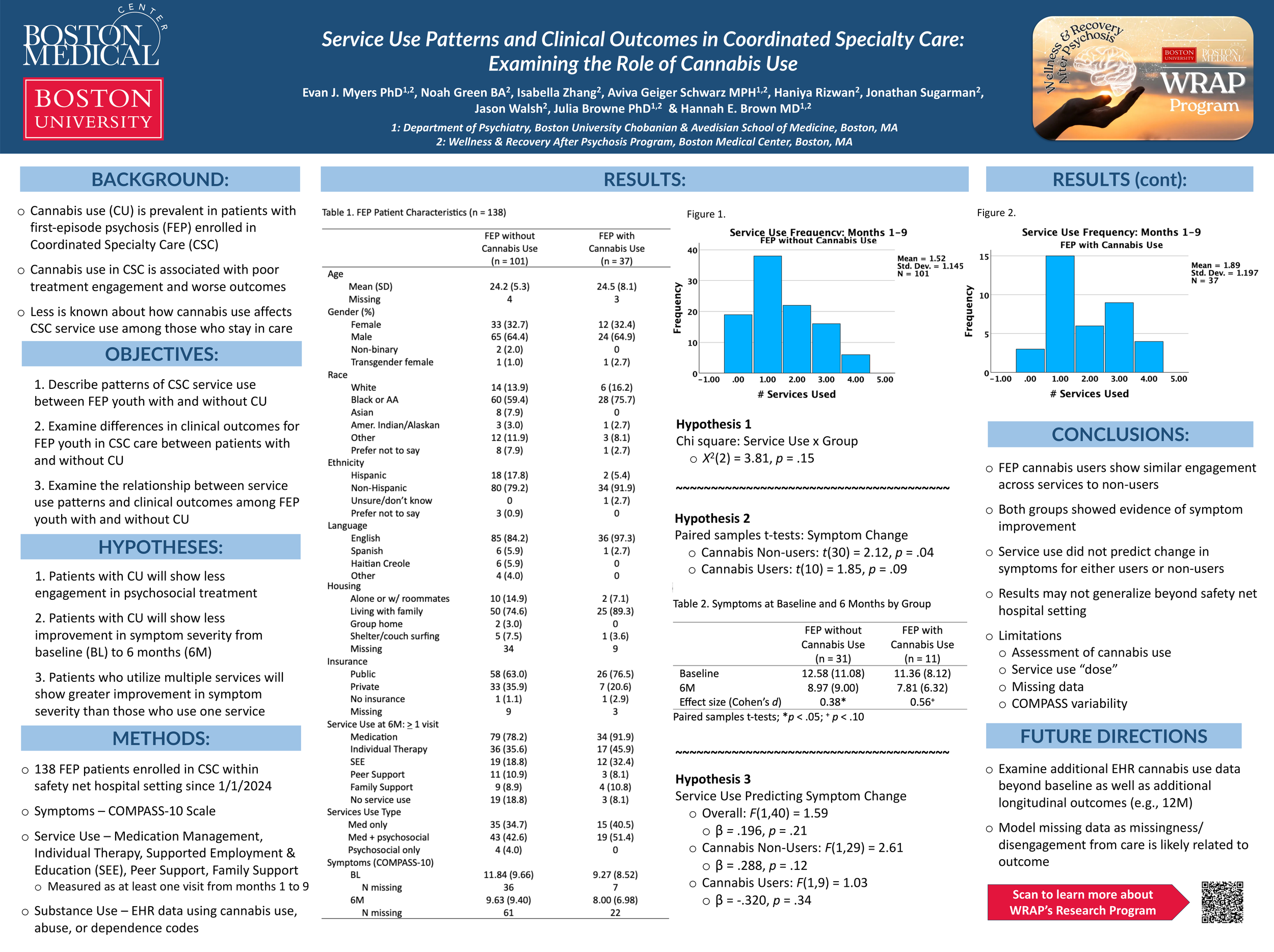
Service Use Patterns and Clinical Outcomes in Coordinated Specialty Care: Examining the Role of Cannabis Use Disorder

Service Use Patterns and Clinical Outcomes in Coordinated Specialty Care: Examining the Role of Cannabis Use Disorder

Evan Myers, PhD¹,²; Noah Green, BA¹; Isabella Zhang¹; Aviva Geiger Schwarz, MPH¹,²; Haniya Rizwan¹; Jonathan Sugarman¹; Jason Walsh¹; Julia Browne, PhD¹,²; Hannah E. Brown, MD¹,²

¹ Wellness and Recovery After Psychosis (WRAP) Program, Department of Psychiatry, Boston Medical Center, Boston, MA, USA
² Department of Psychiatry, Boston University Chobanian & Avedisian School of Medicine, Boston, MA, USA

Poster: Service Use Patterns and Clinical Outcomes in Coordinated Specialty Care, Evan Myers and colleagues

Background: Coordinated Specialty Care (CSC) is an evidence-based treatment model for first-episode psychosis (FEP). Cannabis use in FEP is prevalent and associated with poor treatment engagement and worse clinical outcomes. Less is known about how cannabis use affects use of different CSC services among those who remain engaged in care. Thus, we aim to characterize patterns of service use, clinical outcomes, and how engagement patterns relate to clinical outcomes, comparing those with co-occurring cannabis use disorder (FEP-CUD) and those without (FEP-noCUD).

Methods: Participants were FEP patients who enrolled in a CSC program between 2024 and 2026. Diagnosis of CUD was based on any history of CUD in the patient’s electronic health record. Participants completed the MAPNET Assessment Battery at baseline and at six months, including demographics, service use, and symptom severity (COMPASS-10) measures.

Results: At baseline, FEP-CUD (n = 28) and FEP-noCUD (n = 110) participants were similar in terms of age, race, ethnicity, and health insurance status. Descriptively, a higher proportion of men were in the FEP-CUD group relative to the FEP-noCUD group (79% to 61%). Preliminary descriptive results show that at six months, FEP-CUD participants had lower engagement in all services than FEP-noCUD (medication management: 75% vs. 85%; psychotherapy: 25% vs. 42%; peer support: 7% vs. 11%; family support: 7% vs. 10%; supported education & employment: 4% vs. 6%). FEP-CUD participants also had lower mean symptoms at baseline. Data collection and analysis is ongoing, and changes in symptoms and the relationship between service use and symptoms will be presented in the poster.

Conclusion: Preliminary descriptive results suggest lower service use in the FEP-CUD group. CSC services may need to tailor treatment to address cannabis use to improve FEP care.

View Event →
Nov
2
9:30 AM09:30

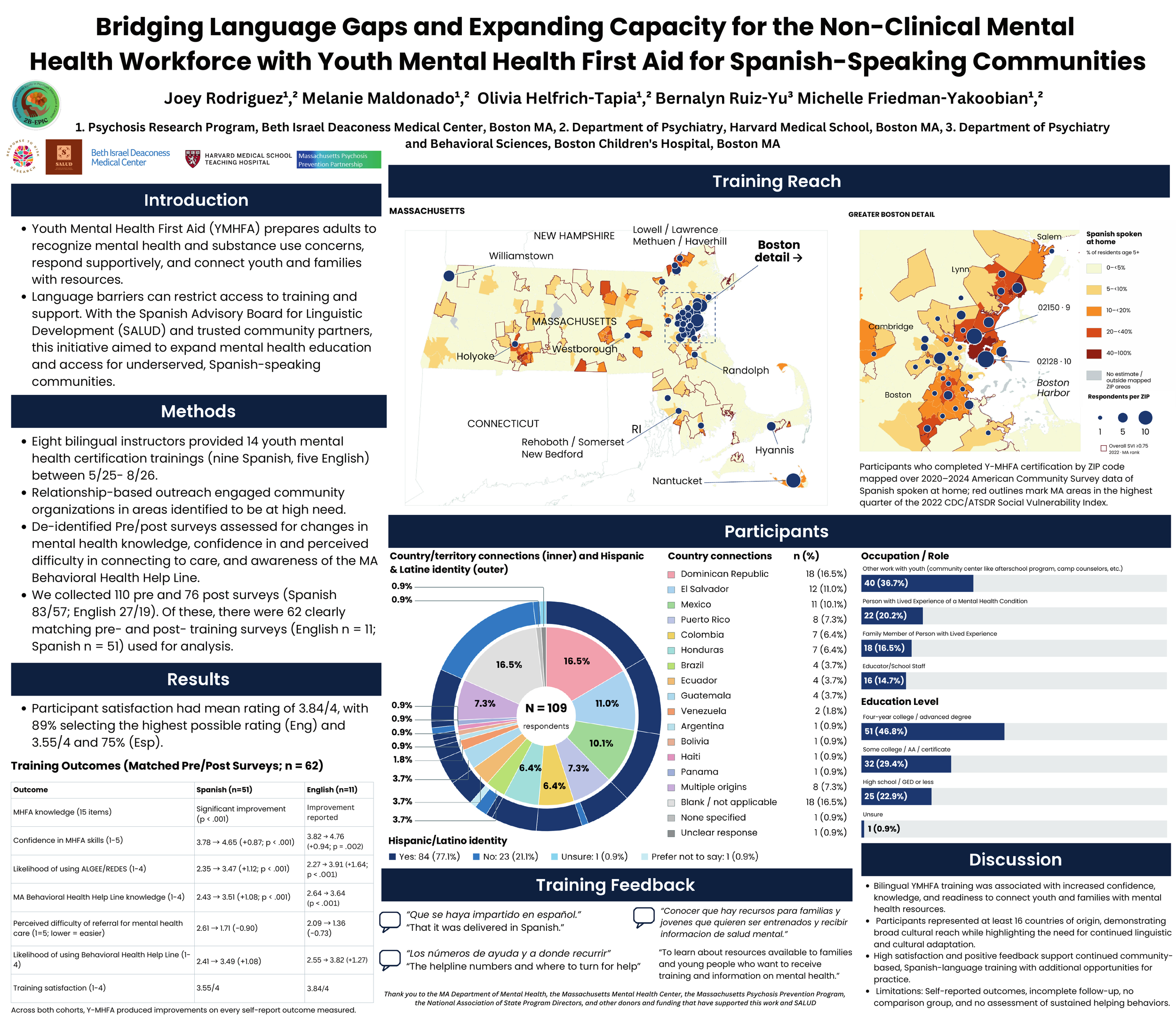
Bridging Language Gaps and Expanding Capacity for the Non-Clinical Mental Health Workforce with Youth Mental Health First Aid for Spanish-Speaking Communities

Bridging Language Gaps and Expanding Capacity for the Non-Clinical Mental Health Workforce with Youth Mental Health First Aid for Spanish-Speaking Communities

Joey Rodriguez¹,², Melanie Maldonado¹,², Kelsey Johnson, MPH¹,², Olivia Helfrich-Tapia¹,², & Michelle Friedman-Yakoobian, PhD¹,²

¹ Psychosis Research Program, Beth Israel Deaconess Medical Center, Boston, MA
² Department of Psychiatry, Harvard Medical School, Boston, MA

Bridging Language Gaps and Expanding Capacity for the Non-Clinical Mental Health Workforce with Youth Mental Health First Aid for Spanish-Speaking Communities, poster by Joey Rodriguez and colleagues

Background: Youth Mental Health First Aid (YMHFA) trains adults to recognize mental health and substance use challenges, respond supportively, and connect youth and families with resources. Language barriers can limit access to training and behavioral health resources. With grant funding from the National Association of State Mental Health Program Directors, the Massachusetts Department of Mental Health, in partnership with the Spanish Advisory Board for Linguistic Development (SALUD), sought to expand free YMHFA training in Spanish and English and develop bilingual instructors.

Methods: Bilingual YMHFA instructors were trained and free trainings were provided in Massachusetts from May 2025–June 2026. Relationship-based outreach engaged trusted community partners, including youth-serving agencies, schools, healthcare and social service organizations, law enforcement, legal aid, child welfare, and faith-based organizations. Fourteen sessions were delivered (nine Spanish; five English). Pre/post questionnaires assessed knowledge, confidence, helping actions, referral barriers, Behavioral Health Help Line awareness, and training reactions.

Results: Overall, 110 participants completed pre-training and 76 post-training surveys (English: 27/19; Spanish: 83/57; 69% post-training response rate), representing at least 16 countries of origin and diverse community-facing roles. Confidence in three key MHFA skills increased significantly in both cohorts (English: +0.67 on a 5-point scale, t=-4.20, p=.002; Spanish: +0.67, t=-6.72, p<.001). Participants also reported greater likelihood of taking helping actions. Among Spanish-speaking participants, perceived difficulty referring someone to professional support decreased from 2.56 to 1.63. Behavioral Health Help Line awareness increased in both cohorts, with particularly important gains among Spanish-speaking participants, who had lower baseline awareness.

Conclusion: Relationship-based outreach and adapting trainings to community needs supported engagement and community partnerships. Participants reported increased confidence and readiness to respond to mental health concerns and connect individuals with resources. Findings support continued investment in linguistically accessible mental health education, bilingual training capacity, and trusted community partnerships to expand early mental health support.

View Event →
Nov
2
9:30 AM09:30

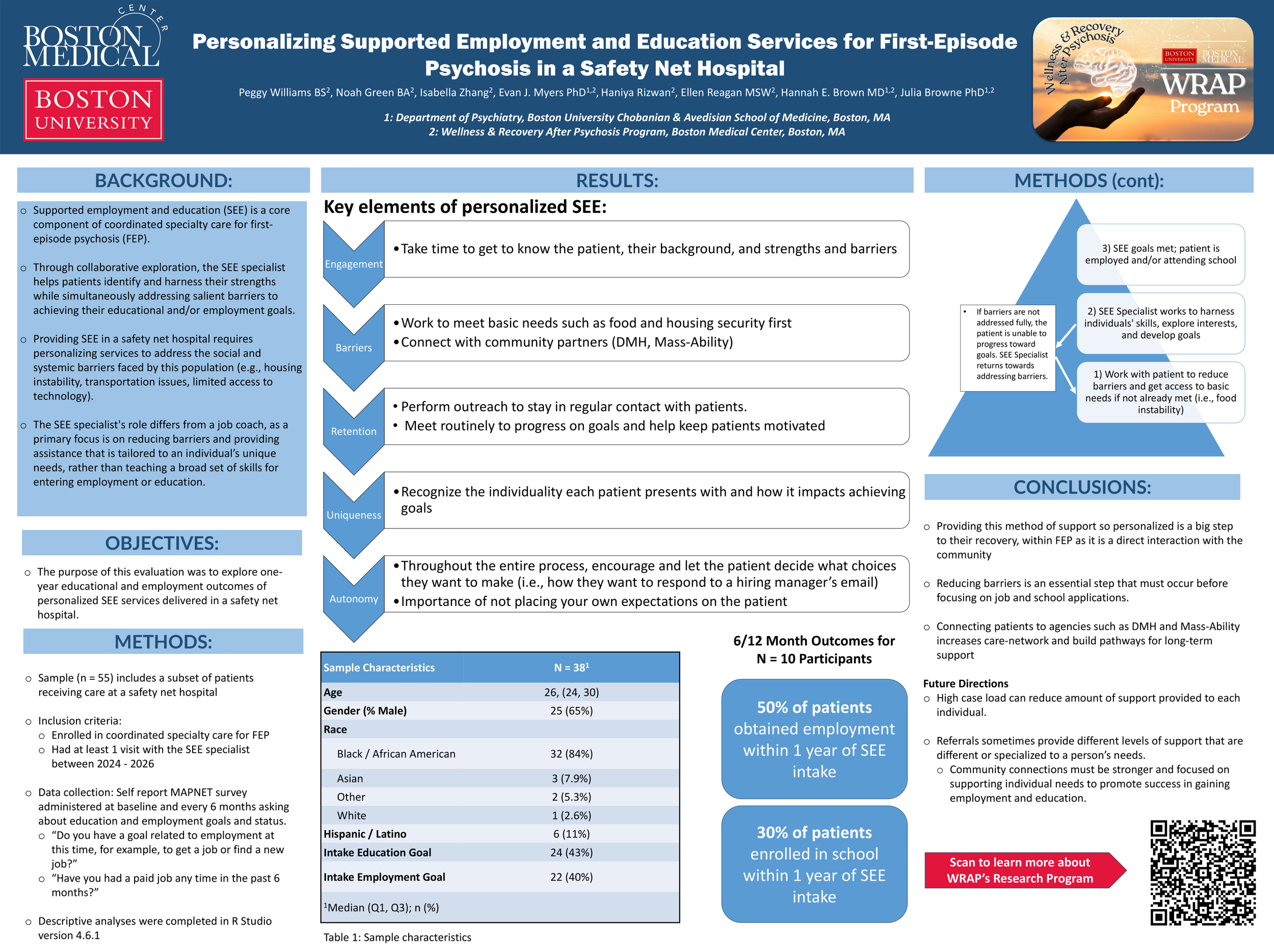
Personalizing Supported Employment and Education Services for First-Episode Psychosis in a Safety Net Hospital

Personalizing Supported Employment and Education Services for First-Episode Psychosis in a Safety Net Hospital

Peggy Williams, BS¹; Noah Green, BA¹; Isabella Zhang¹; Evan Myers, PhD¹,²; Haniya Rizwan¹; Ellen Reagan, MSW¹; Hannah E. Brown, MD¹,²; Julia Browne, PhD¹,²

¹ Wellness and Recovery After Psychosis (WRAP) Program, Department of Psychiatry, Boston Medical Center Health System, Boston, Massachusetts, USA
² Department of Psychiatry, Boston University Chobanian and Avedisian School of Medicine, Boston, Massachusetts, USA

Poster: Personalizing Supported Employment and Education Services, Peggy Williams and colleagues

Background: Supported employment and education (SEE) is a core component of coordinated specialty care for first-episode psychosis (FEP). Personalized SEE services assist individuals in achieving their employment and educational goals through a person-centered approach. Through collaborative exploration, the SEE specialist helps patients identify and harness their strengths while simultaneously addressing salient barriers to achieving their goals. Providing SEE in a safety net hospital requires personalizing services to address the social and systemic barriers faced by this population (e.g., housing instability, transportation issues, limited access to technology). The purpose of this evaluation was to explore one-year educational and employment outcomes of personalized SEE services delivered in a safety net hospital.

Methods: The sample included individuals with FEP who enrolled in a coordinated specialty care program between 2024 and 2026 and had at least one session with the SEE specialist. Demographic and employment/education measures were obtained from the MAPNET standardized battery. Education and employment data were examined at SEE intake and at 6 and 12 months following the SEE intake.

Results: The sample comprised n=38 individuals with FEP (66% male, Average age = 27.1 years old, 84% Black or African American). At SEE intake, 78% reported a goal of obtaining employment and 65% reported a goal of attending school. Of those with 6 and/or 12 month data (n=10), 50% obtained employment and 30% enrolled in school.

Conclusion: Having work- and school-related goals were common among individuals with FEP who enrolled in SEE. Of the small number with follow-up data, most enrolled in school and/or obtained employment.

An SEE specialist at a safety net hospital is essential to address barriers impacting achievement of work- and school-related goals. Future work should explore barriers to achieving work- and school-related goals as well as effective strategies to overcome such challenges.

View Event →
Nov
2
9:30 AM09:30

Trends and Provider Characteristics of GLP-1 Prescribing in First-Episode Psychosis

Trends and Provider Characteristics of GLP-1 Prescribing in First-Episode Psychosis

Sarosh Khan (1,2), Aviva G. Schwarz (1), Janice Weinberg (1,3), Brittany M. Gouse (1,2), Hannah E. Brown (1,2), Julia Browne (1,2)
1. Wellness and Recovery After Psychosis (WRAP) Program, Department of Psychiatry, Boston Medical Center Health System, Boston, Massachusetts, USA
2. Department of Psychiatry, Boston University Chobanian and Avedisian School of Medicine, Boston, Massachusetts, USA
3. Department of Biostatistics, Boston University School of Public Health, Boston, MA, USA

Background: The first episode of psychosis (FEP) represents a critical metabolic period, as the most rapid weight gain occurs within the first year of treatment. Glucagon-like peptide-1 receptor agonists and dual agonists (referred to collectively as GLP-1s) are efficacious for promoting weight loss in antipsychotic-treated individuals with schizophrenia. However, the real-world clinical use of GLP-1s in FEP samples is unknown. The purpose of this study is to characterize the trends of real-world GLP-1 medication prescribing between 2019-2026 among an FEP sample in a safety net hospital, including provider characteristics.

Methods: Study sample: Individuals with FEP who enrolled in a coordinated specialty care program between 9/2019 and 3/2026 were included in this study.

Measures: All measures were obtained from the electronic health record. GLP-1 prescriptions were captured from medication orders. Provider specialty (e.g., psychiatry, family medicine, endocrinology) associated with GLP-1 prescription orders were captured. Analyses were descriptive as they aimed at characterizing trends in prescribing during the study period.

Results: Overall, 41/475 individuals with FEP (8.6%) received a GLP-1 prescription. Total GLP-1 recipients rose from 0 in 2019 to 31 in 2025 and 16 in the first quarter of 2026. GLP-1 recipients were most commonly prescribed newer medications including tirzepatide (N = 28, 68%) and semaglutide (N = 19, 46.3%), and they most frequently received GLP-1 orders from primary care physicians (N = 19, 46.3%) and endocrinologists (N = 14, 34.1%); however, psychiatrist GLP-1 prescribing grew by 3-fold from 2024-2025.

Conclusions: Given the rise in GLP-1 prescribing in coordinated specialty care, FEP treatment guidelines should be updated to guide the effective use of these medications in treating metabolic disorders in FEP.

View Event →
Nov
2
9:30 AM09:30

Loneliness in early psychosis: a mixed-methods study

Loneliness in early psychosis: a mixed-methods study

Gil Grunfeld¹,², Niharika Jhingan¹, Lynn DeLisi¹, Daniel Fulford²

¹ Psychosis Research Lab, RISE Program, Cambridge Health Alliance
² Department of Psychological & Brain Sciences, Boston University

Background: Loneliness, the subjective experience of social disconnection, is prevalent across the psychosis spectrum, with negative consequences for physical health, symptom trajectory, and overall wellbeing. Loneliness is particularly salient for youth at the earliest stages of illness, given unique contributions of developmental (e.g., identity formation), social (e.g., stigma), and illness related factors (e.g., psychosis symptomatology). Despite its relevance for early intervention, little is known about correlates of loneliness in the daily lives of youth recovering from early psychosis, and few studies have explored the lived experience of loneliness in this population.

Methods: Data were drawn from the Pathways to Loneliness in Early Psychosis study at Cambridge Health Alliance’s Recovery in Shared Experiences (RISE) Program [F31MH140381]. Analyses include ecological momentary assessment (EMA) data in 30 participants over two weeks. EMA questions captured experiences of social connection, disconnection, and related phenomena (e.g., stigma, belongingness). Participants also provided real-time qualitative reflections on loneliness and a subset completed full qualitative interviews following the EMA period.

Results: Descriptive analyses reflected heterogeneity of loneliness in daily life. For some participants, momentary loneliness fluctuated substantially across the two-week period, while others reported more persistent disconnection. We will also present follow-up analyses of our intensive longitudinal data using multilevel modeling to elucidate between- and within- participant differences in loneliness across the study duration. Preliminary qualitative reflections illuminated proximal contributors to loneliness, including stigma, social rejection, and unmet needs for belonging, as well as structural challenges.

Conclusion: The current project is the first to explore loneliness through a dynamic, mixed-methods, intensive longitudinal approach in youth with early psychosis. We suggest structural, developmental, social, and symptom-related factors interact to contribute to the subjective experience of disconnection in youth with psychosis spectrum diagnoses. We discuss avenues for addressing loneliness and it correlates in the context of early intervention.

View Event →
Nov
2
9:30 AM09:30

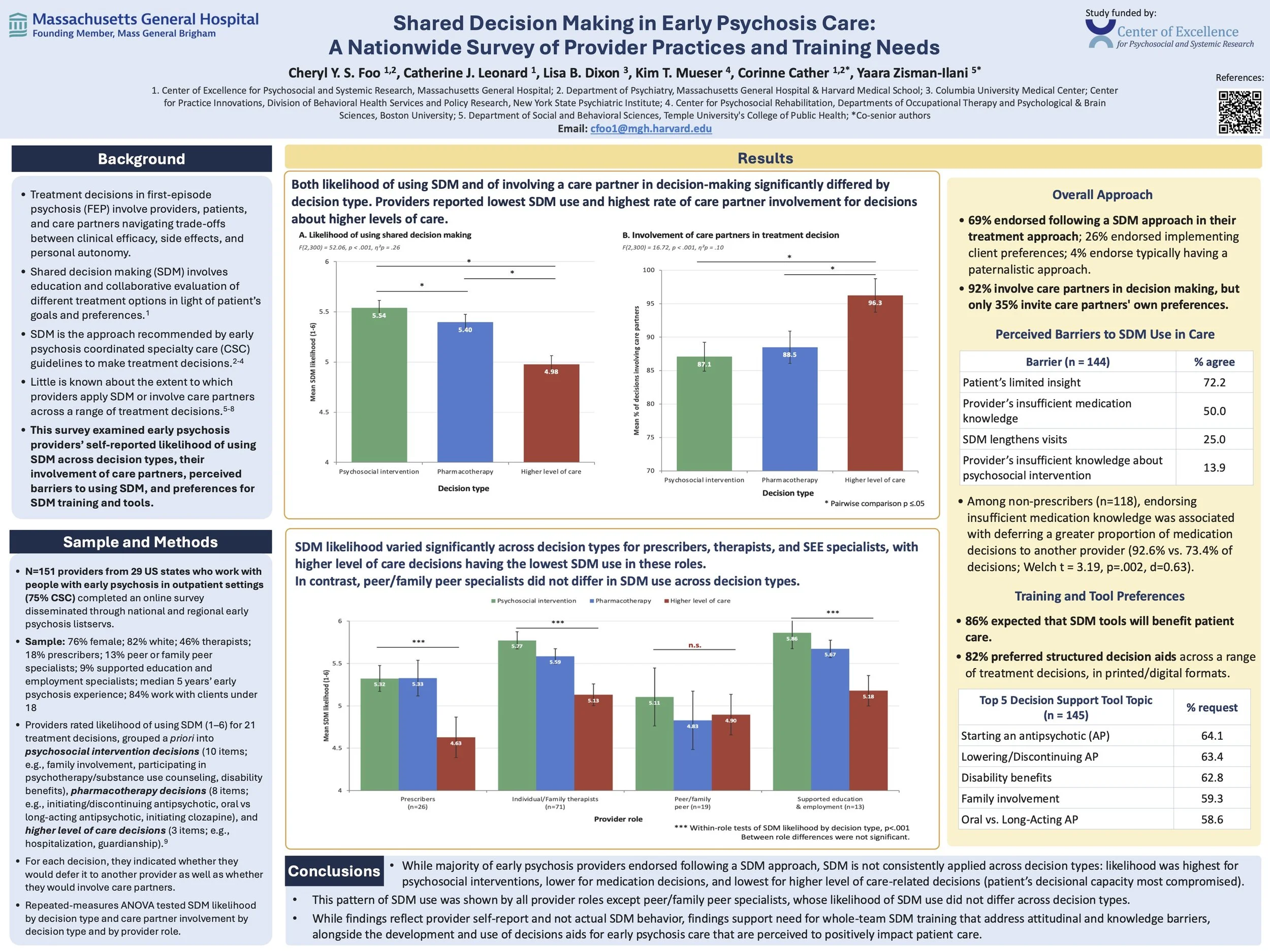
Shared Decision Making in Early Psychosis Care: A Nationwide Survey of Provider Practices and Training Needs

Shared Decision Making in Early Psychosis Care: A Nationwide Survey of Provider Practices and Training Needs

Cheryl Y. S. Foo (1,2), Catherine J. Leonard (1), Lisa B. Dixon (3), Kim T. Mueser (4), Corinne Cather (1,2)*, Yaara Zisman-Ilani (5)*
1. Center of Excellence for Psychosocial and Systemic Research, Massachusetts General Hospital
2. Department of Psychiatry, Massachusetts General Hospital & Harvard Medical School
3. Columbia University Medical Center; Center for Practice Innovations, Division of Behavioral Health Services and Policy Research, New York State Psychiatric Institute
4. Center for Psychosocial Rehabilitation, Departments of Occupational Therapy and Psychological & Brain Sciences, Boston University
5. Department of Social and Behavioral Sciences, Temple University's College of Public Health
*Co-senior authors

Background. Shared decision making (SDM) is a recommended approach for enhancing patient-provider communication about psychiatric treatment and is embedded as a core principle in early psychosis coordinated specialty care (CSC) guidelines. Yet how providers apply SDM across early psychosis treatment decisions, and where their training gaps lie, remains unclear.

Methods. Providers working with people with early psychosis, recruited through nationwide early psychosis and EPINET hub listervs, completed a self-report online survey. On a 6-point scale, providers rated their likelihood of using SDM for 21 treatment decisions grouped into psychosocial intervention and recovery-oriented decisions (10 items), pharmacologic and medical decisions (8 items), and higher level of care and legal decisions (3 items; hospitalization, discharge planning, guardianship). Providers also rated perceived barriers and training and decision support tool needs. Ordinal mixed models with provider random intercepts tested SDM likelihood by decision type and provider role.

Results. Of 159 eligible providers across 29 states (75% in CSC; 41% individual therapists; 18% prescribers; 13% peer or family peer specialists), 69% described typically practicing SDM, 26% implementing client preferences, and 4% a paternalistic approach. While 92% involved care partners in treatment decisions, only 35% reported considering care partners’ own preferences. Within the same provider, SDM likelihood significantly differed by decision type (p<.001): relative to psychosocial decisions, odds of endorsing SDM were roughly halved for medication decisions (OR=0.55) and reduced 88% for hospitalization and guardianship decisions (OR=0.12). No role endorsed using SDM more than another overall, but prescribers and therapists reported being least likely to use SDM for higher-level-of-care decisions compared to other decisions, whereas peer/family peer specialists did not differ in SDM use across decision types. Limited client insight (72%) and insufficient medication knowledge (50%) were top barriers. Although 61% did not use decision support tools, 86% expected them to benefit care.

Conclusions. Early psychosis providers reported least likelihood of using SDM for hospitalization and guardianship decisions. Findings support whole-team SDM training addressing attitudinal and knowledge barriers and the balance of client autonomy and care partner involvement in higher-level-of-care decisions, alongside the development and use of decision aids for early psychosis care.

View Event →
Nov
2
9:30 AM09:30

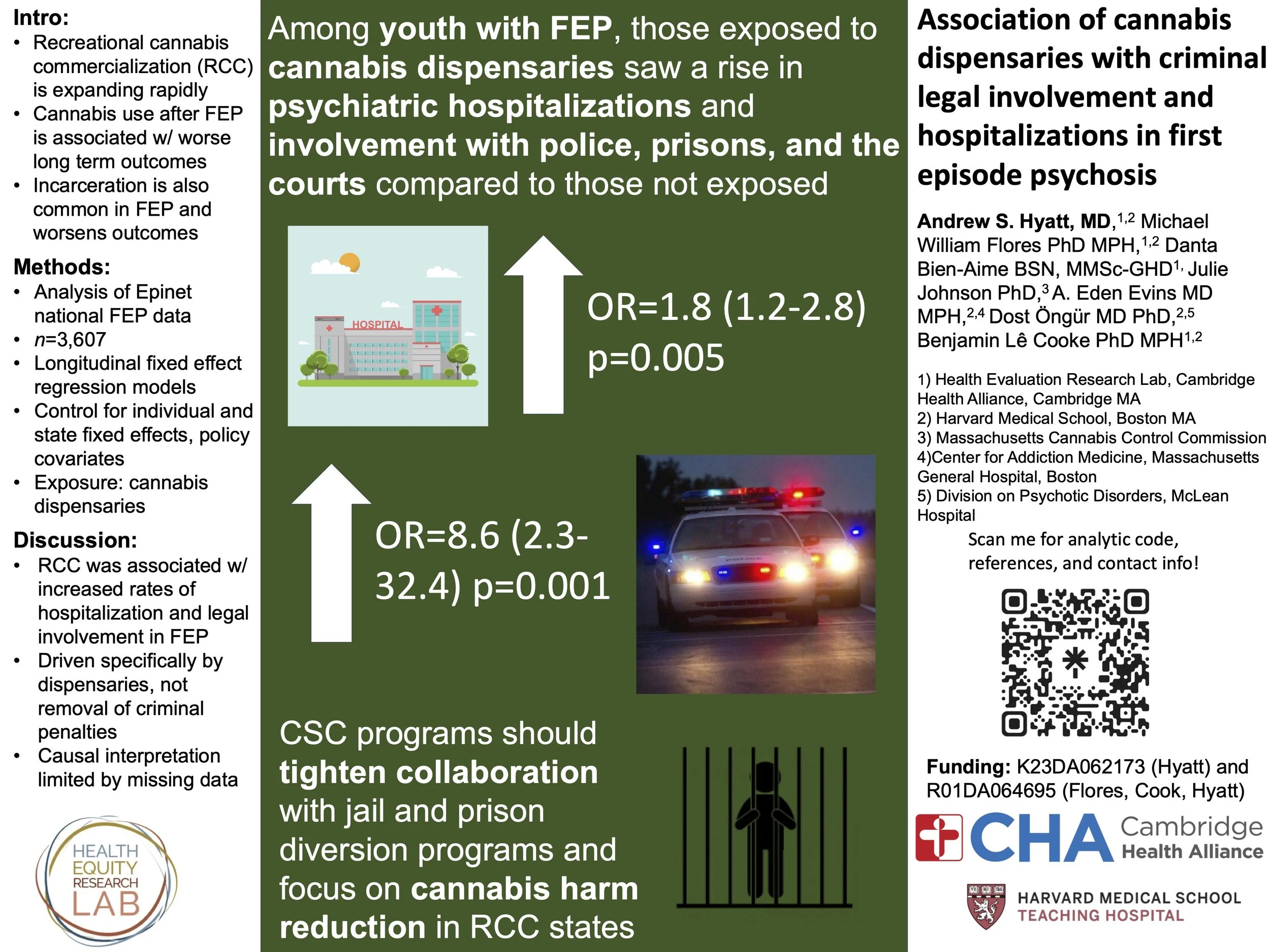
The effects of commercialized legal cannabis on criminal legal involvement and hospitalizations in first episode psychosis

The effects of commercialized legal cannabis on criminal legal involvement and hospitalizations in first episode psychosis

Andrew S. Hyatt, MD, (1,2) Michael William Flores PhD MPH, (1,2) Danta Bien-Aime BSN, MMSc-GHD (1), Julie Johnson PhD, (3) A. Eden Evins MD MPH, (2,4) Dost Öngür MD PhD, (2,5) Benjamin Lê Cooke PhD MPH (1,2)
1) Health Evaluation Research Lab, Cambridge Health Alliance, Cambridge MA
2) Harvard Medical School, Boston MA
3) Massachusetts Cannabis Control Commission
4)Center for Addiction Medicine, Massachusetts General Hospital, Boston
5) Division on Psychotic Disorders, McLean Hospital

Background/Objectives: Individuals with first episode psychosis (FEP) are disproportionately likely to experience adverse effects from cannabis use, and cannabis legalization and commercialization has been associated with a rise in both cannabis use and emergency department visits among individuals with established psychosis. The present study sought to ascertain cannabis policy effects on young people with first episode of psychosis by examining the impact of the opening of cannabis dispensaries on clinical and criminal-legal outcomes.

Methods: We utilized longitudinal data from the Early Psychosis Intervention Network, a network of early psychosis clinics from states with a variety of cannabis policy regimes. 3,607 individuals contributing 7,409 responses were included. The exposure was the opening of cannabis dispensaries in a state. Outcomes included 30-day use of cannabis, recent psychiatric hospitalization, and recent legal issues. Panel fixed effect logistic regression models were utilized to ascertain associations between exposure to dispensaries and outcomes, with both year and individual fixed effects included.

Results: After adjusting for individual and year fixed effects, there was a no significant change in 30-day cannabis use after exposure to dispensaries (OR=2.4, 95% CI 0.86-6.53, p=0.09). Exposure to dispensaries was associated with both an increase in psychiatric hospitalization (OR=1.8, 95% CI 1.2-2.8, p=0.005) and increased criminal-legal involvement (OR=8.6, 95% CI 2.3-32.4, p=0.001).

Implications: Young people with first episode psychosis had increased rates of both psychiatric hospitalization and criminal legal involvement after cannabis dispensaries opened. Increased availability of cannabis and wider availability of high-potency cannabis products may be partially responsible for these adverse consequences. FEP clinicians should engage in systematic assessment and treatment of problematic cannabis use as well as encourage harm reduction practices such as the reduction in use of high potency products, while programs diverting individuals with psychosis from jails and prisons into treatment may need to be strengthened after cannabis legalization.

View Event →
Nov
2
9:30 AM09:30

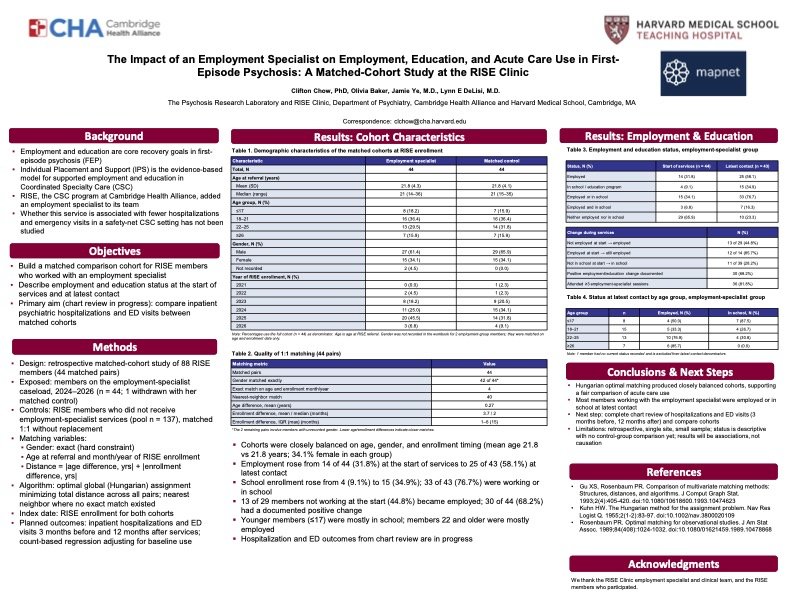
The Impact of an Employment Specialist on Employment, Education, and Acute Care Use in First- Episode Psychosis: A Matched-Cohort Study at the RISE Clinic

The Impact of an Employment Specialist on Employment, Education, and Acute Care Use in First- Episode Psychosis: A Matched-Cohort Study at the RISE Clinic

Clifton Chow, PhD, Olivia Baker, Jamie Ye, M.D., Lynn E DeLisi, M.D.
The Psychosis Research Laboratory and RISE Clinic, Department of Psychiatry, Cambridge Health Alliance and Harvard Medical School, Cambridge, MA

Background: Employment and educational support may improve recovery in psychosis and related mental health disability, but its contribution to First Psychotic Episode treatment in a Coordinated Specialty Care Clinic needs further research. This study will examine whether working with an employment specialist is associated with fewer inpatient hospitalizations and emergency room visits among RISE members.

Methods: Retrospective matched-cohort chart review of 90 RISE members: 45 who received employment-specialist services during 2024-2026, each matched 1:1 without replacement to a member who did not, on gender, age, and month/year of RISE entry. Gender matched exactly, with pairs selected by optimal global (Hungarian) assignment minimizing combined age and enrollment-date distance, using nearest neighbors where no exact match existed. The index date is RISE enrollment for both cohorts. Charts will be reviewed since inception, with descriptive analysis of the exposed cohort 3 months before and 12 months after intervention. Primary outcomes are inpatient psychiatric hospitalizations and emergency room visits; secondary outcomes may include any such encounter, total inpatient days, and time to first acute-care encounter. Count-based regression will compare baseline-to-follow-up change, adjusting for baseline utilization and clinical differences.

Results: Cohorts were closely balanced. Mean age was 21.6 (SD 4.3) years in the employment group and 21.7 (SD 4.1) in controls; 27 (60.0%) versus 30 (66.7%) were male and 15 (33.3%) in each female, with gender unrecorded for 3 exposed members. Mean matched difference was 0.3 years in age and 3.7 months in enrollment. Among the employment group, 25 of 44 with data recorded (56.8%) were currently employed and 16 of 44 (36.4%) currently in school.

Conclusion: This study will assess whether employment-specialist services are associated with reduced acute healthcare utilization among RISE members. Findings may inform integration of employment support into coordinated mental health services. Being observational, results are associations rather than causation.

View Event →
Nov
2
9:30 AM09:30

Developing a Statewide Implementation Blueprint to Expand Access to Long-Acting Psychiatric Medications in Massachusetts Community Behavioral Health Centers

Developing a Statewide Implementation Blueprint to Expand Access to Long-Acting Psychiatric Medications in Massachusetts Community Behavioral Health Centers

1. Cheryl Y. S. Foo
2. Kim T. Mueser, Center for Psychiatric Rehabilitation, Department of Occupational and Brain Sciences, Boston University
3. Catherine J. Leonard, Massachusetts General Hospital Center of Excellence for Psychosocial and Systemic Research
4. Sarah A. MacLaurin, Massachusetts General Hospital; North Suffolk Community Services
5. Michael C. Angelini, Massachusetts College of Pharmacy and Health Sciences University
6. Ryann Abrams, Greater Lawrence Family Health Center; Massachusetts Pharmacists Association
7. Massachusetts General Hospital Treatment Resistant Schizophrenia Advocacy, Clinical Consultation, Education, and Support Service (TRS ACCESS) Network
8. Deirdre Calvert, Massachusetts Department of Public Health
9. David Hoffman, Massachusetts Department of Mental Health
10. Margaret Guyer-Deason, Massachusetts Department of Mental Health
11. Donna Frates, Massachusetts Behavioral Health Partnership
12. Lee Robinson, MassHealth Office of Accountable Care and Behavioral Health
13. Jessica Zeidman, Massachusetts Department of Public Health
14. Amam Saleh, Massachusetts Department of Mental Health
15. Corinne Cather, Massachusetts General Hospital Center of Excellence for Psychosocial and Systemic Research; Harvard Medical School

Background: Long-acting antipsychotic medications reduce relapse and hospitalization for people with schizophrenia spectrum disorders, with greatest benefit early in illness, yet utilization among people with early psychosis remains low (US: 4%; MA: 11%). SMI-REACH is a statewide initiative expanding long-acting psychiatric medication (LAM) access and use across Massachusetts’ 29 community behavioral health centers (CBHCs), which increasingly serve as the entry and continuing care setting for young people after a first episode.

Methods: Phase 1 (2025) built a cross-sector coalition of state agencies, CBHCs, and clinical/research experts aligned on the principle of “no wrong door” to LAM treatment. Phase 2’s landscape analysis (2026) surveyed all 29 CBHCs on ability to prescribe, administer, and store LAMs onsite, yielding a typology of capability stages. Listening tours with 15 purposively sampled CBHCs identified multilevel barriers and facilitators. At a September summit, agency and CBHC stakeholders prioritized barriers and refined candidate strategies to inform a statewide implementation blueprint.

Findings: Sites spanned five capability stages: Fully Capable (21%; routine prescribing, onsite administration and storage of all LAMs); Capable (28%; onsite administration without storage, limited same-day treatment); Partly Capable (17%; onsite administration of long-acting antipsychotics only); Referral-Based (21%; prescribe but refer for administration); and Not Capable (14%; not prescribing due to absent administration workflows). Fewer Southeast (25%) and Western Massachusetts sites (38%) had onsite administration. Listening tours revealed leadership commitment, provider willingness, and patient need were high, while barriers experienced were primarily systemic: licensing requirements delaying onsite administration, non-billable nurse-led care coordination, and fragmented hospital-to-CBHC transitions. Facilitators included whole-team training on discussing LAMs, nurse champions for administration, and pharmacy collaboration for ease of access.

Conclusions: SMI-REACH applies implementation science at the scale of a state behavioral health system to bridge practice gaps in schizophrenia pharmacotherapy across the care continuum beyond coordinated specialty care. Multilevel barriers necessitate use of strategy bundles combining policy action, expanded access, provider training, and patient-facing supports. A capability typology enables stage-tailored strategy deployment, while state agency partnership enables structural change. An actionable blueprint will be finalized in December 2026.

View Event →
Nov
2
9:30 AM09:30

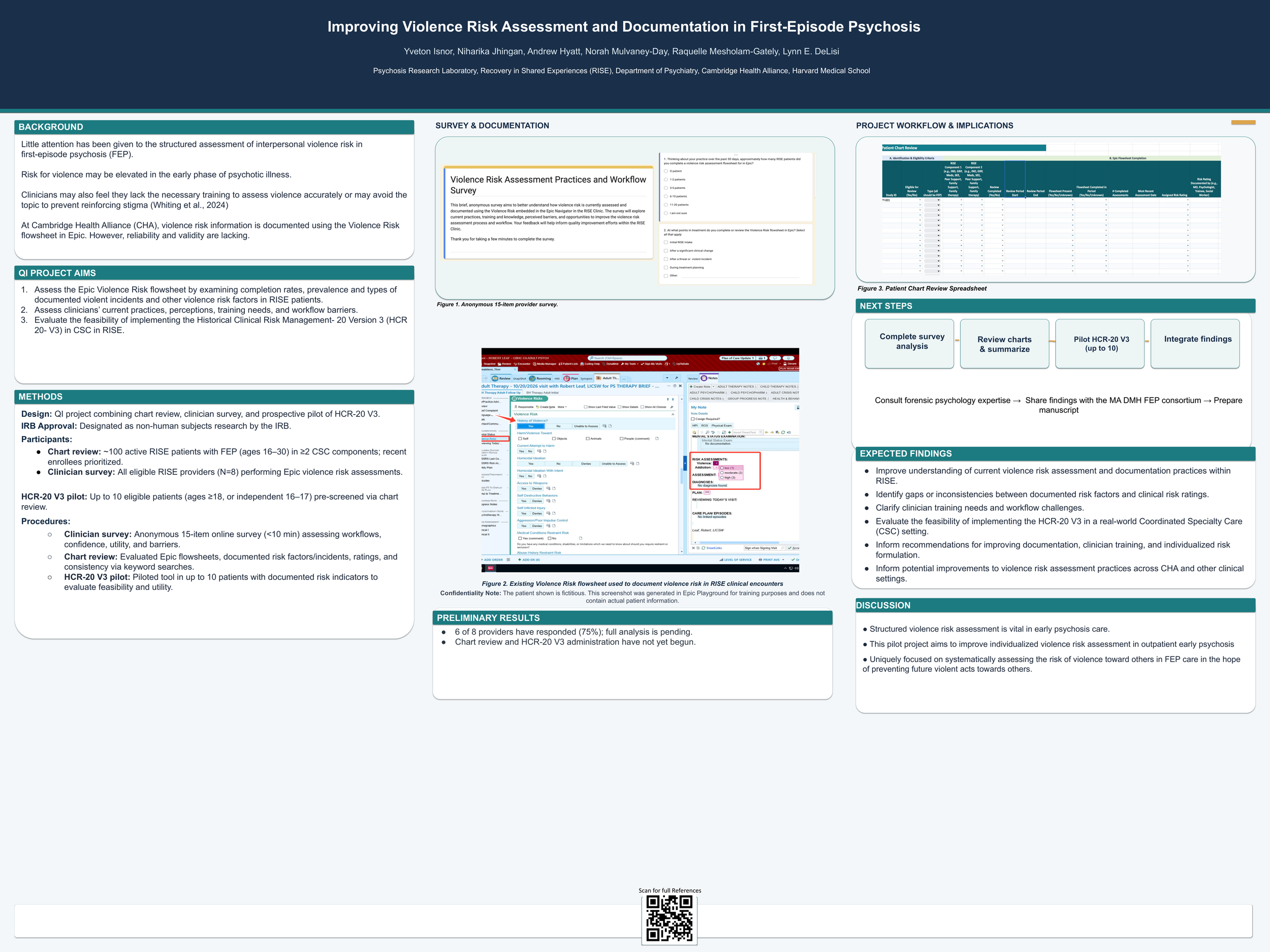
Improving Violence Risk Assessment and Documentation in First Episode Psychosis (FEP): A Quality Improvement Initiative in Coordinated Specialty Care in RISE.

Improving Violence Risk Assessment and Documentation in First Episode Psychosis (FEP): A Quality Improvement Initiative in Coordinated Specialty Care in RISE.

Yveton Isnor, PsyD, LMHC¹,²; Niharika Jhingan, MPH¹,²; Andrew Hyatt, MD¹,²; Norah Mulvaney-Day, PhD¹,²; Raquelle Mesholam-Gately, PhD¹,²; Lynn E. DeLisi, MD¹,²

¹ Psychosis Research Laboratory, Recovery in Shared Experiences (RISE), Department of Psychiatry, Cambridge Health Alliance, Cambridge, MA
² Harvard Medical School, Boston, MA

Poster: Improving Violence Risk Assessment and Documentation, Yveton Isnor and colleagues

Background: Although considerable attention has been given to assessing suicide risk, less attention has been directed toward the systematic assessment of interpersonal violence risk in first-episode psychosis (FEP). Most individuals with FEP will not engage in violence; however, risk may be elevated during the early phase of psychotic illness. Within clinical settings, variability in assessment approaches and documentation may limit clinicians’ ability to identify clinically meaningful risk factors, develop individualized formulations, and implement appropriate risk-management strategies. This project aims to 1) examine how violent incidents are assessed and documented within the Recovery in Shared Experiences (RISE) coordinated specialty care clinic, and 2) assess the feasibility and clinical utility of implementing a structured professional judgment (SPJ) tool for violence risk assessment.

Methods: (1) chart review of approximately 100 active RISE FEP patients to examine completion of the existing Epic violence risk flowsheet and documentation of violence-related risk factors and incidents; (2) an anonymous semi-structured clinician survey assessing current practices, training, perceived barriers, and opportunities for workflow improvement; and (3) pilot administration of the Historical Clinical Risk Management-20, Version 3 (HCR-20 V3), a structured professional judgment tool, with up to 10 patients to evaluate feasibility, time burden, and clinical utility. The IRB determined the project to be exempt as a quality improvement project.

Results: While data collection and implementation are in the early phase, preliminary records review indicates that clinicians completed only a small portion of the Epic violence risk questionnaire. In addition, only a low percentage of patients expressed thoughts of harming other people, or committed a violent act, such as fighting, property destruction, or threats. Further anticipated findings will identify gaps and inconsistencies in current violence risk assessment and documentation, identify clinician training and workflow needs, and evaluate the feasibility and clinical utility of integrating the HCR-20 V3 into routine CSC practice.

Conclusion: This QI project aims to strengthen systematic, evidence-informed, and individualized approaches to assessing interpersonal violence risk in FEP within RISE. Findings will inform recommendations for improving clinical documentation, clinician training, risk formulation, and workflow practices within RISE and may provide a foundation for broader application with other early psychosis programs within the Massachusetts Psychosis Network for Early Treatment (MAPNET) and for future research.

View Event →
Nov
2
9:30 AM09:30

Long-Acting Injectable Antipsychotic Utilization and Prescriber-Reported Barriers Across a Safety-Net Health System

Long-Acting Injectable Antipsychotic Utilization and Prescriber-Reported Barriers Across a Safety-Net Health System

Vincent Betti, MD¹; Brittany M. Gouse, MD, MPH¹,² ; Diana Kim, MD¹,²; Joel Burt-Miller, MD, MPH, MS¹,²; Sarosh Khan, DO¹,²; Destiny Montgomery, RN²; Danny Chen, NP²; Jessica Lewczyk, NP¹,²; Hannah E. Brown, MD¹,²

¹ Department of Psychiatry, Boston University Chobanian & Avedisian School of Medicine, Boston, MA
² Wellness & Recovery After Psychosis Program, Boston Medical Center, Boston, MA

Poster: Long-Acting Injectable Antipsychotic Utilization, Brittany Gouse and colleagues

Background: Long-acting injectable antipsychotics (LAIAs) are associated with increased treatment adherence and decreased risk of premature mortality in schizophrenia. National claims data suggest LAIA administration is more common in patients with multiple hospitalizations or longitudinal non-adherence than first-episode psychosis (FEP) patients. Here, we report rates of and barriers to LAIA administration across Boston Medical Center Health System (BMCHS) alongside provider attitudes surrounding LAIA use in FEP.

Methods: First, we obtained electronic health record (EHR) data on LAIA administration across BMCHS from 8/1/2023 to 8/1/2026. LAIA administrations were stratified by patient age and clinical settings. Then, in April of 2026, psychiatrists and psychiatric nurse practitioners (NPs) across ambulatory, emergency, inpatient, and consult-liaison settings were surveyed on LAIA access, provider education barriers, and prescriber attitudes towards LAIAs.

Results: 7,108 LAIAs were administered across BMCHS from 2023 to 2026. Approximately 16.6% were received by patients under the age of 18 and 66.2% were by patients under the age of 30. LAIA administration was most common in outpatient (54.1%) and inpatient (22.4%) psychiatric settings. Administrative barriers were reported by 96% of the 28 providers that responded to the survey, with uncertainty surrounding nursing administration workflow (57%) and inadequate LAIA stock (54%) being most common. 75% of respondents agreed with LAIAs being offered to FEP patients. LAIA administration was uncommon in the emergency department (n=46, <1%) and on medical floors (n=58, <1%), with uncertainty surrounding follow-up as the most common barrier cited.

Conclusion: Our findings support that LAIAs are acceptable to young adults living with psychosis and prescribers within our health system, however the widespread use of LAIA in FEP is limited by insurance and access to specialty care-related barriers, particularly for patients seen in acute care settings. Future work will explore the impact of a dedicated pharmacy liaison on improving access to LAIA.

View Event →
Nov
2
9:30 AM09:30

Psychosis in Haitian Service Users: Cultural Idioms of Distress and Challenges in Clinical Care

Psychosis in Haitian Service Users: Cultural Idioms of Distress and Challenges in Clinical Care

Yveton Isnor, PsyD, LMHC¹,²; Andrew Hyatt, MD¹,²; Drew Madore, PsyD¹,²; Raquelle Mesholam-Gately, PhD¹,²; Lynn E. DeLisi, MD¹,²

¹ Psychosis Research Laboratory, Recovery in Shared Experiences (RISE), Department of Psychiatry, Cambridge Health Alliance, Cambridge, MA
² Harvard Medical School, Boston, MA

Poster: Psychosis in Haitian Service Users, Yveton Isnor

Background: Cultural factors are essential to the assessment and treatment of psychosis; however, psychosis-specific research regarding Haitian populations remains limited. An estimated 87,000 Haitians live in Massachusetts, making it an important population for Massachusetts Psychosis Network for Early Treatment (MAPNET) and Cambridge Health Alliance (CHA) to consider in efforts to improve psychosis care for this population. Existing literature on Haitian mental health describes culturally specific idioms of distress, explanatory models, religious and spiritual beliefs, language, and stigma that may influence how psychological experiences are expressed and interpreted. These factors may create challenges in distinguishing culturally meaningful experiences from psychotic symptoms and may influence help-seeking behavior, engagement, and family responses to care. This project aims to: 1) conceptually review literature on Haitian cultural concepts of psychosis and distress, explanatory models of psychosis, and culturally informed approaches to psychosis assessment and treatment within Haitian populations, and 2) examine how these concepts apply to the care of Haitian service users with first episode psychosis within the Recovery in Shared Experiences (RISE) coordinated specialty care program.

Methods: We searched HOLLIS, Google Scholar, and reference lists to gather relevant literature on mental health among Haitians. Search terms included “Haitian and psychosis,” “mental health in Haiti,” “idioms of distress among Haitians,” and “vodou and mental health.” A composite, anonymized clinical vignette was created based on Haitian service users in RISE to illustrate challenges when spiritual or psychological experiences overlap with features that may be interpreted as psychotic symptoms and when family explanatory models differ from biomedical understandings of psychosis.

Results: Current literature suggests a significant gap in psychosis-specific research involving Haitian populations. Existing work indicates that cultural and explanatory frameworks may influence symptom expression, help-seeking, treatment engagement, and interpretations of mental illness. The composite vignette highlights the importance of assessing cultural context, normative beliefs, distress, conviction, functional impairment, and changes from baseline when evaluating unusual experiences. It also illustrates the potential importance of culturally responsive psychoeducation and family involvement when explanatory models differ among service users, families, and clinicians.

Conclusion: Attention to cultural factors may support nuanced assessment and culturally responsive care for Haitian service users experiencing psychosis. Future research should examine psychosis phenomenology, family explanatory models, treatment engagement, and the role of Haitian Creole, culturally specific idioms, and religious views in clinical care.

View Event →