Finalist

Filtering by: Finalist

Nov
2
9:30 AM09:30

Preliminary clinical cohort outcomes of a brief, hybrid care clinic model for individuals with psychosis

Preliminary clinical cohort outcomes of a brief, hybrid care clinic model for individuals with psychosis

Sunnie Li¹, Victoria Lisowski¹, Andrew Jin Soo Byun¹, Kathryn Taylor Ledley¹, Brian Sampson, Maddalena Cipriani¹, Matcheri Keshavan¹, Michelle Friedman-Yakoobian¹, John Torous¹

¹ Department of Psychiatry, Beth Israel Deaconess Medical Center, Harvard Medical School, Boston, MA, USA
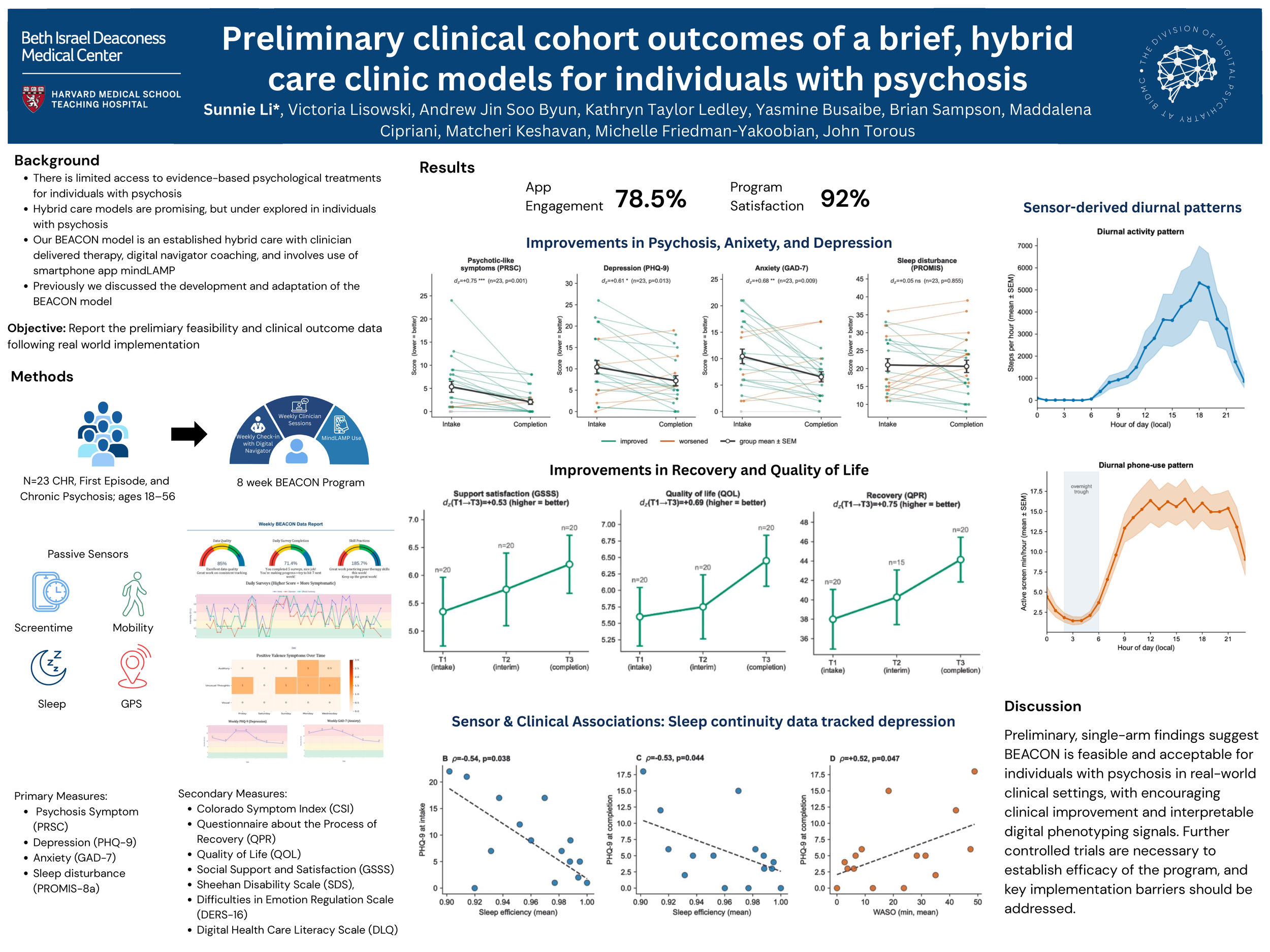
Background: With limited access to evidence-based psychological treatments for individuals with psychosis, hybrid digital care models are promising yet remain under-explored in naturalistic psychosis populations. Our BEACON model adapts an established hybrid care model (with clinician-delivered therapy, the mindLAMP smartphone app, and Digital Navigator coaching) for individuals with psychosis. Having presented previously on the development and adaptation of the BEACON model, this poster reports preliminary feasibility and clinical outcome data from its initial real-world implementation.

Methods: A preliminary clinical cohort (N=23) spanning the psychosis spectrum (Clinical High Risk, First Episode, and Chronic Psychosis; ages 18–56) completed the 8-week BEACON program. Primary clinical outcomes (attenuated psychosis symptoms, anxiety, depression, sleep disturbance), secondary measures (recovery, quality of life, disability, emotion regulation, etc.), and passive digital phenotype data (steps, screen time, GPS mobility) were collected from intake to completion.

Results: Patients demonstrated 78.5% app engagement and 92% program satisfaction. From intake to completion, patients showed medium-to-large improvements in attenuated psychosis symptoms (d_z=+0.75), anxiety (d_z=+0.68), and depression (d_z=+0.61), with no significant change in sleep disturbance. Secondary measures moved in favorable directions, most notably self-worth/recovery (d_z=+0.75) and quality of life (d_z=+0.69). Passive sensing data revealed coherent behavioral patterns (diurnal activity rhythms, expected phone-use trends), and exploratory associations linked greater sleep continuity and GPS mobility diversity to lower symptom burden.

Conclusion: These preliminary, single-arm findings suggest BEACON is feasible and acceptable for individuals with psychosis in real-world clinical settings, with encouraging clinical improvement and interpretable digital phenotyping signals. Further controlled trials are necessary to establish efficacy of the program, and key implementation barriers should be addressed.
View Event →
Nov
2
9:30 AM09:30

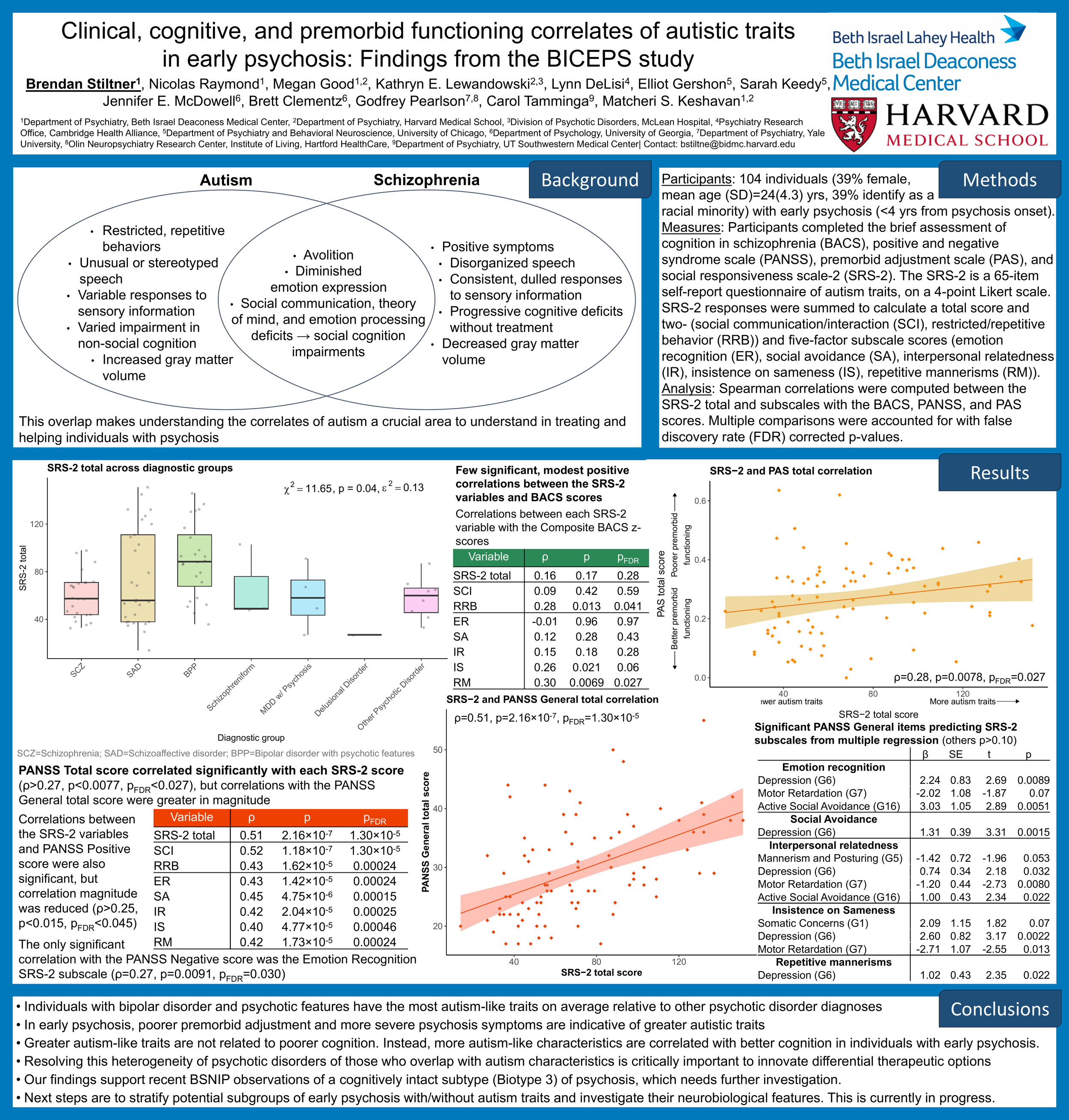
Clinical, cognitive, and premorbid functioning correlates of autistic traits in early psychosis: Findings from the BICEPS study

Clinical, cognitive, and premorbid functioning correlates of autistic traits in early psychosis: Findings from the BICEPS study

Brendan Stiltner (1), Nicolas Raymond (1), Megan Good (1, 2), Kathryn E. Lewandowski (2, 3), Lynn DeLisi (4), Elliot Gershon (5), Sarah Keedy (5), Jennifer E. McDowell (6), Brett Clementz (6), Godfrey Pearlson (7, 8), Carol Tamminga (9), Matcheri S. Keshavan (1, 2)

1. Department of Psychiatry, Beth Israel Deaconess Medical Center, Boston MA
2. Department of Psychiatry, Harvard Medical School, Boston MA
3. Division of Psychotic Disorders, McLean Hospital, Belmont MA
4. Psychiatry Research Office, Cambridge Health Alliance, Cambridge MA
5. Department of Psychiatry and Behavioral Neuroscience, University of Chicago, Chicago, IL
6. Department of Psychology, University of Georgia, Athens, GA
7. Department of Psychiatry, Yale University, New Haven, CT
8. Olin Neuropsychiatry Research Center, Institute of Living, Hartford HealthCare, Hartford, CT
9. Department of Psychiatry, UT Southwestern Medical Center, Dallas, TX

Background: Approximately 75% of genes associated with autism are also implicated in schizophrenia. Phenotypically, there is overlap between psychosis symptoms and autistic behaviors. However, research understanding how autistic traits impact outcomes of in early psychosis (EP) is lacking.

Methods: 104 participants (39.4% female, mean age (standard deviation)=24.04 (4.27) years, 39.4% identifying as a racial minority) with EP (<4 years from symptom onset) were enrolled and eligible. Participants completed the brief assessment of cognition in schizophrenia (BACS), positive and negative syndrome scale (PANSS), premorbid adjustment scale (PAS), and social responsiveness scale-2 (SRS-2). The SRS-2 quantifies autism traits, yielding total scores and two- (social communication/interaction (SCI), restricted/repetitive behavior (RRB)) and five-factor subscale scores (emotion recognition (ER), social avoidance, interpersonal relatedness, insistence on sameness, repetitive mannerisms (RM)). Spearman correlations were computed between the SRS-2 total and subscales with the BACS, PANSS, and PAS scores. The false discovery rate (FDR) corrected P-values.

Results: The PAS correlated significantly with the SRS-2 total (ρ=0.29, p=0.0056, FDR-p=0.025), SCI (ρ=0.29, p=0.0060, FDR-p=0.025), and ER scores (ρ=0.28, p=0.0078, FDR-p=0.027). The RM subscale correlated with the symbol coding (ρ=0.29, p=0.0080, FDR-p=0.027), verbal fluency (ρ=0.30, p=0.0069, FDR-p=0.027), and composite BACS scores (ρ=0.28, p=0.013, FDR-p=0.041), which the RBB score also correlated with (ρ=0.28, p=0.013, FDR-p=0.041). We found the SRS-2 total and all its subscales correlated significantly with PANSS total (ρ>0.27, p<0.0077, FDR-p<0.027) general (ρ>0.40, p<0.000048, FDR-p<0.00046) and positive scores (ρ>0.25, p<0.015, FDR-p<0.045). Additionally, the ER subscale correlated significantly with the PANSS negative subscale (ρ=0.27, p=0.0091, FDR-p=0.03). Other correlations were not significant (FDR-p>0.05).

Conclusion: Greater prevalence of autism-like traits in a sample of individuals with EP related to poorer premorbid functioning, more severe symptoms, but better cognition. While future work must evaluate the significance of baseline autism-like traits on longitudinal outcomes, results indicate the import of autistic traits to the presentation of EP.

View Event →
Nov
2
9:30 AM09:30

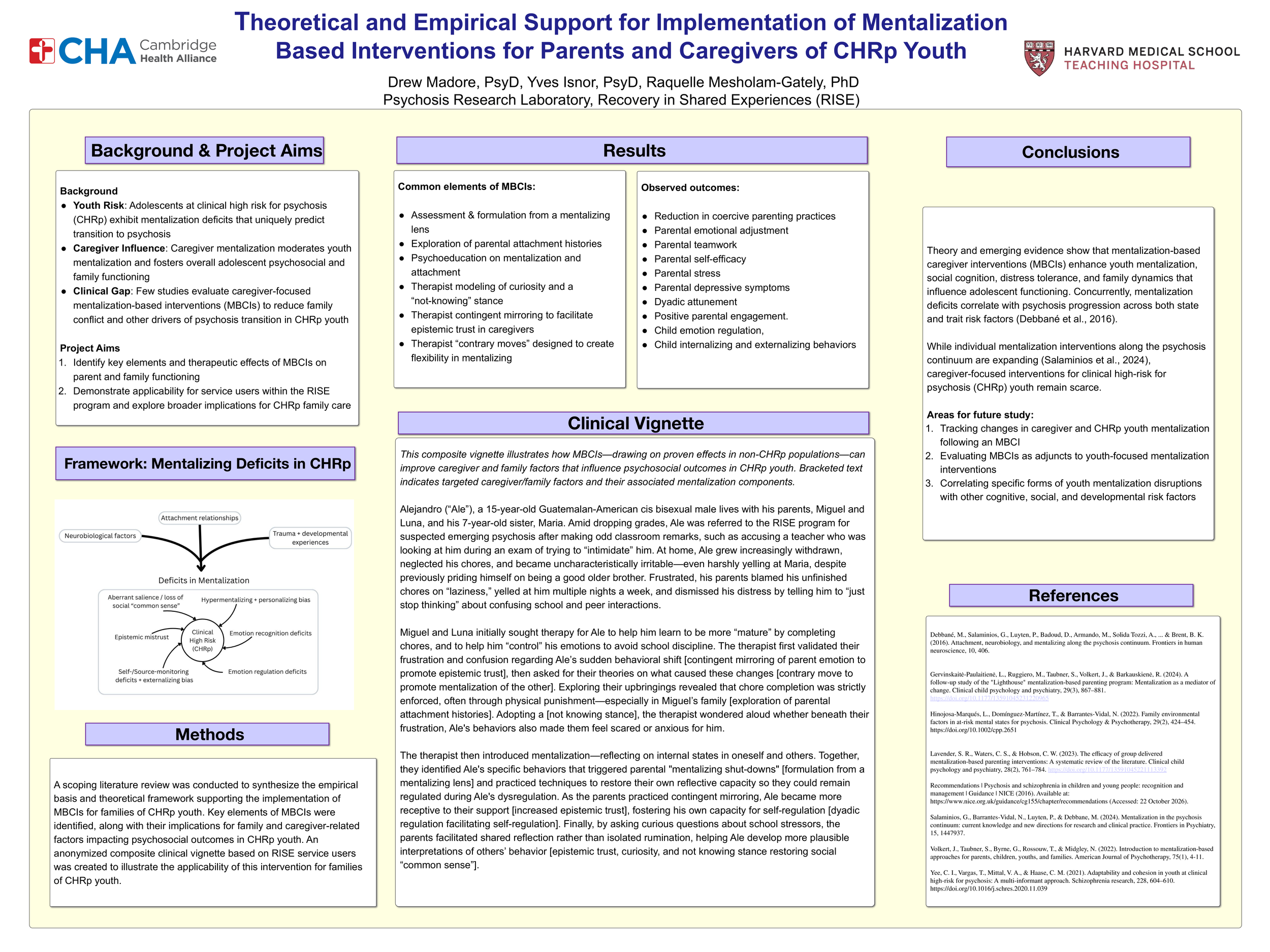
Theoretical and Empirical Support for Implementation of Mentalization Based Interventions for Parents and Caregivers of CHRp Youth

Theoretical and Empirical Support for Implementation of Mentalization Based Interventions for Parents and Caregivers of CHRp Youth

Drew Madore, PsyD¹,²; Yves Isnor, PsyD¹,²; Raquelle Mesholam-Gately, PhD¹,²

¹ Psychosis Research Laboratory, Recovery in Shared Experiences (RISE), Department of Psychiatry, Cambridge Health Alliance, Cambridge, MA
² Harvard Medical School, Boston, MA

Poster: Mentalization based interventions for parents and caregivers of CHRp youth, Drew Madore and colleagues

Background: Adolescents at clinical high risk for psychosis (CHRp) have been found to exhibit deficits in mentalization, with said difficulties also being identified as unique predictors of transition to psychosis in CHRp populations. Parent/caregiver mentalization has been posited as a key moderator of child mentalization, in addition to promoting greater overall familial functioning and adolescent psychosocial functioning. However, there are few studies examining the efficacy of mentalization based interventions for parents and caregivers of CHRp youth, and their potential for reducing family conflict and other drivers of transition to psychosis in CHRp youth. In light of the demonstrated links between family functioning, caregiver mentalization, and youth psychopathology, there is a need to examine the effects of a mentalization based caregiver intervention (MBCI) in families of youth designated as CHRp.

Methods: A systematic literature review was conducted to synthesize the empirical basis and theoretical framework supporting the implementation of an MBCI for families of CHRp youth. Additionally, an anonymized composite clinical vignette based on RISE service users was created to illustrate the applicability of this intervention for families of CHRp youth.

Results: Studies demonstrated that caregiver-focused mentalization based interventions correlate with reductions in child/adolescent psychopathology, improvements in adolescent psychosocial functioning, reductions in parent/caregiver stress, and improvements in familial functioning. Greater degrees of mentalization in parents are also correlated with greater degrees of mentalization and emotion regulation in youth across a wide range of diagnostic presentations.

Conclusion: There is a strong theoretical basis and emerging empirical evidence supporting the link between MBCIs in promoting improved mentalization, social cognition, and decreased distress in youth, providing a strong rationale for the utility of these interventions in reducing the risk of transition to psychosis in CHRp youth. Implications for intervention design, assessment of CHRp youth and families, and service delivery are discussed.

View Event →
Nov
2
9:30 AM09:30

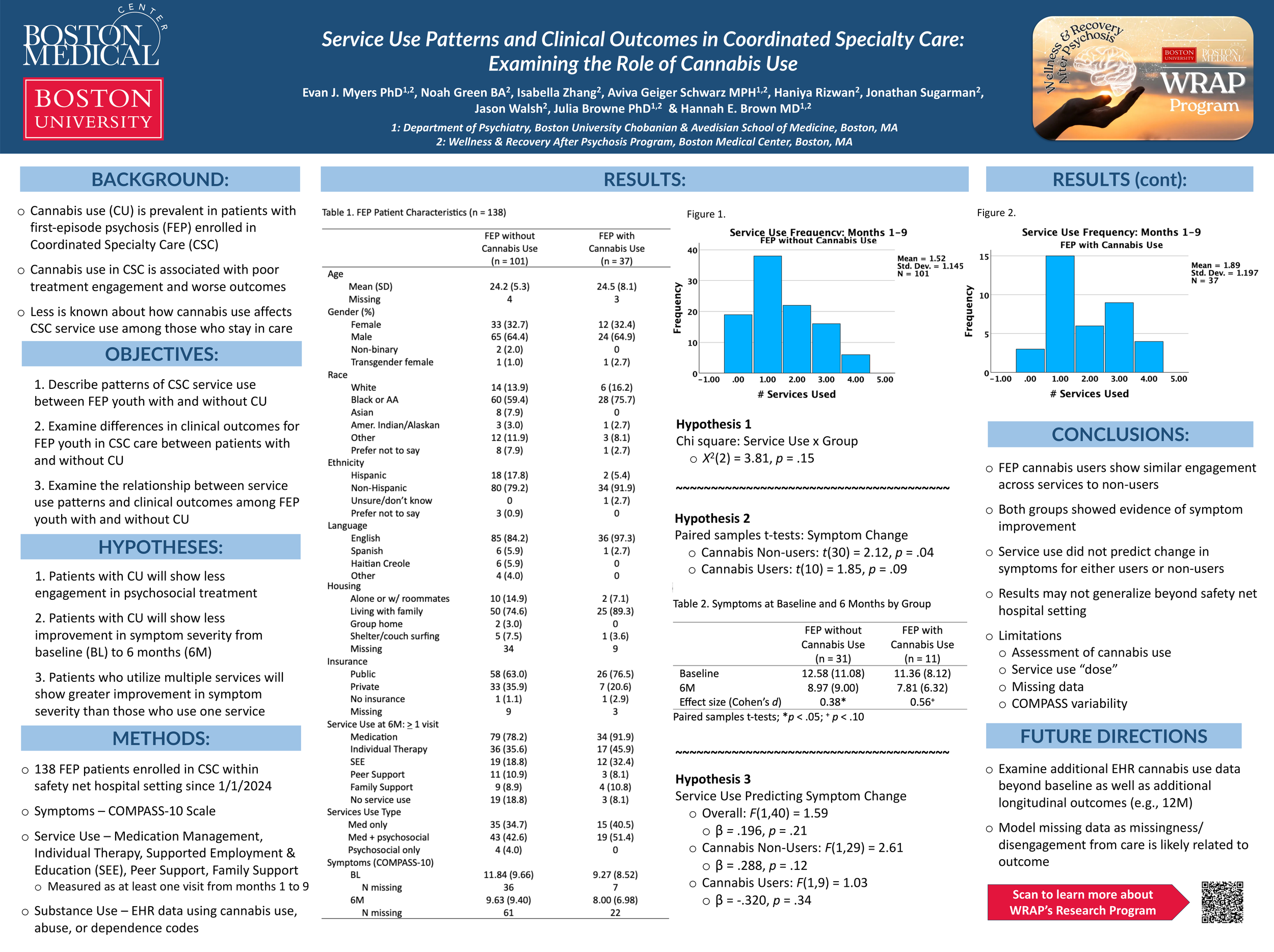
Service Use Patterns and Clinical Outcomes in Coordinated Specialty Care: Examining the Role of Cannabis Use Disorder

Service Use Patterns and Clinical Outcomes in Coordinated Specialty Care: Examining the Role of Cannabis Use Disorder

Evan Myers, PhD¹,²; Noah Green, BA¹; Isabella Zhang¹; Aviva Geiger Schwarz, MPH¹,²; Haniya Rizwan¹; Jonathan Sugarman¹; Jason Walsh¹; Julia Browne, PhD¹,²; Hannah E. Brown, MD¹,²

¹ Wellness and Recovery After Psychosis (WRAP) Program, Department of Psychiatry, Boston Medical Center, Boston, MA, USA
² Department of Psychiatry, Boston University Chobanian & Avedisian School of Medicine, Boston, MA, USA

Poster: Service Use Patterns and Clinical Outcomes in Coordinated Specialty Care, Evan Myers and colleagues

Background: Coordinated Specialty Care (CSC) is an evidence-based treatment model for first-episode psychosis (FEP). Cannabis use in FEP is prevalent and associated with poor treatment engagement and worse clinical outcomes. Less is known about how cannabis use affects use of different CSC services among those who remain engaged in care. Thus, we aim to characterize patterns of service use, clinical outcomes, and how engagement patterns relate to clinical outcomes, comparing those with co-occurring cannabis use disorder (FEP-CUD) and those without (FEP-noCUD).

Methods: Participants were FEP patients who enrolled in a CSC program between 2024 and 2026. Diagnosis of CUD was based on any history of CUD in the patient’s electronic health record. Participants completed the MAPNET Assessment Battery at baseline and at six months, including demographics, service use, and symptom severity (COMPASS-10) measures.

Results: At baseline, FEP-CUD (n = 28) and FEP-noCUD (n = 110) participants were similar in terms of age, race, ethnicity, and health insurance status. Descriptively, a higher proportion of men were in the FEP-CUD group relative to the FEP-noCUD group (79% to 61%). Preliminary descriptive results show that at six months, FEP-CUD participants had lower engagement in all services than FEP-noCUD (medication management: 75% vs. 85%; psychotherapy: 25% vs. 42%; peer support: 7% vs. 11%; family support: 7% vs. 10%; supported education & employment: 4% vs. 6%). FEP-CUD participants also had lower mean symptoms at baseline. Data collection and analysis is ongoing, and changes in symptoms and the relationship between service use and symptoms will be presented in the poster.

Conclusion: Preliminary descriptive results suggest lower service use in the FEP-CUD group. CSC services may need to tailor treatment to address cannabis use to improve FEP care.

View Event →
Nov
2
9:30 AM09:30

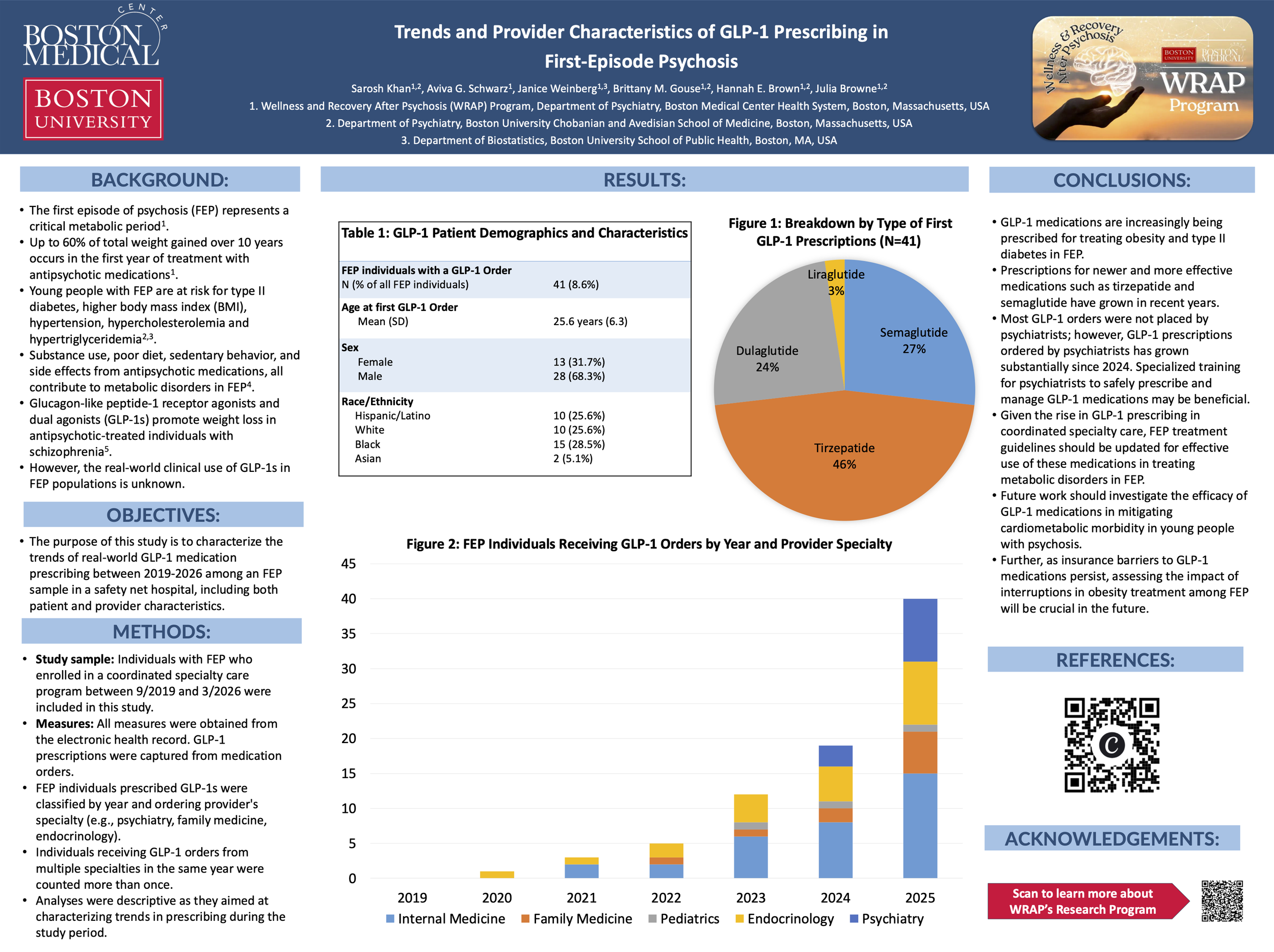
Trends and Provider Characteristics of GLP-1 Prescribing in First-Episode Psychosis

Trends and Provider Characteristics of GLP-1 Prescribing in First-Episode Psychosis

Sarosh Khan (1,2), Aviva G. Schwarz (1), Janice Weinberg (1,3), Brittany M. Gouse (1,2), Hannah E. Brown (1,2), Julia Browne (1,2)
1. Wellness and Recovery After Psychosis (WRAP) Program, Department of Psychiatry, Boston Medical Center Health System, Boston, Massachusetts, USA
2. Department of Psychiatry, Boston University Chobanian and Avedisian School of Medicine, Boston, Massachusetts, USA
3. Department of Biostatistics, Boston University School of Public Health, Boston, MA, USA

Background: The first episode of psychosis (FEP) represents a critical metabolic period, as the most rapid weight gain occurs within the first year of treatment. Glucagon-like peptide-1 receptor agonists and dual agonists (referred to collectively as GLP-1s) are efficacious for promoting weight loss in antipsychotic-treated individuals with schizophrenia. However, the real-world clinical use of GLP-1s in FEP samples is unknown. The purpose of this study is to characterize the trends of real-world GLP-1 medication prescribing between 2019-2026 among an FEP sample in a safety net hospital, including provider characteristics.

Methods: Study sample: Individuals with FEP who enrolled in a coordinated specialty care program between 9/2019 and 3/2026 were included in this study.

Measures: All measures were obtained from the electronic health record. GLP-1 prescriptions were captured from medication orders. Provider specialty (e.g., psychiatry, family medicine, endocrinology) associated with GLP-1 prescription orders were captured. Analyses were descriptive as they aimed at characterizing trends in prescribing during the study period.

Results: Overall, 41/475 individuals with FEP (8.6%) received a GLP-1 prescription. Total GLP-1 recipients rose from 0 in 2019 to 31 in 2025 and 16 in the first quarter of 2026. GLP-1 recipients were most commonly prescribed newer medications including tirzepatide (N = 28, 68%) and semaglutide (N = 19, 46.3%), and they most frequently received GLP-1 orders from primary care physicians (N = 19, 46.3%) and endocrinologists (N = 14, 34.1%); however, psychiatrist GLP-1 prescribing grew by 3-fold from 2024-2025.

Conclusions: Given the rise in GLP-1 prescribing in coordinated specialty care, FEP treatment guidelines should be updated to guide the effective use of these medications in treating metabolic disorders in FEP.

View Event →
Nov
2
9:30 AM09:30

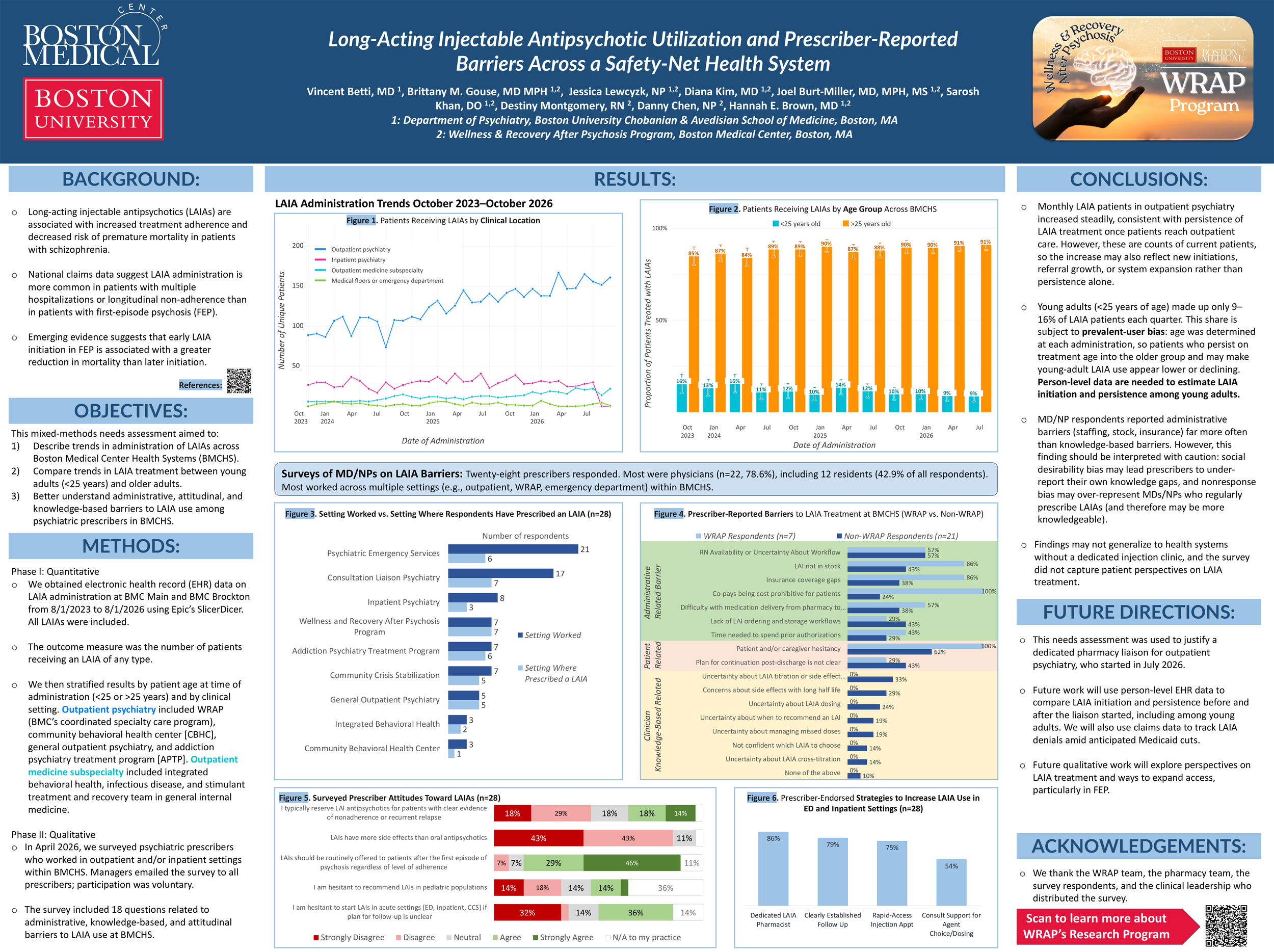
Long-Acting Injectable Antipsychotic Utilization and Prescriber-Reported Barriers Across a Safety-Net Health System

Long-Acting Injectable Antipsychotic Utilization and Prescriber-Reported Barriers Across a Safety-Net Health System

Vincent Betti, MD¹; Brittany M. Gouse, MD, MPH¹,² ; Diana Kim, MD¹,²; Joel Burt-Miller, MD, MPH, MS¹,²; Sarosh Khan, DO¹,²; Destiny Montgomery, RN²; Danny Chen, NP²; Jessica Lewczyk, NP¹,²; Hannah E. Brown, MD¹,²

¹ Department of Psychiatry, Boston University Chobanian & Avedisian School of Medicine, Boston, MA
² Wellness & Recovery After Psychosis Program, Boston Medical Center, Boston, MA

Poster: Long-Acting Injectable Antipsychotic Utilization, Brittany Gouse and colleagues

Background: Long-acting injectable antipsychotics (LAIAs) are associated with increased treatment adherence and decreased risk of premature mortality in schizophrenia. National claims data suggest LAIA administration is more common in patients with multiple hospitalizations or longitudinal non-adherence than first-episode psychosis (FEP) patients. Here, we report rates of and barriers to LAIA administration across Boston Medical Center Health System (BMCHS) alongside provider attitudes surrounding LAIA use in FEP.

Methods: First, we obtained electronic health record (EHR) data on LAIA administration across BMCHS from 8/1/2023 to 8/1/2026. LAIA administrations were stratified by patient age and clinical settings. Then, in April of 2026, psychiatrists and psychiatric nurse practitioners (NPs) across ambulatory, emergency, inpatient, and consult-liaison settings were surveyed on LAIA access, provider education barriers, and prescriber attitudes towards LAIAs.

Results: 7,108 LAIAs were administered across BMCHS from 2023 to 2026. Approximately 16.6% were received by patients under the age of 18 and 66.2% were by patients under the age of 30. LAIA administration was most common in outpatient (54.1%) and inpatient (22.4%) psychiatric settings. Administrative barriers were reported by 96% of the 28 providers that responded to the survey, with uncertainty surrounding nursing administration workflow (57%) and inadequate LAIA stock (54%) being most common. 75% of respondents agreed with LAIAs being offered to FEP patients. LAIA administration was uncommon in the emergency department (n=46, <1%) and on medical floors (n=58, <1%), with uncertainty surrounding follow-up as the most common barrier cited.

Conclusion: Our findings support that LAIAs are acceptable to young adults living with psychosis and prescribers within our health system, however the widespread use of LAIA in FEP is limited by insurance and access to specialty care-related barriers, particularly for patients seen in acute care settings. Future work will explore the impact of a dedicated pharmacy liaison on improving access to LAIA.

View Event →
Nov
2
9:30 AM09:30

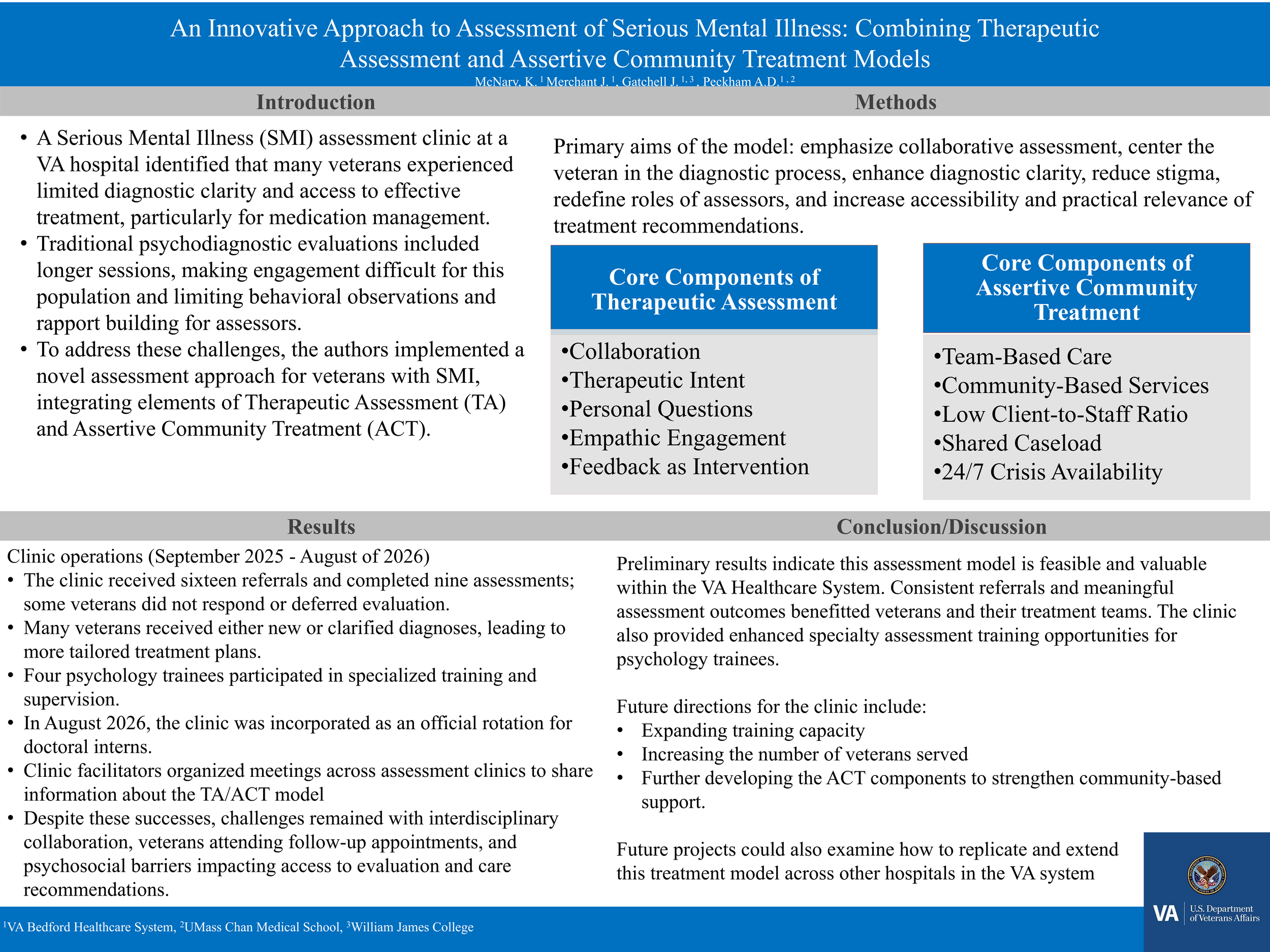
An Innovative Approach to Assessment of Serious Mental Illness: Combining Therapeutic Assessment and Assertive Community Treatment Models

An Innovative Approach to Assessment of Serious Mental Illness: Combining Therapeutic Assessment and Assertive Community Treatment Models

Kelley McNary PsyD¹, Julia Merchant PsyD¹, Jalan Gatchell MA¹,³, Andrew Peckham PhD¹,²

¹ Department of Veteran Affairs Boston, MA
² UMass Chan Medical School, Worcester, MA
³ William James College, Newton, MA

Background: A Serious Mental Illness (SMI) assessment clinic at a VA hospital identified that many veterans experienced limited diagnostic clarity and access to effective treatment, particularly for medication management. Traditional single session psychodiagnostic evaluations included longer sessions, making engagement difficult for this population and limiting behavioral observations and rapport building for assessors.

Methods: To address these challenges, the authors implemented a novel assessment approach for veterans with SMI, integrating elements of Therapeutic Assessment and Assertive Community Treatment (ACT). This model aimed to emphasize collaborative assessment, center the veteran in the diagnostic process, enhance diagnostic clarity, reduce stigma, and increase accessibility and practical relevance of treatment recommendations. The approach also redefined roles for assessors and treatment teams to better support veterans' needs.

Results: Clinic operations began in September 2025, with sixteen referrals and nine completed assessments; some veterans did not respond or deferred evaluation. Four psychology trainees participated in specialized training and supervision. In August 2026, the clinic was incorporated as an official rotation for doctoral interns. Seven veterans received either new or clarified diagnoses, leading to more tailored treatment plans. Despite these successes, challenges remained with interdisciplinary collaboration, veterans attending follow-up appointments, and psychosocial barriers impacting access to evaluation and care recommendations.

Conclusions: Preliminary results indicate this assessment model is feasible and valuable within the VA Healthcare System. Consistent referrals and meaningful assessment outcomes benefitted veterans and their treatment teams. The clinic also provided enhanced specialty assessment training opportunities for psychology trainees. Future directions include expanding training capacity, increasing the number of veterans served, and further developing the ACT components to strengthen community-based support.

View Event →
Nov
2
9:30 AM09:30

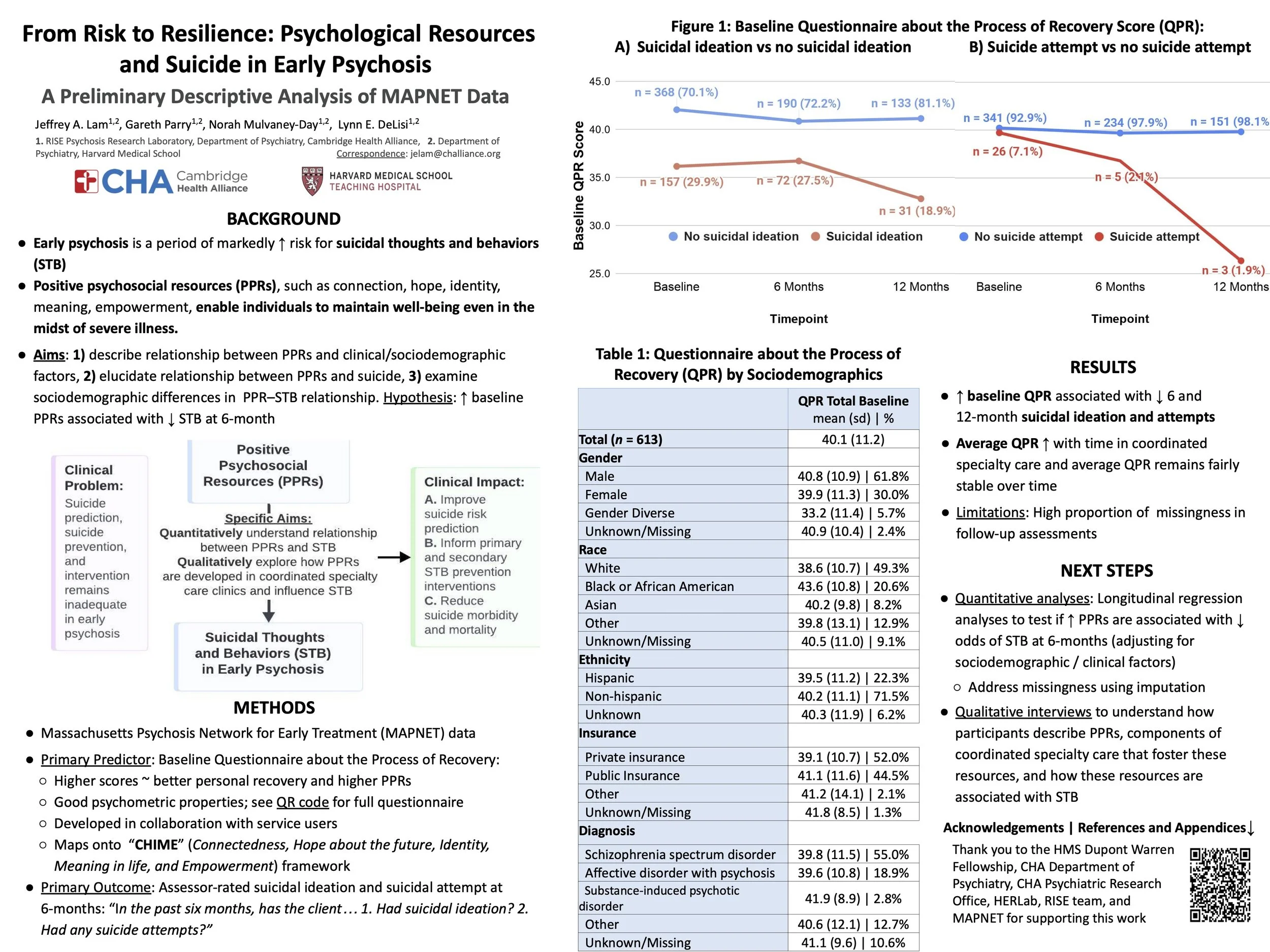
From Risk to Resilience: Psychological Resources and Suicide in Early Psychosis A Preliminary Descriptive Analysis of MAPNET Data

From Risk to Resilience: Psychological Resources and Suicide in Early Psychosis : A Preliminary Descriptive Analysis of MAPNET Data

Jeffrey A. Lam (1,2), Gareth Parry (1,2), Norah Mulvaney-Day (1,2), Lynn E. DeLisi (1,2)
1. RISE Psychosis Research Laboratory, Department of Psychiatry, Cambridge Health Alliance
2. Department of Psychiatry, Harvard Medical School

Background: Early psychosis represents a period of markedly elevated risk for suicidal thoughts and behaviors (STB). While risk factors for suicide have been studied extensively, little is known about the relationship between positive psychosocial resources (PPRs; e.g., meaning, hope, social connection) and suicide during this vulnerable period. Furthermore, racial and ethnic minoritized individuals are overrepresented among individuals with severe mental illness yet are understudied, especially in recovery-oriented research. The objectives of this project are to elucidate the relationship between PPRs and suicide; describe the relationship between PPRs, clinical, and sociodemographic factors; and describe how the relationship between PPRs and STB varies by clinical and sociodemographic groups.

Methods: This project leverages data from the Massachusetts Psychosis Network for Early Treatment (MAPNET) consortium. Longitudinal regression analyses will test whether higher PPRs (measured by the Questionnaire about the Process of Recovery; QPR) are associated with lower odds of STB (clinician-rated at 6 and 12-month follow-up) adjusting for sociodemographics, clinical characteristics, service engagement, and clinic. We hypothesize that higher baseline PPRs will be associated with lower STB at 6-month and 12-month follow-up.

Results: Current MAPNET data include complete STB and QPR for 633 (baseline), 316 (6-months) and 237 (12-months) individuals. IRB has been approved by the MA Department of Mental Health, and analyses are ongoing. We anticipate the final poster to include descriptive and preliminary multivariate analyses.

Conclusions: The ultimate goal is to generate research to equitably improve suicide risk prediction by better understanding understudied PPRs across racial/ethnic and sociodemographic groups, and form the basis for future work to reduce the morbidity and mortality associated with STB in this highly vulnerable period and group.

View Event →